
What’s It Worth?
Secondary Market and Residual Values
Short on time? Read the short version.
Nobody knows what a used electric truck is worth, and the manufacturers whose numbers matter say so. The market’s answer is to keep the truck, so no realised value is ever produced. The third report from TwentyForty’s 12 Pillars of Change series, built on interviews, desk research and a workshop hosted by Aon in London on 22nd July 2026.
Ask the reports
Put your question straight to the 12 Pillars research. Answers come from the published reports, with the section cited so you can check the numbers yourself.
Ask about the 12 Pillars reports — vehicle costs, energy prices, charging, grant funding, policy. Every answer cites the section of the report it comes from.
Who contributed
Lenders, a leasing trade body, battery businesses, an insurer, academics and operators, in the room at Aon and in follow-up interviews.
By the numbers
realised sales of a used electric truck on an open market. Every price is a guess
manufacturers whose numbers matter keep their used electric trucks off the market
for diesel’s used fleet to catch up with each Euro standard. Electric’s clock hasn’t started
operators on Restricted licences only, median fleet of two, waiting on that cascade
Foreword
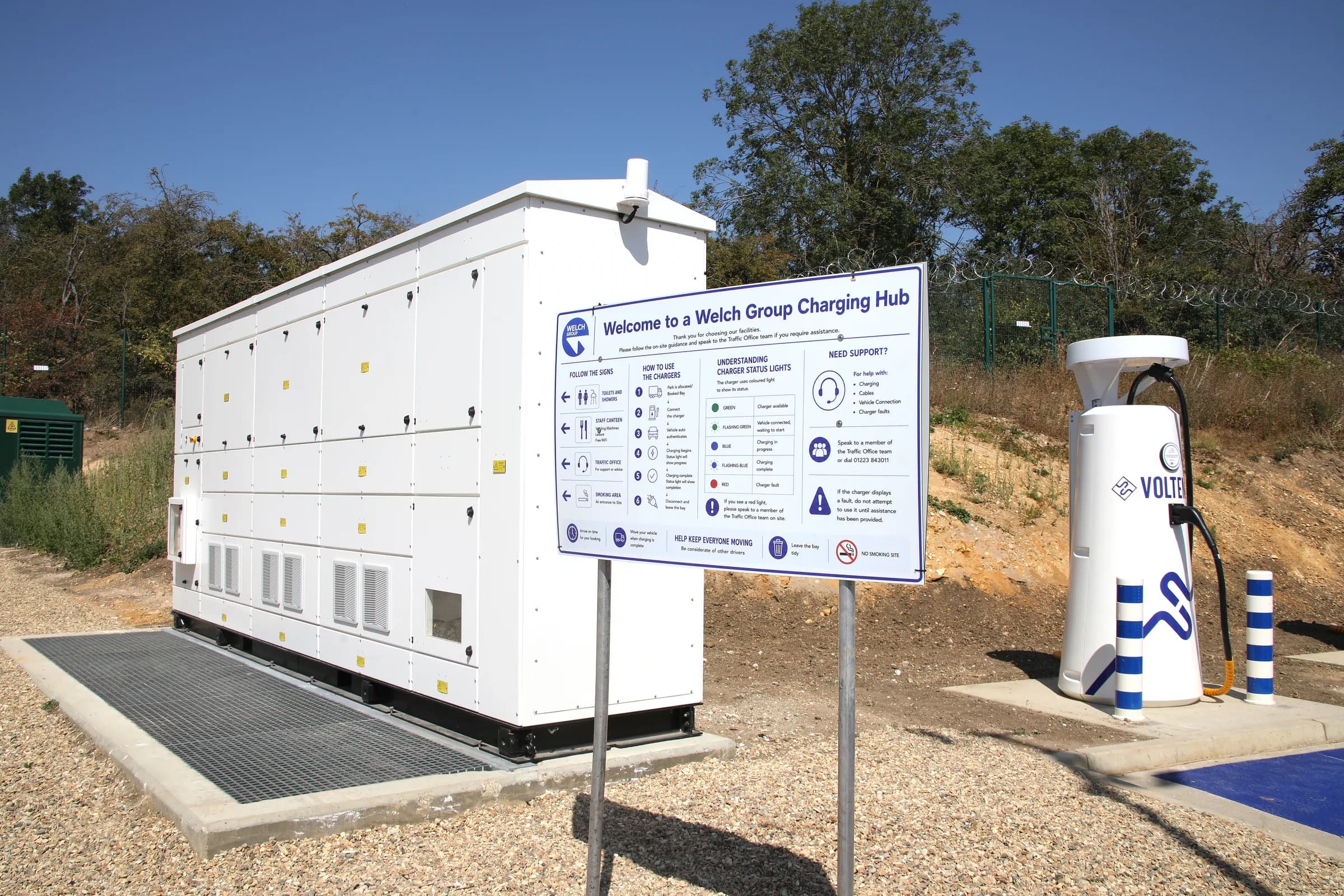
Welch Group, the family haulier I work for, has battery-electric artics in daily service. So when someone asks what a used one is worth, I've got a direct interest in the answer, and I don't have it. Nobody does. That's the finding this report is built on, and the manufacturers who'd have to refute it said it first.
Residual value keeps coming up as the thing that kills the deal, and every conversation about it ends with someone saying the data will sort it out. We wanted to test that. We put the question to lenders, a green finance body, a leasing trade body, battery businesses, a risk and insurance adviser, academics, three manufacturers and people who've spent careers in commercial vehicles, at a workshop in July and in the weeks after it. We read what government, the trade bodies and the published research say. Where a question went unanswered, we say so.
This report takes positions. Where the evidence carries one, we state it. Where it doesn't, we say the evidence is thin and stop. Where people disagreed, both sides are in, and we haven't smoothed them over. In a few places the position is mine.
Everyone agrees this needs collaboration. That isn't a plan. A plan says who does what. Section 17 is ours. Most of it is cheap, and some of it is ours to do. We've listed what we owe.
If we've got something wrong, tell us. Section 18 says what would prove us wrong, and updates and corrections go in a dated section at the end of the report.

Jamie Sands
Founder, TwentyForty
Method note

What this is built on. Desk research up to 14th October 2026, when the evidence stops. Nine interviews and one written exchange between 24th July and the end of August. One written question to mainstream lessors in October 2026. A workshop at Aon on 22nd July 2026, recorded in five parts. Every claim traces to a claims register, and we'll show the trail for any of it on request. Appendix D sets out the sources.
What was there already. A literature search in July 2026 found no study anywhere documenting a used electric truck market. That's why the work was worth doing. It isn't evidence that the market fails to form: that case rests on what manufacturers and lessors told us they do (section 5).
Quotes. A boxed quote is the line alone, checked against the audio. Interviews aren't quoted. Nothing given off the record is used.
Whose view. Where a sentence says who holds a view, it's theirs. Where it doesn't, it's ours. We label our reading only where it sits next to a source's and the two could be confused.
Section 1:The position, on one page
Nobody knows what a used electric truck is worth, and the manufacturers we asked say so. One declined to price its used stock three times. Another doesn't set an electric residual, the value its finance assumes the truck will have when it comes back, and follows a group formula. A third's captive, the finance company it owns to lend against its own trucks, called its figure a best estimate with no history behind it. Between them they price off a diesel proxy, a capital-cost formula or the new lease price, and none has a realised electric sale inside it.
The market's answer is to keep the truck. All the manufacturers we spoke to retain used electric stock, each through a different instrument, and the independents re-rent or repower inside their own books. Each choice is sensible. Together they mean the truck never changes hands, so no realised value is ever produced. The working solutions work by hiding the number.
That may only hold while volumes are small. It's one source's suspicion, and the one captive asked where its appetite stops didn't answer. If it gives way, the captive's own routing, dealers first and auction last, puts the trucks its dealers couldn't place at auction first. The first real numbers would be the wrong ones. The market may still get there. The question is who's lost on the way.
Government is relying on it getting there. DfT's HGV CO2 consultation, the RHA and TransiT all rest small operators' route to zero emission on used trucks cascading down from larger fleets, the mechanism the BVRLA described for diesel clean air compliance in 2018. For diesel, the used fleet took 8.4 to 10 years from each Euro mandate to reach a majority, with an open market, price discovery and an export route. On the evidence here, electric has none of the three. The operators waiting are counted: 29,744 on Restricted licences only, 47.5% of GB operators, median authorisation two vehicles, mostly builders, merchants, farmers and plant hirers. Some will leave rather than wait. That's a prediction, and it's now checkable every year.
The grant points the wrong way. It's paid on the new truck, the used truck is priced off the new one, and OZEV's own subsidy assessment says nearly new residuals may fall as a result. OZEV found no market failure in finance; Transport Scotland, six months later, found lenders can't price residuals. Both are half right: finance is available, finance against a residual isn't.
So the ask isn't a guarantee and it isn't more grant. It's to make realised values exist.
- Measure first. Three of the twelve actions in section 17 cost nothing: DfT splitting its keeper table by fuel, OZEV publishing the used-value monitoring it committed to, and DfT saying whether its battery study exists.
- Give GB the battery access right Northern Ireland already has. Article 14 of the EU Batteries Regulation lets whoever bought a battery read its state of health, and names residual value as a purpose.
- Public money that touches a residual buys a realised value on the record, with battery data attached, from a truck that has left the manufacturer's hands. The National Wealth Fund shouldn't back captive residuals on any other terms, and Scotland's truck fund should make its consortia publish what they learn.
- Then back aggregation, the lead recommendation: a structured long lease across a book big enough to pool the risk. Three parties designed, write and buy versions of it. No mainstream lender has tested it. Scotland's new truck fund, which only pays consortia with a private financier in them, is where it gets tested.
Don't underwrite the number. Pay for it to exist.
Section 2:How a used truck gets its price
In brief
- A truck's value over its working life is set by a chain: the new sale, the finance, the residual, the return, the resale, and the cascade down to smaller operators. Each link leans on a price from the one after it.
- The residual is the value the finance assumes the truck will have when the first operator hands it back. It's set from what similar trucks have actually sold for. That realised value is the number this report is about.
- A captive is a manufacturer's own finance arm. It can carry a residual an outside lender can't, because it controls where the returned truck goes next.
- For diesel the chain closes: each resale produces a price, and that price sets the next residual. For electric it doesn't. The rest of the report is about where it breaks and what would close it.
Every argument about residual value assumes the reader knows how a truck's value gets set. Outside the trade, most don't, and the rest of this report doesn't work without it. This is the chain as it runs for diesel.
The new sale and the finance
An operator buying a new truck pays cash, takes hire purchase or leases. On hire purchase the operator owns the truck at the end and carries its value. If it's worth less than hoped, that's the operator's loss. On a lease the funder owns the truck and carries its value instead.
Who funds it matters. A bank or an independent leasing company funds against a truck it will have to sell on the open market. A captive, the manufacturer's own finance arm, funds against a truck it can take back through its own dealers, refurbish, re-lease or sell through its own used channel. The captive holds information and routes an outside lender doesn't. That difference runs through the whole report.
The residual
A lease rental is, roughly, the truck's price less what it'll be worth at the end of the term, spread across the term, plus the cost of money. What it'll be worth at the end is the residual. Set it high and the rental falls. Set it low, or decline to set one, and the rental rises, or the deal becomes hire purchase and the operator takes the risk.
Funders set residuals from realised values: what comparable trucks, by age, mileage and specification, have actually fetched at auction and through dealers. A residual is a forecast. It's only as good as the sales history behind it.
The return and the resale
At the end of the term the truck comes back. It's sold through a dealer or a used truck centre, at auction, or abroad. Each sale is a realised value, and it closes the loop: today's resales set tomorrow's residuals.
The cascade
The second and third owners are smaller operators, and many of them aren't hauliers. They hold Restricted licences, which cover carrying their own goods: builders, merchants, farmers, plant hirers. They buy used because a new truck doesn't fit their numbers. As the larger fleets renew, newer technology reaches them second-hand. That's the cascade, and it's how every previous emissions standard reached the whole fleet.
What's different about electric
Much of an electric truck's value sits in the battery, and a buyer can't read the battery's condition. The grant is paid on the new truck, which is the price the used one is anchored to. And the trucks aren't changing hands, so there are no resales and the loop doesn't close.
| Link | How it works for diesel | Tested in |
|---|---|---|
| The price | Realised sales set the residual | 4 |
| The return | The truck goes back to the open market | 5, 6 |
| The cascade | Used trucks reach smaller operators, in about a decade | 7, 8 |
| The asset | Chassis and engine, judged on age and mileage | 9, 10, 11 |
| The levers | Not needed: the market produced its own prices | 12, 13, 14 |
Sections 4 to 8 are about process: how the market prices a truck, holds it and passes it on. Sections 9 to 11 are about the physical asset: the battery, its afterlife and the power it needs. Sections 12 to 14 are the levers that act on both. Section 16 puts it back together.
Section 3:Would it sort itself out?
In brief
- This report starts from a premise: residual value is a barrier, and something has to be done about it. This section tests that before the rest of the report leans on it.
- Four ways the problem might resolve without intervention are on the record. One has been narrowed by its author to a data date, not an end date, one is an argument for intervention, one is an untested question, and the strongest needs trucks at auction that manufacturers say they won't send.
- So the case for intervention doesn't rest on the market never forming. It rests on the next five years, and on who's lost during them.
- Three questions run under the rest of the report: who does what, what not moving costs, and whether industry should give up the grant. Sections 17, 15 and 14 answer them.
Residual value gets called a barrier to zero emission trucks, and most proposals for fixing it start from the assumption that it needs fixing. If it sorts itself out on a timescale that costs nobody anything, there's nothing to ask for. So the premise gets tested here, not assumed.
Could it resolve itself?
Four mechanisms are on the record. The premise has to survive all four or the report has no ask.
| Mechanism | Who put it | When | Where it stands |
|---|---|---|---|
| Battery data arrives and prices the asset | A reading of one workshop participant's data timeline | Data by 2027 | Narrowed by its author afterwards: 2027 is when the data is expected, not when the problem ends. BEV car residuals still fell around 60% between 2022 and 2024, on BVRLA figures (section 4) |
| Regulation arrives and forces the market | An industry commentator | Clarity needed well inside five years | An argument for intervention, not against it |
| Volume brings trucks to auction and realised values follow | A fleet electrification provider | Around 2030 | The strongest still standing, and the only one with capital behind it. Needs trucks reaching auction; three manufacturers say they retain, and the first units to reach auction will be the ones dealers couldn't place |
| It resolves organically | A workshop takeaway, unattributed, put as a question | Not given | Stays in, unattributed and untested. Nobody responded to it |
Source: interviews, August 2026; workshop, 22nd July 2026.
Three questions the rest of the report answers
Nearly every proposal on residual value ends on collaboration.
Collaboration is easy to say.
A plan says who does what, and who shouldn't. Section 17 is ours.
The second question is what not moving costs. One person asked it at the workshop, and nobody has costed it since. Section 15 takes it up without inventing a number.
The third is whether industry should tell government it doesn't need funding because a sustainable model exists. It was put to two people arguing against truck subsidy, one of them TwentyForty's founder, and to nobody since. Section 14 answers it.
Part 1. The market
Section 4:Nobody knows
In brief
- Three manufacturers price the same asset three different ways, and none of the three methods has a realised electric sale inside it.
- Each method is what's left of the diesel method once the realised sales are taken out. The anchor that's missing is the one diesel pricing has always rested on.
- The market's own people said nobody knows before they were asked. Four refusals, on what a truck is worth and where the structure breaks, are part of the finding.
- The one captive residual on the record started at zero and rose because the sale needed it. No mainstream lender has written one on the record.
Three desks, three methods
We spoke to three manufacturer-side desks. Each answers a slightly different question: what a used truck in the yard is worth today, what a new one will be worth in five years, and what residual a finance arm will write on a lease. The methods differ and shouldn't be merged. What they share is in the last column.
| Method | What it rests on | Electric realisations inside it |
|---|---|---|
| A used sales price | The new lease price. Used is pitched far enough below it to attract and no further than the point where the customer buys new instead | None. One channel has moved ten to fifteen used units in total, demonstrators included |
| A forward residual formula | A comparable diesel residual, adjusted for range and for an assumed longer working life | None. No used electric stock has come back |
| A captive residual | A calculation led by capital cost, which the captive itself calls a best estimate with no history behind it | None |
Source: interviews with three manufacturers, August 2026. Methods as described to us, not as audited.
On diesel, the same desks price from the new price, their own realised sales over decades and what the rest of the market is selling at. Capital cost has little bearing. On electric, only the new price is left. The electric method isn't a new method. It's the diesel method with the realised sales removed and the new price left standing.
That has two consequences. First, each book is correlated on its single assumption. A formula that builds in longer working lives before a single sale supports it is wrong all at once if the assumption is wrong. A formula led by capital cost moves with list price and nothing else, and list price is the number grant, Chinese entry and the next model generation all act on. That includes grant policy, whether or not the formula sees the grant. A truck sold at five years after the grant period ends competes with new trucks at full price, which holds its value up. A cheaper next generation pulls it down. Grant design moves a captive's residual exposure either way. That's our reading. Second, where used is priced off the new lease price, the used price and the new price are the same conversation.
What they said before they were asked
All three said, in one form or another, that nobody knows what these trucks are worth, before the question was put. The refusals carry as much weight as the statements:
- Asked for a price, a percentage or a range for a used electric truck, three different ways, a used truck business gave none.
- A residual value team won't set an electric residual at all, and defers to a group formula.
- A captive refused to make its residual position visible to a third-party lender, on commercial sensitivity.
- Asked in writing where its residual appetite stops as volumes grow, the same captive didn't answer.
Captives quote residuals to their own customers; that's what a lease offer is. So the numbers exist. What's refused is letting anyone outside the deal see them, or saying where the appetite behind them stops. Both support the premise: a number only the buyer sees produces no price anyone else can use.
The number the sale needs
The only captive electric residual on the record was set by the sale, not by evidence. The captive took no residual position on battery electric trucks at first. It moved because the total cost of ownership didn't work without one and competitors were offering. Its manufacturer reports the position improving since. That's the sales side's account, and there's no realisation behind the rise. Another manufacturer describes its own finance company the same way: there to support product sales rather than earn on the lend, and so readier to take a view on residual value.
Outside the captives, nobody we spoke to writes one.
We will fund for ten years on an HP, yes. We won't on an RV.
Six vantage points agree, including two inside the same lender and a captive in writing. So the residuals that exist are written by parties whose job is to sell trucks, and the parties whose job is to price risk haven't written any. Whether that's structural or a data gap, we can't settle. Transport Scotland's assessment in section 14 says data, and if it's data, knowledge sharing reaches it.
Why the method breaks
An industry commentator puts the cause plainly. Residual value is a theoretical number in a pricing model, anchored to realised secondary market performance for around sixty years, and that anchor is what breaks in a transition. Setting residuals with today's models won't work across the next twenty years.
The electric method is the diesel method with the evidence taken out.
A fleet electrification provider sits closer to strained than broken. It still sets residuals today, stepping down from a diesel realised-value baseline, and says it can price properly once enough units reach auction to observe. That's the strongest of section 3's mechanisms. Section 5 explains why the units aren't reaching auction.
A leasing trade body adds the car market's version from its own history: used values moved with grant changes rather than with condition. That's what single-anchor pricing predicts.
Could data sort it out?
Section 3 set out the version that matters here: battery data by 2027, since narrowed by its author to when the data arrives.
Our reading: none of the three methods in the table, as described to us, has an input that battery data would feed. A residual built off a diesel proxy, a capital cost or a new lease price doesn't change when a state of health figure arrives. It changes when someone sells a truck. The car market had battery data for years and residuals still fell around 60%. Data is necessary. On the evidence here it isn't the missing step.
Section 5:The market's answer is to keep the truck
In brief
- All three manufacturers keep the exposure, each through a different instrument. None of the three lets a used electric truck reach an open market.
- The independent players do the same by design: long terms and re-renting at one, a secondary market built inside its own fleet at another.
- Seven sources, from the used trade to the battery pack, arrive at repower-and-re-rent inside one owner's book. They agree on the mechanism and split on whether a used market ever follows.
- Each choice is rational. Together they mean no realised value is produced, so the uncertainty in section 4 has nothing to resolve it.
- Refuse is the segment to watch: the youngest, fastest-turning part of the rigid parc.
Three manufacturers, three instruments
Section 4 showed that nobody knows the number. This is what the market does about it. Each manufacturer holds a different slice of the risk, in whichever instrument sits closest to its own books.
| Instrument | At end of term | Stated motive | What reaches an open market |
|---|---|---|---|
| Used trucks leased, never sold. Every unit carries a compulsory full repair and maintenance contract covering the traction battery | Stays on lease, inside the manufacturer's service network and finance book. An outright sale to an operator with its own qualified workshop is possible in principle; it hasn't come up and isn't promoted | Protecting the customer from pack replacement cost | Nothing |
| Closed buyback at a guaranteed value against agreed usage | The truck comes back, is refurbished and resold through the manufacturer's dealer network | End-of-use certainty for the customer, some risk taken on, and control of the used market for its own product, including keeping its trucks out of auctions | Nothing |
| Captive lease carrying the full residual, battery included, with a return obligation | The truck comes back with the battery in it. Dealer network preferred; auction always the last resort | Making the cost of ownership work and matching competitors (section 4) | Nothing so far |
Source: interviews with three manufacturers, August 2026; one account is written and paraphrased here.
The instruments hold different things. The used lease holds battery risk, the buyback holds residual risk, the captive lease holds both in one number. All three keep it inside the manufacturer, and none is available to a third-party lender pricing the same truck. The used lease also gives its customer no battery condition figure: the risk is insured under the contract rather than measured and disclosed, so nobody inside the deal needs the number (section 12).
Take the motives at face value. The used lease's is customer protection, and we've no reason to doubt it. The structure still keeps the truck inside one network and one book for its whole second life, and means the manufacturer never has to publish a used price or a battery figure. The buyback states channel control as a purpose. A closed buyback is designed to stop open-market price formation, and does.
A fleet finance specialist in the room made the case for buybacks from the other side: a manufacturer offering one tells a funder it believes the truck will still be worth something in five or eight years. That signal reaches the manufacturer's own customers. A third-party lender pricing the same truck sees none of it (section 4).
The captive's route is its own account: dealers first, auction last. Last resort isn't never, and what that means for the first auction prices is section 6's subject.
The market inside one book

The independent players without a manufacturer's dealer network have reached the same answer by design.
A fleet electrification provider writes seven- and ten-year deals rather than the two to three years common in truck finance. Its truck structure is seven years, then five more on a replacement battery, reaching about twelve, when the chassis is scrapped and the battery comes back. Where a truck returns early it re-rents it for a further period, taking a cut on the rental; where an operator keeps it, the residual is amortised to zero over the extension. It won't do this at ones and twos. Residual risk is bearable across two to four hundred units, where losses on some trucks are absorbed by gains on others, and ruinous on a handful.
A truck-as-a-service lessor buys the same structure: its funders take seven-year terms amortised to zero, and anything recovered at the end is a bonus.
Seven arrivals, one disagreement
Seven sources arrive at the same structure from different starting points: an industry commentator from the used truck trade, the finance side, where first holds of eight to fifteen years starve used supply, the provider from leasing, the truck-as-a-service lessor by design, a second-life battery business from the pack side, and two of the manufacturers. Of those two, one is doing it rather than predicting it. The other expects longer first holds because of capital cost and reliability, and its own valuation formula already assumes them (section 4). The battery business adds the reason it suits the asset: the chassis outlasts the pack, so two or three battery sets pass through one chassis in its life (section 9).
Cars show where this goes. The BVRLA's published outlook reports its members turning from new business to re-leasing used electric cars to steady their profits. Re-leasing is retention under another name, and it's happening in a market that already has battery data and open auctions.
They're going to hold them longer, which is going to mess up the used market.
On diesel, a majority of every truck cohort since 2000 has left its first keeper within seven years. Retention is a departure from a measured national norm, not from an assumption. Modelling from New Zealand puts electric cost parity with diesel at about nine and a half years, close to the point where the diesel would have been sold on. The moment the truck becomes worth keeping is the moment it used to leave. That's modelling, not observation.
Not every large operator is retaining. The truck-as-a-service lessor describes a large continental fleet buying its own trucks on the diesel habit of three years and sell. On his reading that fleet is betting on a disposal market that may not exist, and taking residual risk it underestimates. If he's right, the first open-market sellers will be the ones who assumed a market was there.
The fix for not knowing is the reason nobody finds out.
The segment to watch
Refuse is where a used electric market would show first, if it shows at all. Refuse vehicles have a median age of four years: 65% are under five and 7% over ten, the youngest and fastest-turning segment in the rigid parc. Council contract cycles drive the buying, the duty cycle suits electric, and the product exists. California reached the same segment independently: its 2R initiative targets zero emission refuse collection on the strength of predictable routes, with 14 grant-eligible refuse models from eight manufacturers.
It doesn't escape retention. If councils repower and keep their trucks, no used refuse market forms either. Section 8 takes the segment further.
Section 6:Retention at volume
In brief
- Whether retention holds at volume is a question, not a finding. It rests on one source's suspicion, and the one captive asked where its appetite stops didn't answer.
- The only captive residual on the record was set by what the sale needed, so nothing in it says how much the book can carry.
- Each book prices every truck on one assumption. More trucks add exposure, not diversification.
- If retention gives way, one captive's routing, dealers first and auction last, means the first trucks at auction are the ones its dealers couldn't place.
- A market finding its first residual overshoots both ways. That's the case for acting during the hump, whatever the endpoint.
Retention works today at ten to fifteen used units through one manufacturer's channel and a few hundred new ones. Nobody has said whether it works at ten times that.
One suspicion, asked once

The case for a ceiling rests on a single source. The designer of a public residual value guarantee told us the captives can support today's residuals because volumes are so low, and that this becomes a problem later. He offered it as a suspicion, with no number behind it. He also advocates an instrument a ceiling would make necessary. That doesn't make him wrong, but it needs testing by someone with nothing riding on it.
We put the break point in writing to the captive. The reply covered other questions and not this one. The manufacturer running the buyback holds the other half of the answer. Asked once, not answered. That's the whole of the evidence. The cost-of-funds account the suspicion came with is contradicted by that same captive; section 13 sets them side by side.
What does exist leans the suspicion's way without proving it. A residual set by what the sale needs, as the captive's was (section 4), has no internal brake. It tells you what the captive will write, not what its book can absorb.
The book moves as one
The forward formula builds in longer working lives, on a basis nobody who owns it has been asked to explain. The capital-cost formula moves with list price. Either way every truck on the book carries the same assumption, so a wrong one is wrong everywhere at once.
Our reading: volume doesn't dilute that. The fleet electrification provider's pooling across a large book (section 5) works for risk that differs truck to truck. It does nothing for an assumption every truck shares.
| Now | At volume | |
|---|---|---|
| Who holds the risk | The manufacturer, inside its own network and book | The manufacturer if it holds. If not, whoever buys or lends against the first open-market sales |
| What funds it | The captive's balance sheet, as a cost of selling the truck | The same balance sheet, exposure growing with every unit and no realised value to mark it against |
| What breaks it | Nothing yet. No assumption has met a sale | The book's one assumption moving, working life or list price, across the whole book at once |
| Who's been asked | Three manufacturers, on what they do. All three retain | One captive, in writing, on where it stops. No answer |
Source: follow-up interviews and written exchange, August 2026. The right-hand column is a question: one source's suspicion, untested.
If it gives way
The captive says end-of-term electric stock goes to its dealers first and to auction only as a last resort. On that routing, its first electric trucks at auction will be the ones dealers couldn't place. If retention breaks at volume, the used market doesn't open slowly. It opens on the units nobody wanted.
That hits the strongest mechanism in section 3. If the first trucks at auction are the ones nobody wanted, the provider reads the wrong signal even when it finally has one, and so does every lender pricing off it.
The overshoot
The same designer gave a fuller account of the car market. Residuals were hard to call and lease costs jumped. A year or two later the market said it was comfortable. A year or two after that, lenders admitted they'd been over-optimistic and were losing money.
That isn't section 4's car argument, which says battery data existed for years and residuals still fell, so data doesn't set the number. This one says that even once the number is set, the path there costs whoever is holding when it corrects. Same history, two arguments, kept apart.
It's the stronger case for acting now. Our reading: a captive residual rising for a year from zero with nothing realised behind it looks like the upward leg.
A market finding its first residual overshoots both ways. Somebody eats the difference.
Who's left holding it is section 8. What it costs not to move is section 15.
Section 7:The cascade: measured for diesel, absent for electric
In brief
- DfT, the RHA and TransiT all rest small operators' route to zero emission on used trucks cascading down from larger fleets. The BVRLA described the same mechanism for diesel clean air compliance in 2018.
- For diesel the mechanism is real and measurable in DfT's own data. The used fleet reached a majority at each Euro standard 8.4 to 10 years after mandate, six to seven years behind first keepers, across four standards.
- The lightest rigids, where the smallest operators sit, took longest: over eight years to a Euro VI majority against under three for artics.
- Diesel's cascade ran on an open used market, price discovery, an export route and, for Euro VI, charging zones repricing old stock. Electric has none of the first three on the evidence we hold, and nobody has tested the fourth.
- "In due time" has a number. On the diesel clock it's about a decade from mandate-scale volume, and electric isn't at mandate-scale volume.
Who is relying on it
DfT's HGV CO2 consultation floats a fleet mandate on larger operators, on the stated logic that a "trickle-down" effect will "in due time" let smaller fleets reach used zero emission HGVs. That's the cascade in the government's own words, carrying one of four options. The consultation closed on 17th March 2026. As at 14th October 2026 DfT's page still says feedback is being analysed, with no response published.
The RHA's select committee evidence names the goal as affordable zero emission trucks for small and medium operators through a vibrant second-hand market. TransiT's consultation response proposed focusing the fleet requirement on larger operators, with smaller ones served by a robust second-hand market. The leasing industry has stated the mechanism too, for diesel: the BVRLA's October 2018 release described used trucks as the affordable route to compliant vehicles for fleets facing clean air zones.
Every forward residual written on an electric tractor relies on it too. A residual at seven years only holds if a second operator buys the truck and runs it. Without one, the truck is worth its pack to second life and its chassis, and sections 9 and 10 put both low. Diesel is the only cascade with a record, so diesel is what we measured.
The diesel clock
DfT table VEH1108 counts licensed HGVs by year of first registration and number of keepers, every year from 2000 to 2025. A cohort moving from one keeper to two is the cascade, observed directly.
Every cohort since 2000 has passed majority to a second keeper. The median age at first keeper change was 4.9 to 5.1 years for the 2000 to 2002 cohorts and 5.5 to 6.6 for cohorts since 2004. The 2019 cohort hadn't crossed at age six. At the end of 2025, 44% of the licensed stock registered since 2000, about 230,000 trucks, was on its second keeper or later. The used trade isn't marginal. It's nearly half the fleet.
Split the stock by keeper count and track when each half reaches majority at a new Euro standard, and the delay shows up directly.
Years from each Euro mandate to a majority of the fleet, first keepers against used stock
Doesn't show: fleet size or licence type, which no public data can resolve. Source: DfT VEH1108, GB, end 2000 to end 2025. The 2013 Euro V pre-buy compresses the Euro VI first-keeper crossing; the Euro VI gap is also shortened by LEZ and CAZ repricing.
The first-keeper fleet reaches each new standard two to three years after mandate. The used fleet follows six to seven years later, at 8.4 to 10 years from mandate, and the gap held across Euro III, IV, V and VI. Nothing in the record says it's speeding up. First lives lengthened by about a year between the early 2000s and mid 2010s cohorts and have been broadly flat since.
So DfT's "in due time" has a measured value: roughly a decade from mandate to a used majority, per standard. That's the optimistic reading, because it's what the mechanism delivered when everything it needs was in place.
Four limits travel with every figure here, and they're why the register holds it as qualified.
- The used stock is a proxy for what small operators buy, not a measurement of it. Some multi-keeper trucks sit in large fleets and some small fleets buy new.
- No public data splits keeper changes by fleet size or licence type. The vehicle record and the O-licence register only join inside government. DfT could run the join at its own desk.
- It counts surviving licensed stock. Trucks exported or scrapped never register a further UK keeper, so early export is invisible.
- The keeper is the registered keeper, which isn't always the owner. Finance structures blur the reading at the margin.
None of these can manufacture a stable six-to-seven-year gap across four standards out of noise.
The gradient
No public series shows whether sub-ten fleets buy used or new. The testimony points one way. An industry commentator called new and used two different markets, and another participant added that small operators sit more in the used one. In 2018 the FTA, now Logistics UK, objected to a levy surcharge on pre-Euro VI trucks because falling Euro IV and V resale values were hurting small and medium businesses.
What the data does show is how long each segment took to reach a majority at each standard.
| Segment | Euro III | Euro IV | Euro V | Euro VI |
|---|---|---|---|---|
| Articulated | 3.7 | 4.3 | 3.7 | 2.9 |
| Rigid over 18t | 4.5 | 6.0 | 6.1 | 4.1 |
| Rigid 7.5 to 18t | 5.8 | 6.6 | 6.7 | 5.0 |
| Rigid 3.5 to 7.5t | 6.8 | 9.0 | 9.6 | 8.2 |
| All HGV | 5.2 | 6.2 | 6.2 | 4.6 |
Source: DfT df_VEH0520, road-using licensed stock, GB, designated convention. Whole-parc penetration; no keeper split by weight band is published.
That's the small-operator exposure argument in one table. Same shape, every standard.
What made it work, and what electric lacks
The diesel cascade ran on four things. The record has each of them.
| Condition | Diesel | Electric | Where |
|---|---|---|---|
| An open used market | 44% of the fleet on a second keeper or later, about 230,000 trucks | All three manufacturers keep the truck. None sells used electric outright | Section 5 |
| Price discovery | Used values from realised sales across decades | No realised electric sale inside any of three pricing methods | Section 4 |
| An export route | Export to Africa and the Middle East credited by Manheim for the old tail's strength at auction in 2022 | No manufacturer account describes a working one | Below |
| Regulation repricing old stock | Charging zones cut Euro V residuals, on the RHA's advocacy figures; London LEZ compliance rose from 71% to 95% between May 2019 and October 2021 | Untested | Below |
Source: TwentyForty analysis of DfT tables; follow-up interviews, August 2026.
On export, one manufacturer's used business reports talk of Far East import quotas favouring electric, from conversations, not transactions. Another anticipates no export market for used electric. A third's end-of-term route has no export leg. None describes a working outlet. Whether the diesel route stays open is contested, and section 15 takes it up.
The fourth condition is the one time the diesel cascade visibly sped up, and it was regulation forcing it. The RHA told Parliament that clean air policy cut Euro V residuals and inflated used Euro VI values, a stranded asset effect it put at up to £1.2 billion. That's an advocacy figure on the parliamentary record. Its evidence to another committee priced the Euro VI step at about £7,000 per truck new, also an advocacy figure. Both show policy moving used truck values sharply, in diesel, years before this project described the same mechanism for electric (section 14). Whether a zone would pull used electric trucks down the fleet the way it pushed old diesel out is a question nobody has put.
The clock, conditional
Even a working cascade takes a decade. Electric's hasn't started.
Section 8:Who is waiting
In brief
- The operators the cascade is meant to reach are counted from the O-licence register: 29,744 hold Restricted licences only, 47.5% of GB operators, on a median authorisation of two vehicles.
- They're builders, merchants, manufacturers, farmers, waste firms and plant hirers, not hauliers, and they're spread evenly across every traffic area.
- On section 7's clock they sit about a decade behind any transition. Some will leave rather than wait. That's a prediction, and it's now checkable year on year from the same register.
- If a used electric market forms for them, it's a rigid market: most of the vehicles, a minority of the freight.
- An industry commentator proposed putting owner-drivers out of scope. We haven't, and the population he'd set aside is bigger than he said.
29,744
operators hold Restricted licences and nothing else
47.5%
of GB's 62,620 valid-licence operators
83,872
vehicles specified on their licences (144,418 authorised)
2
vehicles median authorisation; median specified is one
21%
of GB's authorised capacity, 144,418 of 686,500
Source: TwentyForty analysis of the GB O-licence register as imported 3rd August 2026, valid licences only. Authorisation is the traffic commissioner's ceiling. Nationally it runs about a third above the licensed parc; for this group, 144,418 authorised against 83,872 specified, it's 72% above.
Half the operators aren't hauliers
Nearly half of Britain's goods vehicle operators can't carry for hire or reward. They're businesses that happen to run trucks, and they're small: 92% are sub-ten on authorisation and 13,401 specify a single truck. Between them they hold a fifth of the market's capacity across half its operators. For comparison, 80% of all GB operators are sub-ten. The familiar 90% is the sub-twenty figure.
An instrument aimed at fleets reaches trucks. One aimed at these operators has to reach 30,000 businesses whose trade isn't transport. DfT holds the same register through DVSA and can rerun every figure here.
Builders, farmers, skips and plant
Companies House classifies three quarters of them by sector. The rest are sole traders, partnerships and public bodies, which carry no company number, so the gap is a legal form, not a random hole.
Restricted-only operators by sector
Fleet size on authorisation, all 29,744
Doesn't show: agriculture's full size, because agricultural exemptions keep much of farming off the register; or councils, which sit in the no-company-number row. The transport codes on Restricted licences are a data curiosity, not hauliers. Source: GB O-licence register, 3rd August 2026; Companies House, 1st July 2026.
Construction alone is a quarter. Add agriculture, waste and plant hire and it's 10,023 operators, a third of the population and 45% of those classified, on median fleets of two to four. The unclassified quarter is where the jobbing builder and the farmer sit as sole traders, so it probably leans the same way. That's inference from legal form, not data.
Geography doesn't change it. Restricted licences are 43% to 52% of the total in all eight traffic areas, Scotland lowest and Wales highest. No region is a special case and none can be ignored.
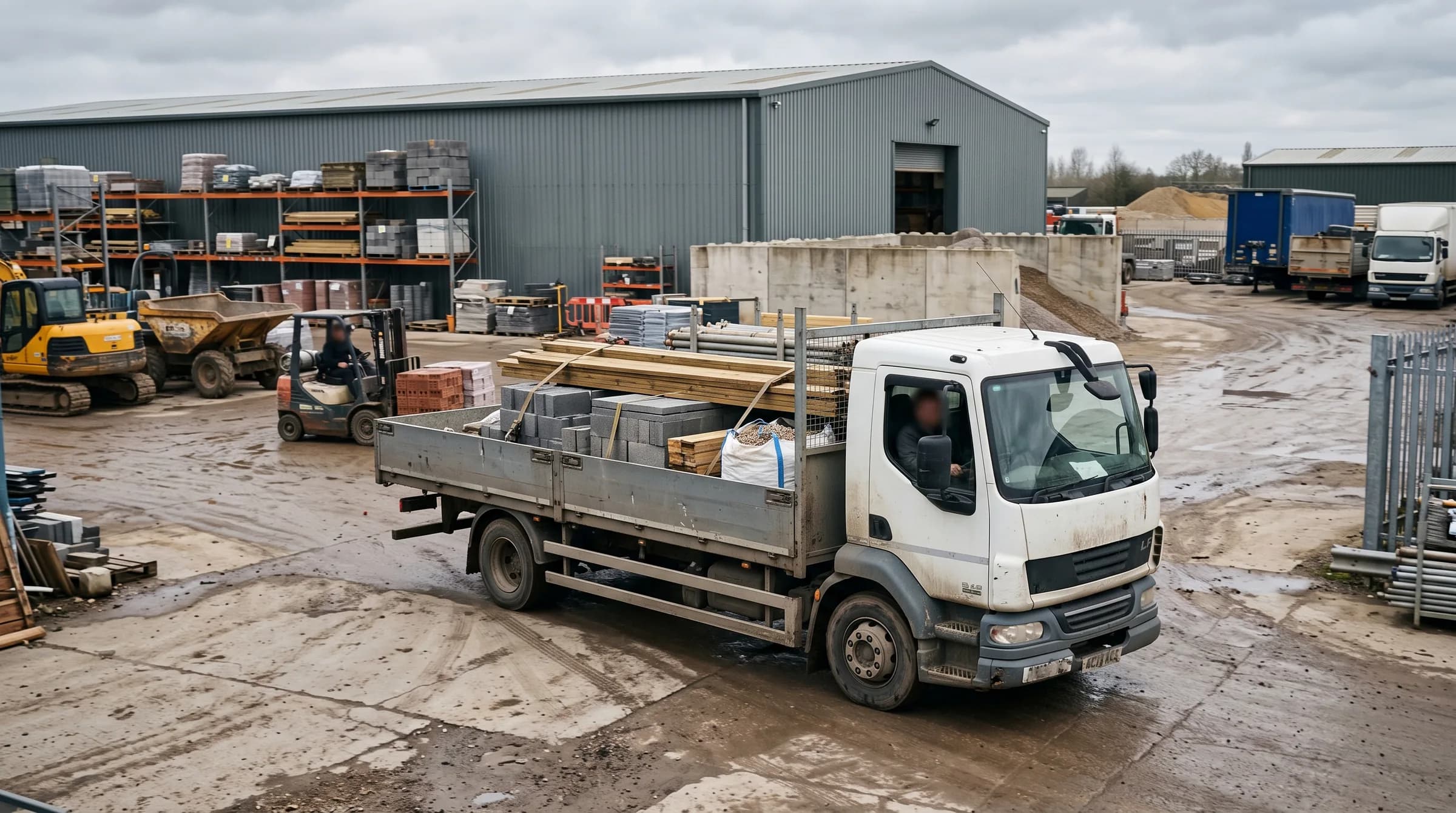
Low mileage, total dependence
These are return-to-base trades. Rigids average 58 km a journey on DfT's road freight survey. Fuel savings scale with distance and capital doesn't, so the premium on a new electric truck has the least to pay it back here. If new TCO never works for them, they reach zero emission through a used market or not at all.
An industry commentator offers the counter-reading himself. Own-account firms set ESG targets outside the transport function, and leasing companies treat them as easy prey, so a couple of electric trucks may be a corporate purchase, new and leased. If they turn out to be early adopters who keep trucks for a decade, they can't also be the second buyer. Which way they go is open, and now askable of a defined population.
A rigid market, doing the lesser job
Rigids are 66% of the GB parc and lift 37% of goods, on DfT's most recent published parc year, 2021. The trades counted above run tippers, skips, refuse and dropsides. So the used market these operators depend on is a rigid market: most of the trucks and most of the operators, moving the minority of the goods. We state that tension rather than settle it.
Rigids at or below 26 tonnes are about 57% of the fleet, and they face the 2035 date for new zero emission sales, not 2040. The two dates tend to get treated as one problem. For these operators they aren't.
Most of the trucks, most of the operators, and the smaller share of the work.
The hump
On section 7's clock, where the lightest rigids took longest, these operators are at the back of the queue. Put to the fleet electrification provider on a follow-up call that most smaller operators may simply pack up before used supply reaches them, he agreed. His route to them is big fleet deals first and trucks flowing down later. The BVRLA's HGV Outlook 2026 found 9% of HGV operators confident in the zero emission business case.
The strongest way this might resolve without intervention (section 3), volume bringing trucks to auction, would price the asset. It wouldn't shorten the queue: diesel had open auctions and price discovery and still took a decade.
So the exit prediction has a population. If the hump loses operators, it loses them from here, and the register counts it every year, so attrition is now monitorable by DfT as easily as by us.
Owner-drivers stay in
That prediction is separate from a scoping choice. After the workshop, the commentator proposed putting owner-drivers out of scope: around eight thousand at most, no service for them in the medium term, so let them carry on in a decent diesel. Nobody adopted it, and this report doesn't. The register has 9,631 single-vehicle Restricted-only operators before a single Standard-licence owner-driver is counted, so the population he'd set aside is larger than his estimate. If a later version narrows scope, it'll say so here and say whose argument it took.
Councils
The used truck dealer's black book, on the commentator's account of the trade, is headed by local councils, alongside jobbing builders, small refrigerated operators and charities. Councils don't appear in the sector figure. They fall in the register's public-authority-and-charity category, which carries no company number, so a Companies House join can't see them. They're missing from the table, not from the population.
Refuse, the segment section 5 named, is a council segment. The most likely buyer of a used electric refuse truck is the one buyer the census can't classify, and nobody has yet asked councils whether they'd buy used, or sell rather than repower.
What it costs if these operators aren't there when the market forms is section 15.
Part 2. The asset
Section 9:What the residual is made of: the battery
In brief
- The battery is the consumable and the chassis the durable asset. On a first-generation truck the chassis carries two or three packs and ends at about 5% of value.
- A state of health percentage tells a buyer nothing they can run a business on. A range guarantee does, and one fleet electrification provider already sells it. One manufacturer insures the battery instead, which protects its customer and tells nobody else anything.
- The technical fear, that the battery dies and takes the value with it, is weaker than it's made out to be. The commercial damage stands, because the fear prices the truck whether or not it's justified.
- The usual worry is hard use. The evidence points at idle time at full charge, and at charging power, where nobody has truck data. Routine megawatt charging on HGV packs is the named research gap.
- Repowering works on the bench and doesn't scale. The limits are labour and service networks, not chemistry.
The battery is the consumable
The fleet electrification provider puts a battery-less chassis at about 5% of the truck's value, as scrap. The intrinsic worth is the pack. A second-life battery business turns that round. On first-generation commercial vehicles the chassis outlasts the pack, so two or three sets of batteries pass through one chassis, and the value event happens at every swap, not once at disposal. Cars run the other way: the pack usually outlasts the car.
That makes the battery the consumable and the chassis the durable asset, the reverse of how a truck is usually valued. It answers the question of whether to treat the battery separately: value it separately. Nobody yet finances it separately, and the provider says it can't.
| Chassis | Battery | |
|---|---|---|
| Life | Outlasts the first pack on first-generation trucks; two or three packs per chassis | Shorter than the chassis on first-generation trucks. A heavy-duty LFP bus pack is warranted to 1.5 million km or 15 years. Unknown for HGV packs under megawatt charging |
| Value at end | About 5%, as scrap | A second-life bid that falls to zero at a threshold (section 10) |
| What decides its value | Body, age, condition: what a diesel residual already prices | Usable range and charge power, how it was charged and stored. None of it visible to a buyer today (section 12) |
| Who holds the risk now | Whoever holds the truck. Nobody prices it separately | The manufacturer, by insurance or inside the residual; the fleet electrification provider, by guarantee. No third party |
Source: follow-up interviews, July and August 2026; desk research.
One tension sits under the table. A battery electrochemist expects the mechanical parts, chassis corrosion, suspension, brakes, to fail before a well-made pack does. If he's right for later generations, the pack stops being the consumable and the swap count falls. Both readings are on the record; the evidence doesn't yet decide.
If the chassis really is 5%, a diesel-derived residual method sets a ceiling and nothing more. Everything above it is a battery valuation dressed as a truck.
Range, not a percentage
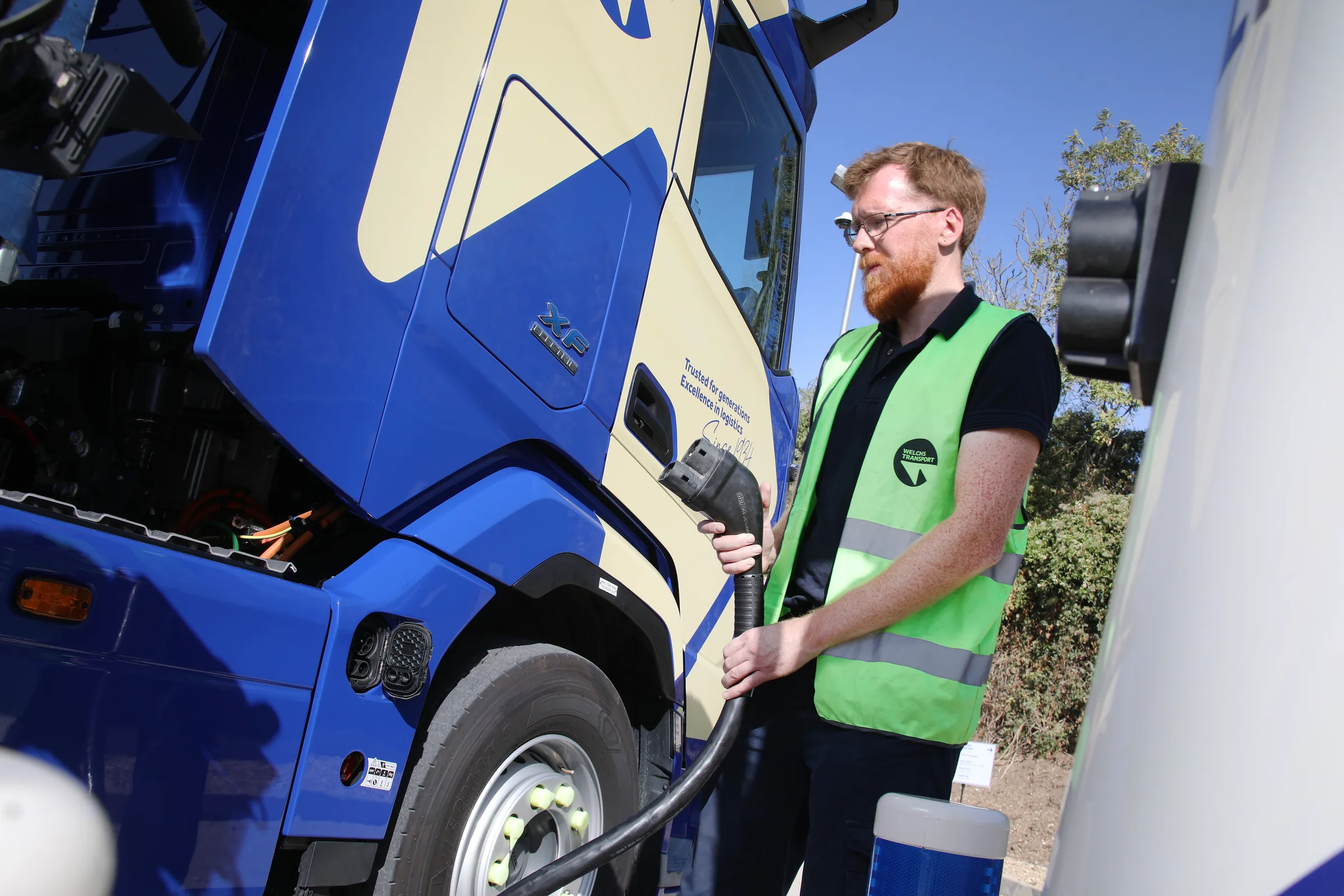
Start with what a buyer actually needs.
A battery certificate that tells me it's eighty percent is meaningless.
A buyer needs to know whether the truck will do 200 miles a day, and for how long. The electrochemist explains why a percentage can't say. State of health has two meanings, capacity and internal resistance. As resistance rises the cell hits its voltage limits sooner, so range falls and charge power gets throttled on a megawatt charger.
The market has three answers. The provider guarantees range (below). One manufacturer publishes a durability claim for its heavy electric tractor, a design life of up to 1.2 million km over ten years with state of health still above 80%, though with no stated measurement standard and on an LFP pack that won't read across to NMC. Another publishes nothing, gives its used customer no figure, and covers the pack under a compulsory repair and maintenance contract instead. Its stated reason is that nobody can honestly say what real-world degradation looks like without road data.
Two manufacturers of comparable standing chose opposite ways, so non-disclosure is a commercial choice, not a technical necessity. The insurance route protects the customer completely. It transfers nothing to a lender or buyer pricing the same truck from outside.
The fear prices the truck anyway
The technical fear, that the battery dies and takes the truck's value with it, is weaker than it's made out to be. The 1.5 million km LFP bus warranty is a warranty, not a projection. Geotab's study of 22,700 vehicles across 21 models found average degradation of 2.3% a year, about 81.6% of capacity after eight years. That is light-duty data. So are the 2016 and 2017 packs the second-life business cites as still running: first-generation car packs, in stationary storage at low charge rates. Nine years of real data, and not truck evidence.
The commercial consequence is untouched. Buyers price what they fear, not what the cell does. A leasing trade body has concluded that talking about battery health itself depresses used demand, though its reassurance rests on cars and vans, and it says plainly nothing is known about HGV packs. Until a buyer can see a truck's battery condition, the fear sets the discount (section 12).
Hard use is the wrong variable
The instinct in finance is that operating history sets the value: a truck run hard is worth less, and a lease should say so in its return conditions. The electrochemist points elsewhere. The worst degradation he sees is in packs sitting at full charge and doing short trips. Lithium-ion does better worked than idle. A return condition written to penalise hard use is pricing the wrong thing.
Charging power is harder. Geotab finds vehicles using DC fast charging above 100 kW for more than 12% of sessions degrading at up to 3.0% a year, against about 1.5% for mainly AC users. It names charging power as the dominant operational variable, and its fleet average rose from 1.8% to 2.3% as fast charging spread. Again, light duty. The electrochemist reasons that a several-hundred-kWh truck pack sees a low charge rate even at megawatt power, so it may have an easier life than assumed. That's reasoning, not data. The provider says nobody knows, and it's one of the questions its customers ask most.
So the sharper question isn't whether fast charging is bad. It's whether megawatt-rate charging as a routine daily pattern on an HGV pack behaves differently from an occasional fast charge. Nobody has the data. The nearest tail dataset, the second-life business's 12.5 million operating hours, is car and bus, with nothing on trucks or megawatt charging. That's a named research ask, and section 17 gives it an owner.
Newer packs, worse packs?
An electric van specialist in the room offered a theory he'd heard at a vehicle test facility: first-generation packs were over-engineered, and manufacturers now trim to the margin for cost, so newer packs may last less well. He flagged it himself as theory with no evidence. It went unchallenged at the time, and the source that can test it is the second-life business, which runs first-generation packs alongside later ones. Geotab offers a competing explanation with better evidence: its rising degradation average is attributed to fast charging, not to build generation. That doesn't disprove it. It's speculative and open, and if true it inverts the assumption that later is better.
Repowering works and doesn't scale
The same specialist makes the case: open the pack, replace the bad cells, recover 85% to 95% for around £20,000 against £100,000 for a new pack. The industry commentator hears operators planning exactly that, a new pack and eight to ten more years on the chassis (section 5). Right order of magnitude for a one-off. The claim that it scales is unevidenced, because three conditions sit on it.
- Technical. The pack has to allow module or cell access, and replacement modules have to be voltage matched to the ones they join, or range doesn't recover.
- Commercial. The only source here that opens packs for a living works at pack level, knows nobody working at cell level, and says module work is viable at hundreds of packs a year and not hundreds of thousands.
- The binding one. Service network capability. The technology exists; the workshops able to do it at volume don't.
Who can see the battery's condition, and who should measure it, is section 12.
Section 10:Second life: real, modest, oversold
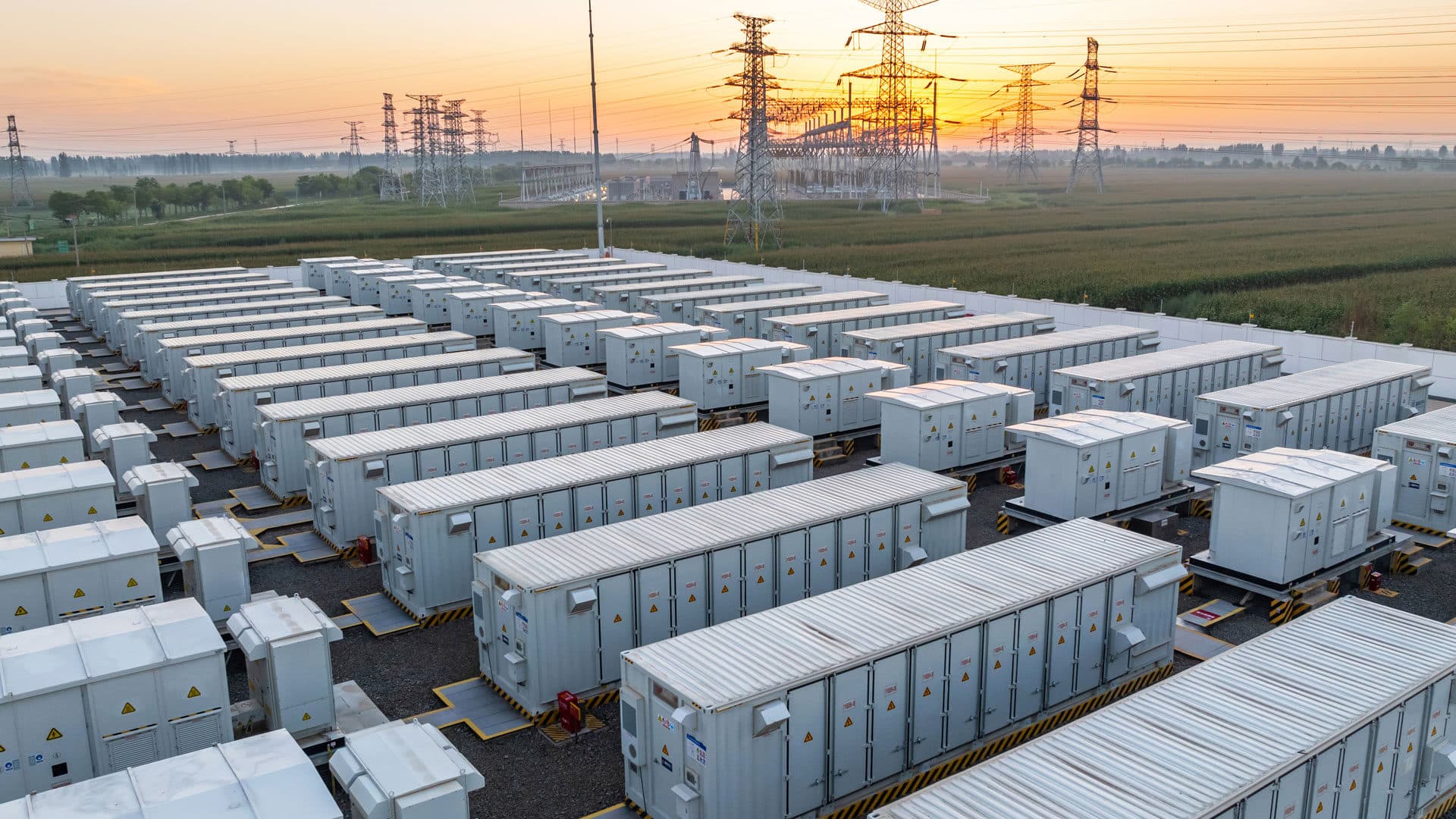
In brief
- The only specific second-life bid on the record is €20 per kWh of usable capacity, from one business, for one bus pack. On a truck that's under €15,000 even at the ceiling. Real, and not a residual value rescue.
- The value doesn't taper. It falls to zero across a single year of state of health, at a threshold set by an investor's hurdle rate rather than by the cell. You can't time a swap you can't see coming.
- Second life is a waste business that sells energy as a byproduct. Cheap new cells don't kill it. They raise the bar a returning pack has to clear.
- The value has to be contracted about two years before the swap, so it enters at purchase or not at all. It can't be picked up at disposal, and it isn't a depot product.
- The only firm with the data to value a returning pack is the firm that buys it.
The bid is real, and it's small
A second-life battery business says storage could absorb large volumes, at first without a number.
The number came later, in writing. It values usable second-life capacity at €20 per kWh in a worked example for a bus fleet, footnoted as illustrative and subject to condition assessment. Against nameplate that's €16. It has integrated no truck pack, expects one to do somewhat better because truck packs are energy dense, and won't put a figure on it.
The one figure anyone here will stand behind, the €20 per kWh bid, is against nameplate roughly a quarter to a third of what a new utility-grade LFP cell cost in early 2026.
One thing needs checking rather than assuming. On that same illustrative curve, value slides from about €33 per kWh at full health to about €20 at 75%, then drops to zero. The headline rate sits at the edge of the drop, not mid-window. Whether it's meant as the pessimistic case is a question for the business that published it.
The cliff
The second-life business spells it out: a pack worth something this year may be worth nothing next year. The zero isn't chemistry. A container carries a fixed cost, and below some state of health the capacity inside it won't earn the investor's return. In the business's illustration, below about 75% the container returns 6% against a 10% hurdle, the project doesn't proceed and the pack is worth nothing. The threshold moves by battery and with energy prices.
A fleet electrification provider describes no cliff. It brings packs back around year seven at about 80% and redeploys them on a power skid for a few more years of earning. Same physics, opposite framing. The provider owns the deployment. The second-life business has to clear someone else's hurdle rate. The gap between what each can pay is the price of not owning the asset.
The consequence is operational. A fleet optimising the vehicle always delays the swap. Put a falling battery value in the sum and the right answer can be to swap this year, because next year it's gone. On the business's own curve, the pack is still worth about 45% of its full-health value at the moment the bid disappears: around 60% of the peak rate per kWh, on a pack that has lost about a quarter of its capacity. That's the strongest operational case in this report for battery data access (section 12).
Waste, not storage
Put to it that cheap new cells make second life pointless, the business didn't argue the price. It said it isn't in the storage business. A bus operator can't put its own retired packs in a cheap imported container. The problem being solved is waste, and the energy is what falls out.
That's half an answer. Cheap cells won't compete second life out of existence, because the two serve different customers, but as alternatives get cheaper the cliff's threshold climbs. A battery electrochemist expects cell prices to rise within a few years, which would ease it; one expert's expectation. Two published studies on whether second-life storage beats new reach opposite answers, and the difference is entirely in what they assume repurposing costs.
A manufacturer's used truck business is cooler. Static storage is still the answer, but very few companies have made a business of it, and on car packs. At two to five electric trucks a year it isn't an operational question. At two to five hundred it is, four or five years out. The desk that would value a returning pack has no line of sight to any second-life buyer.
The durations on record don't agree, and they aren't the same asset, deployment or duty. We don't average them.
| Source | Duration | Deployment | Who carries the asset |
|---|---|---|---|
| A fleet electrification provider, interview | 3 to 4 years | Its own power skids, packs back around year seven | The provider, which owns the deployment |
| A second-life battery business, interview | 6 to 7 years | Grid-scale containers | A third-party investor, at a hurdle rate |
| The same business, published collateral | 5 to 8 years before recycling | Grid-scale containers | As above |
Source: follow-up interviews, 3rd and 4th August 2026; company collateral received 8th August 2026.
On recycling, the electrochemist, the used truck business and the second-life business say the same thing independently: it's a sequence, not a conflict. Second life delays recycling and gives that industry time to mature. The electrochemist adds that recycled-content quotas may pull serviceable packs into early retirement. A leasing trade body raised a sharper version, that circular economy rules could require recycling regardless of the economics.
We've checked the sharper version against the EU Batteries Regulation, and it doesn't hold. The regulation follows the waste hierarchy, which ranks preparing a battery for repurposing above recycling, and Article 73 sets out how a spent vehicle battery is prepared for a second life. Nothing in it requires a serviceable pack to be recycled. The electrochemist's pull is real and weak this decade. Minimum recycled content in new EV batteries starts in August 2031, at 16% for cobalt and 6% for lithium and nickel, rising in 2036, and one study projects manufacturing scrap supplying a large share of that early material rather than retired packs. Great Britain has no equivalent rule.
Contracted two years ahead, or not at all
Grid-scale sites need land, a connection and permitting, and above 10 MW in the UK the connection alone takes around five years. A pack stored in the gap loses its reuse value, so pack and site have to arrive together, and the business wants roughly two years' notice of a swap. Two weeks is too late, even for a pack type it has already integrated.
The consequence gets missed. Second-life value isn't discoverable at disposal. It has to be contracted in advance. A lessor pricing a residual on day one needs a figure at disposal. What exists is an income starting after disposal and running six or seven years, which doesn't price the same way. If the value only exists when it's contracted at purchase, the intervention is a transaction structure, not a valuation method. That's a different ask of DfT, and section 13 takes it up.
It also rules out an idea that keeps coming up. Working at pack level keeps processing costs down (section 9) but costs floor space, which is why second-life sites are rural and grid scale. Second life isn't a depot product, and parking retired packs behind the meter at the yard isn't a plan.
A bus is the right proxy for the cell, not the charging
Whether a bus battery is a fair proxy for a truck's keeps coming up. Every source we asked lands in the same place: model bus chemistry and duty cycle, not bus charging discipline, because freight will never get a bus fleet's ten hours of managed downtime. The second-life business's suggestion that first-life history may not matter to second-life degradation was a conditional, not a result, and hasn't been tested.
The valuer is the buyer
The second-life business sells a battery valuation product to fleets, manufacturers and battery owners: when to repower, and what a new fleet's packs will be worth at the end of first life. Its own material says the valuations run on the same models it uses to price its own procurement.
That's not misconduct. It's the only place the data exists, which is the problem. An operator using that valuation to set a swap date is taking pricing advice from the counterparty, and nothing in the market separates the two. Whether it's been sold to a UK fleet, whether any lessor has accepted one as an input to a residual, and whether anyone other than a second-life buyer can value a returning pack in the UK today, we don't know. That last question is the one section 12 turns on.
The firm with the data to value the pack is the firm that buys it.
A competing claim on the same pack
The truck-as-a-service lessor argues that an operator selling grid services from the battery can accept a lower residual, because value is being taken out another way. Manufacturers block it on warranty, priced on assumed use, because vehicle-to-grid adds cycles outside traction. One manufacturer's published warranty for its heavy electric tractor caps the pack at 1,800 charging cycles, alongside time and distance limits. That turns the objection into a number and a cost share into something negotiable.
It's the only argument on record that end value is one of several ways to earn from the asset, and can be traded away on purpose. Single source, untested with a manufacturer. It also collides with everything above. Every grid cycle lowers the state of health the second-life bid is priced against and moves the pack towards the cliff. Nobody has costed the trade.
Section 11:Grid and swapping, briefly
In brief
- Electric trucks need the grid. At the energy a working truck fleet draws every day, batteries and solar at the depot are a buffer, not a supply. That's our position, and the opposing view is set out below.
- On one manufacturer's own sales counter, the connection date is what kills the used deal.
- A shared hub that holds the connection gets operators round the yard they can't connect. Reform for a few hundred hubs is a policy you could write. Reform for every yard isn't.
- Battery swapping is five against one in this evidence base, and the one has around 30% of China's zero emission heavy truck sales on his side. No European manufacturer has told its customers it's coming.
The connection

Electric trucks need the grid. That isn't a view about how depots ought to be built. It's the energy. On Welch Group's trucks, an artic draws about 190 kWh on an average working day and around 300 on a full trunking day, and a depot running even a handful needs most of a megawatt-hour a day, every day of the year, December included. Solar on a depot roof can match that on a June day. It makes a fifth of it in December, and it makes it in daylight, when the trucks are out. A battery on site moves energy in time; it doesn't make any. Behind the meter, both are ways of using a connection better, not of doing without one.
An electric van specialist in the room takes the other side: a depot can electrify on batteries and solar without the grid, easily, and in ten years we'll wonder why anyone worried about connections. For vans on short local rounds that may well prove right. The numbers above are why we don't think it carries to trucks. TwentyForty's founder goes further: the O-licence register lists about 88,700 operating centres on valid GB licences, and he predicts most won't get an upgraded connection in twenty years. That's a prediction, not a finding. If the specialist is right about trucks, the connection problem shrinks on its own. If we are, the fix is putting connections where trucks can share them, not in every yard.
The evidence since points the same way. The battery electrochemist describes battery-backed chargers that draw a low continuous supply and deliver hundreds of kW on demand, need no civils and can move. A low continuous supply is still a grid supply: they shrink the connection rather than replace it, and he says they're hard to get right and most attempts fail. Element Energy's December 2022 study for T&E found 65% to 75% of GB rigids and 30% to 35% of artics could run on depot charging alone with models available then. That's a finding about vehicles and duty cycles. It assumes the depot can get the power.
A manufacturer's used truck business, with no stake in grid policy, says charging is the first question on every used electric enquiry. Customers assume a depot charger is simple, then the network operator gives them a date years out and the deal dies. A second-life battery business adds the same queue from a different asset: above 10 MW in the UK the wait is around five years, which is why its grid-scale pipeline is in France. Section 15 counts that as a cost.
The hub gets round the yard

A truck-as-a-service lessor is building it: a third party holds the connection and the operator rents access to it as its yard. Its first hub, outside the UK, opened at the end of September 2026, with full capacity due in 2027. It's for operators who can't get meaningful power at their own sites and have no room in their yards. Drivers will leave a car, collect keys from a control room, take a charged truck and bring it back at shift end. Keys are held centrally, so any driver can take any truck. It wants to build the same in the UK.
That changes the ask. Connection reform for nearly 90,000 operating centres isn't going to happen. Connection reform for a few hundred congregation points is a policy someone could actually write. The licensing side is already settled: operators can share an operating centre, and the condition is room for every truck authorised there.
Nobody's connecting 90,000 yards. A few hundred hubs is a policy.
Swapping
The van specialist expects swapping to cross from cars to vans and trucks, after which nobody worries about batteries. Five sources disagree. The industry commentator calls it a red herring that feeds the idea batteries are disposable, and notes drivers stop for 45 minutes anyway. The fleet finance specialist says it's been five years away for five years. The electrochemist is sceptical, because operator benefit depends on commercials nobody can see. The fleet electrification provider says refreshing a pack beats swapping one. The truck-as-a-service lessor buys from European manufacturers and none has told it swapping is on a roadmap.
The objection has moved from technical to commercial, which makes it stronger. But the specialist isn't on his own. ICCT puts swap-capable trucks at around 30% of Chinese zero emission heavy truck sales in 2025, mostly tractors and dump trucks, alongside 136,000 dedicated heavy-vehicle chargers above 240 kW. That isn't a red herring, and the dismissal doesn't go in unqualified. For the UK, on the evidence here, depot and hub charging is the default, and swapping is something to watch in China rather than plan for.
Part 3. The levers
Section 12:Data: the disclosure problem, not the standards problem
In brief
- The battery data exists and is collected. It's withheld from third parties and, at one manufacturer, from its own paying customer. Two motives are on the record: comparison and liability.
- The disclosure right already exists. Article 14 of the EU Batteries Regulation gives whoever bought a battery read access to its state of health, and residual value is the first purpose its recitals name. Northern Ireland has it. Great Britain doesn't.
- Heavy truck battery standards aren't years away. GTR 25 was adopted in November 2025 and the UK voted for it.
- A figure read off the battery management system isn't enough. Any standard has to measure at rest and under load.
- What a buyer needs to know is a short list nobody claims is proprietary. It has to be measured by someone independent, because today the only valuer is the buyer.
The data exists
Getting at the data isn't the hard part. A fleet electrification provider that has negotiated for it says physical access is trivial: plug into the CAN bus and it's there. The block is legal. Manufacturers claim it as intellectual property and won't grant an API or permission. Its account of the motive is that published degradation rates would be comparative and would expose the slower performers. Its workaround is fitting its own telematics.
A truck-as-a-service lessor asks a manufacturer for voltage, current and state of health at useful fidelity and doesn't get it. That manufacturer is building a telematics API it says will be open to any party. It isn't live, the lessor hasn't been given access, and nobody has seen what comes out of it.
One manufacturer's used truck business monitors pack condition on every electric truck it puts out, through its service network, under the compulsory maintenance contract. The used customer gets none of it (section 9). Asked why, it gave caution about real-world degradation, not confidentiality. So the withholding runs from manufacturer to its own paying customer, and the reason given is liability, not intellectual property.
The exception proves the rule. The second-life battery business gets everything it needs, through its own manufacturer relationships. Asked whether it would back a disclosure mandate, it said it doesn't have the problem.
Neither motive covers the case that matters most. Telling a lessee the condition of the pack it's paying for isn't comparative and isn't anyone's intellectual property. What's left is that a published number is a number you can be held to. That's a liability problem, and liability problems are solved by agreeing how something is measured and to what tolerance.
The manufacturer measures the pack and doesn't tell the customer paying for it.
The right exists, in Belfast
Article 14 of Regulation (EU) 2023/1542 has applied since 18th August 2024. It requires state of health and expected lifetime data to be held in the battery management system, and read-only access to it, on a non-discriminatory basis, for the person who legally bought the battery or anyone acting for them. Its recitals name the purposes, and the first is evaluating the battery's residual value. Traction batteries in category N vehicles are in scope, so trucks are covered.
Northern Ireland has it through the Windsor Framework. Great Britain doesn't. Defra committed on 8th July 2026 to consult in the autumn on a GB regime aligned with the EU regulation. As at 14th October we found no sign it had launched.
In Belfast the buyer can read the battery. In Birmingham they can't.
So the near-term ask isn't a new disclosure standard to be invented and piloted. It's alignment with a provision that has been in force for two years, already applies in part of the UK, and was written for this purpose. The consultation has to cover the Article 14 access right, not only the battery passport.
The limits matter. Access is granted "respecting the intellectual property rights of the battery manufacturer", which is the hedge a manufacturer will lean on, and there's no published enforcement record showing how far it stretches. The claim is that the right exists, names residual value, and GB lacks it. Not that it has solved the problem in the EU. It does take the edge off the liability defence. A manufacturer selling in the EU already has to expose these figures to the purchaser there.
The passport, mandatory in the EU from February 2027, is weaker for lessors than it looks. Individual battery data goes to persons with a legitimate interest, framed around repair, second life and recycling, and an asset financier isn't obviously on the list. The act defining it missed its August 2026 deadline and is now expected around the end of the year, so the argument is still open. As drafted, a second-life buyer could get access a lessor doesn't (section 10). Euro 7 standardises how the figure is recorded, which makes Article 14 data comparable between manufacturers, but needs the truck in front of you.
| What it gives | European Union | Northern Ireland | Great Britain | Gap for a lessor | |
|---|---|---|---|---|---|
| Article 14, Batteries Regulation | Read access to state of health and expected lifetime, for the purchaser or anyone acting for them; residual value named as a purpose | In force since August 2024 | In force, through the Windsor Framework | None. Consultation on an aligned regime promised for autumn 2026; not launched as at 14th October | Intellectual property carve-out, untested in enforcement |
| Battery passport | State of health on an individual battery, restricted to persons with a legitimate interest | Mandatory from February 2027; access rules overdue | Follows the EU | None | Legitimate interest framed around repair, second life and recycling, not finance |
| Euro 7 and GTR 25 | A standard method for recording state of health, readable via OBD or on screen | Euro 7 carries GTR 25 | Euro 7 applies, through the Windsor Framework | Euro 7 consulted on April to May 2026; GTR 25 adopted at UNECE November 2025, GB transposition not started | Needs the vehicle present; no remote access |
Source: Regulation (EU) 2023/1542; Regulation (EU) 2024/1257; UNECE registry; Northern Ireland Assembly research, 2026; interviews, August 2026.
The heavy truck standard already exists
GTR 22, which gets cited as the fix, covers cars and vans. The heavy truck instrument is GTR 25, on in-vehicle battery durability for heavy-duty electric vehicles. It was adopted at UNECE on 12th November 2025 and entered the UN registry on 5th February 2026, and an amendment is already in train. It was drafted with refuse trucks and concrete mixers in mind, whose bodies draw on the pack when the truck isn't moving: the segment section 8 marks as the one to watch.
The UK voted for it. Under the 1998 Agreement, a party voting in favour is obliged to start domestic adoption. Two questions are open. When GB transposes it, which is DfT's to answer. And whether the electrochemist's objection to fixed state of health algorithms, that standardising one locks out better ones developed later, applies to GTR 25 as it does to the light-duty rule. The electrochemist is the person to answer it.
Reading isn't measuring
The electrochemist describes packs that eat into a hidden buffer to keep usable capacity looking flat, then fall away fast when it runs out. An honest pack shrinks slowly from the start. The regulator recognises the practice. JRC work behind the EU durability rules found 34% of stationary storage products surveyed were designed with capacity reserves, and the stated worry is that oversizing lets a battery pass minimum requirements it would otherwise fail. That's stationary storage, not vehicles, so it isn't direct evidence for trucks. The practice is real and the rule writers are worried about it.
The market has noticed. In Sweden, DEKRA sells a state of health test that measures at rest and under load without relying on the manufacturer's algorithm. The leasing trade body looked at standardising certificate providers and concluded it couldn't be done, and that a certificate reading the vehicle's own system isn't worth much. It also says DfT ran its own study of reported against actual battery state across makes and models, found wide variation, and never published it. That's one source, and we haven't confirmed the study exists. If it does, DfT holds evidence for this section, and the ask is simple: publish it or explain why not.
Certification is becoming routine in European used car markets, Scandinavia included. Sweden's used car declarations now require battery health on used EVs, and Arval certifies on resale across eight countries.
What a buyer needs to know
A risk and insurance adviser makes the point: if buyers, lenders and lessors agreed what they need to know about a battery, none of it would be proprietary. Three sources at three points in the transaction have answered it.
- What a second-life buyer needs: the communication protocol, the ability to command charge and discharge at a given power, safety signals, error codes and health status. Not how the battery works or how its control strategy is built. The business says none of it is sensitive, and these are packs designed ten years ago.
- What a lessor asks for: voltage, current and state of health, at useful fidelity.
- What explains the rate of degradation: distance, terrain, the state of charge window the pack runs in, and the charge and discharge rate.
- How it's taken: measured at rest and under load, not read from the battery management system's own figure.
It's what a disclosure standard would contain and what an accreditation body would test against.
Who measures
An industry commentator is exploring, with the leasing trade body, a Euro NCAP-style not-for-profit body for truck battery performance, funded because manufacturers, lessors, insurers and operators all need the same information. He's clear it's long-term market development, not a way to price a truck today. The fleet electrification provider names the obstacle: a body like that publishes comparisons by design, which is why manufacturers withhold the data. Euro NCAP gets round it by testing vehicles it has bought. Car-side, CARA accredits independent battery evaluation providers, and Arval has issued more than 8,300 certificates across 30 brands on that basis.
It can't be left to the market, because the only valuer today is the buyer (section 10). An independent body measuring to an agreed specification stops the first mover in second life setting the price for every returning pack in the country.
So the order is: GB aligns with Article 14 as the legal floor; industry agrees the specification as a measured standard; an accredited body tests against it. A compelled mandate beyond Article 14 stays in reserve until the manufacturer's open API ships and someone has looked at what it gives. Section 17 assigns them.
None of this prices a truck on its own (section 4). It makes the first realised sale legible when it happens.
Section 13:Instruments on two axes
In brief
- Every instrument on the table has been graded on one question: who can afford to hold the residual. On that axis the manufacturer captives win and will keep winning while volumes are low.
- Graded on a second question, how many realised values and battery figures an instrument forces into the open, the ranking turns over. Captive retention and closed buybacks score zero.
- The lead recommendation is matching and aggregation, carried by a structured long lease. Three parties designed, write and buy versions of it. We recommend it. No mainstream lender has tested it. Scotland's truck fund, which only pays consortia with a private financier in them, is where it gets tested.
- As proposed, the guarantee is a cost instrument, and on cost the record favours the sceptic. The version we'd back is a discovery instrument: small, time-limited, exercised often, every exercised value published. That design is ours, and it isn't costed.
- Public capital behind a captive's residual should be conditional on the truck leaving at a disclosed value, with battery data attached. The one captive asked to do that voluntarily refused.
Two questions, not one
Every position in the evidence base grades an instrument on cost or risk-bearing. On that test the captives win: they hold the risk on a balance sheet whose job is selling trucks, and section 5 showed all three doing it. That's why every alternative kept getting demoted.
The problem in section 4 isn't that nobody can carry the risk. It's that nobody knows the number. So grade the same instruments on what they put on the record: realised sale values and battery condition figures, per year of operation. On that test captive retention and closed buybacks score zero, by design in one case, where the manufacturer states that keeping its trucks out of open-market price formation is a purpose. A structured lease scores at each exit. A guarantee scores every time it's exercised.
That's our position, not a source's. It reorganises everything below.
Residual value instruments, risk-bearing against information yield
Source: interviews and written exchange, July and August 2026. What it doesn't show: cost, or whether any instrument has been tried in the UK truck market. The second table covers that.
The captive pattern, everywhere it's been tried
The guarantees that last are the ones the guarantor owns. Rover launched a residual guarantee on the 75 in late 1999. Contract hire companies called it unworkable, it was cut back, and it was scrapped within months. Daewoo guaranteed auction prices in 1998 and excluded leasing and contract hire companies altogether. Both were manufacturer sales promotions, and neither survived. The form that persists is captive. A peer-reviewed study of 23 years of US heavy equipment data found that fully captive-financed models depreciate 14% more slowly than bank-financed ones, in concentrated industries where manufacturers hold market power, which fits the UK truck market.
The only government-backed truck residual programme we found ends up in the same place. It's set out as a case study below. The public material doesn't say whether the manufacturer's finance company was chosen by design or because it was the one party with trucks to put in it.
So the fleet electrification provider's objection, that a guarantee designed by someone whose money isn't at stake has nothing holding it up, is what the record shows.
The guarantee, demoted and reinstated
The structural fix most often proposed is a public residual value guarantee: a strike price on a contract-for-difference model, smoothing risk for lenders and breaking the circularity by targeting one market. A participant at the workshop put it forward and nobody challenged it at the time. The Green Finance Institute and Drive to Zero project around 11% off monthly lease costs, about £6,000 a year on a UK heavy truck. That's advocacy modelling, not independent evidence.
There's a simpler test of the cost case. A manufacturer's captive told us in writing that public residual support would work by raising the residual it writes, with the saving passed to the customer as a lower rental. Where a captive already writes the residual the sale needs (section 4), its own customers already get that saving without public money. On cost, a guarantee adds something only outside the captive: for third-party lenders, and for operators who don't buy on the manufacturer's paper.
The sharpest objection came from inside. Afterwards, the same participant who proposed it said that if the battery data arrives next year or the year after, a scheme stood up in the meantime may land after the gap it was meant to fill. Every other objection asks whether the instrument works. This one grants that it works and says it may arrive late.
On the second axis that objection turns over. A scheme that lands after the data is a failed cost instrument and a working discovery instrument, because exercising it is how realised values reach the record. California's air regulator asked the market in January 2025 about a used truck voucher pilot, explicitly to build a secondary market and generate residual value data, and says it's evaluating guarantee programmes. Its stated purpose is price discovery, not cost.
As proposed, it's a cost instrument. Its advocates lead with the lease saving, and its designer's own description, above, is of an instrument built for exercise to be rare.
The version we'd support is a different instrument, and it's ours. Public, small, time-limited, built to be exercised often, with every exercised value published and the battery condition attached. It buys realised values, not lower lease costs, so it's still worth having if the data arrives first. We haven't costed it.
Two accounts of the cost of funds
The guarantee's designer reports that the captives tell him their cost of funds is high and a guarantee could bring it down. A manufacturer's captive says, in writing, that residuals have no bearing on its cost of funds, and that public support would work through the residual it writes, as above.
Different captives, treasury against sales inside one, or different things described: we haven't reconciled them or put one to the other. The written account comes from the party that would operate the instrument.
The condition on public capital
The obvious UK version of the Australian deal is the National Wealth Fund putting capital behind residual positions the captives already write. Unconditioned, that fails on this report's own logic. It strengthens the manufacturers' capacity to retain, and retention is what keeps the number hidden. The Fund's own additionality test should refuse it.
The conditioned version survives. Public capital behind a captive residual only where the truck exits to a third party at a disclosed value, with battery data to the Article 14 standard attached (section 12). That moves the battery risk. One manufacturer keeps used trucks inside a maintenance contract to spare its customer a pack replacement, and a truck that exits leaves that cover behind. The battery data is what lets the second owner price the risk it's taking on. That's the point of the condition, not a side effect. Asked whether it would make its residual position visible to a third-party lender, a manufacturer's captive said no, on commercial sensitivity. So the condition can't be voluntary. The state doesn't buy the risk. It buys the market's formation.
A guarantee nobody exercises tells nobody anything.
The lead recommendation, and where it gets tested
Section 5 found the problem underneath the residual: nobody can name the operator in years six to ten. A bank-owned lender in the room arrived at the same place from the other side: credit risk on one customer over ten years is what stops it. That's a matching problem, and matching problems are solved by aggregation, not by guarantees.
The instrument under it is a structured long lease. The industry commentator designed one: ten to fifteen years depreciating to zero, with stopping-off points, say at year five, where the paperwork passes to a second operator and the same product continues. The curve steps down hard at year five and flattens, because affordability is what makes a used truck attractive. If a secondary market forms, it forms from operators buying themselves out. The provider writes close to it and the truck-as-a-service lessor buys it (section 5). The lessor reports that the constraint is customers committing to the term, not lender appetite. UK research on van leasing finds return and swap options priced into lease contracts cut risk-adjusted cost by about 12%.
Term isn't the obstacle. In 2010 a contract hire company wrote a ten-year lease on an electric 10-tonner for a single customer, reported at the time as one of the first electric HGV leases in the UK. One customer held it for the whole term. What nobody has written is the hand-on.
Two conditions travel with it. The provider writes it on scale and control of the charging, which the commentator's version has to do without. And it needs a book behind it, which most of the UK market can't assemble.
We put the bare version in writing to bank-owned, specialist and contract hire lessors in October: a ten-year lease on one electric truck, passing to a second operator around year five. None engaged. That isn't a no, and we don't read it as one. Section 5 already says what the answer on one truck would be.
It does settle who can run the test, and it isn't us. A lender answering a research body's hypothetical was always a long shot. A lender inside a deal is a different matter. Transport Scotland's truck fund, below, pays only consortia with a private financier and at least four operators in them: aggregation with a lender inside it, on real trucks, from 2027/28. We recommend it now, and say plainly that no lender has tested it. If one says no at book scale, section 18 sets out what changes.
Nobody can name the operator in years six to ten.
Building the book
Three instruments act on the aggregation problem directly.
The first is a publicly seeded leasing vehicle, designed by the guarantee designer's organisation alongside the guarantee: public equity into a special purpose vehicle leasing electric trucks to a defined customer base, the public tranche lowering the blended return so it can serve SMEs. It's the only proposal here that acts on the constraint rather than the residual number. It's also single source, unfinished and unseen by us, and we don't lead on it until we've seen the capital stack and the customer definition.
The second is a demand signal, and the designer says demand is what binds: buy a block of trucks and you need them on the road fast. His route is a large shipper saying it wants a route electrified. Ours starts from the other end, with pallet networks and transport associations turning fifty operators with five trucks each into something a financier will look at. Both run into the same circularity, and the shipper interest reported to us is interest, not commitment. It needs one shipper willing to say a route and a number.
The third is already funded, in Scotland. Transport Scotland's Zero Emission Truck Fund, reviewed by the Subsidy Advice Unit on 29th September 2026, puts up to £240 million over five years into trucks and charging, with the first round from 2027/28. It pays only consortia that include a private financier and at least four operators, tapers the vehicle grant after a fleet's first ten trucks, and names one purpose as getting financiers the data to price risk sooner than they otherwise would. That's aggregation and information yield written into a public scheme.
The test on the second axis is who sees the data. The SAU notes that financiers inside a winning consortium gain an edge from information competitors don't have. If what they learn stays in the consortium, the fund buys private information, not a public price. That's a condition to write in before the first round, and section 17 asks for it.
Instruments that only discover
Two cheap instruments carry no risk at all and exist only to put numbers on the record.
The leasing trade body proposes asking the sector's second-hand-only buyers, early, what they'd pay for an electric truck at year eight. A stated forward price gives whoever writes the residual something to price against, and section 8 has counted the population to ask.
A quarterly census of used channels, counting electric trucks offered against the registered cohort of that age, would show whether any are reaching the market. An empty catalogue at a manufacturer that doesn't sell used electric is an explained absence, and a thin one at a captive that auctions only dealer rejects may be selection.
| Instrument | Who has it, or proposes it | Tested with | Not tested with |
|---|---|---|---|
| Captive retention, three forms | All three manufacturers interviewed | Their own customers | Any third-party lender; volume (section 6) |
| Public capital inside a captive | Australia, one manufacturer | One market, tied to local production | How it's priced or triggered; any UK party |
| Third-party or public guarantee | A participant in the room; a green finance body | Published modelling; failed twice in UK cars as a sales promotion | Any UK truck deal; a discovery version at any scale |
| Structured long lease | Industry commentator designs; fleet electrification provider writes; truck-as-a-service lessor buys | Two independent operators of it; a written question to mainstream lessors, no engagement | A lessor across a book, with an aggregator holding the second operator |
| Seeded leasing SPV | A green finance body | Its designer's unfinished model | Anyone outside its designer; the model itself |
| Shipper demand signal | A green finance body; TwentyForty | Reported interest | A named shipper and a number |
| Consortium grant: a financier and four operators | Transport Scotland, from 2027/28 | Subsidy Advice Unit review, September 2026 | Any funding round; whether the data leaves the consortium |
| Forward willingness-to-pay | A leasing trade body | Nobody | The buyers it would ask |
| Used-channel census | TwentyForty | Nobody | Not started |
Source: interviews and written exchange, July and August 2026; desk research; Subsidy Advice Unit, 29th September 2026.
The right-hand column is the gap. Plenty has been designed. Almost nothing has been put to the party who'd have to act. Section 17 names them.
Section 14:Grant, regulation, and the fork
In brief
- OZEV's own subsidy assessment says the truck grant may push down nearly new residuals, and claims a well-stocked used market as a benefit in the same document. The Subsidy Advice Unit asked it to show how it weighed the two.
- When the grant caps stepped down on 1st April 2026, the three manufacturers gave three different accounts of what happened to values. We keep all three.
- OZEV found no market failure in finance availability. Six months later Transport Scotland told the same review unit the opposite. Both are half right. Finance is available; finance against a residual isn't.
- Opinion splits three ways on regulation against cost, and the split stands.
- The question of whether industry should tell government it doesn't need the grant went unanswered on the day. We answer it: not in those words. The vehicle grant is the wrong instrument, not the money. Spend it where it creates value that lasts.
The department wrote it down first
A manufacturer's used truck business raised it unprompted, as a problem. Because a used electric truck is priced from the new price and nothing else, a grant that cuts the new price pulls the used price down with it, to keep the gap that makes buying used worthwhile. It didn't put a number on it.
OZEV had written the same mechanism down four months earlier. The Zero Emission Truck Grant was referred to the Subsidy Advice Unit, the part of the CMA that checks subsidy control, which reported on 24th March 2026. In OZEV's own assessment of its own scheme, under negative impacts, it says residual values of nearly new zero emission commercial vehicles may fall in response to the lower new prices the scheme brings about. Under distortions, it says leasing companies may be hit by sharper depreciation, that the used HGV market is currently very small, and that used values will be monitored. Among the benefits, in the same document, it lists supporting a well-stocked used market.
The scheme both builds the used market and depresses used residuals, and the document doesn't reconcile the two. The SAU noticed. It told OZEV to show how it weighed the positive effects against the negative ones, and to substantiate key statements with evidence. The regulator has already asked the question this report asks.
The scheme runs from 1st April 2026 to 31st March 2030, £877 million, around 19,000 zero emission HGVs and 270,000 vans.
The natural experiment
The caps stepped down on 1st April 2026, by 25% to 38% across the bands. An articulated truck went from £120,000 to £81,000. If the used price tracks the grant-adjusted new price, that date should show in the market. We asked all three manufacturers.
| Who | Answer | What it rests on |
|---|---|---|
| A used truck business | Used prices track the grant-adjusted new price | Its own used pricing, which keys off the new price |
| A residual value team | No used book to watch it through; favours a grant held stable over several years | Saw a short buying rush on the January uplift, then a return to normal |
| A captive | No bearing. Its assumption didn't move | A residual formula keyed to capital cost |
Source: interviews and written exchange with three manufacturers, August 2026. The captive's account is written and paraphrased.
A leasing trade body adds the car market's sequence, from the organisation that sourced the 60% car figure: grant withdrawal pulled used values towards parity with new, the used market failed, and lease rates rose. That's sequence evidence, not method evidence.
Don't read the captive's answer as refuting the used truck business's. If the captive's formula keys off capital cost and the grant doesn't move it, the capital cost in the formula is the gross price, not what the customer pays. Its residual then wouldn't move with the grant while the realisable used price, on the used truck business's account and on OZEV's, does. That isn't the mechanism failing. It's the assumption and the market moving apart, which is the overshoot in section 6 seen from inside. We haven't confirmed gross against net with the captive, so this is a reading and not a finding.
No market failure in finance
OZEV considered a loan and leasing instrument and turned it down. One reason was administration cost. The other, at 2.13(b) of the SAU's report, was "the assessed lack of market failure in the area of finance availability".
It's the most attackable sentence government has published on this subject. Six vantage points in section 4 say otherwise, and section 13 shows why: nobody can name the payer in years six to ten, so the only residuals written are captive. Finance is available. Finance against a residual isn't, and the risk has moved onto the operator's balance sheet, where the operators in section 8 are least able to carry it.
Another public body has since said as much. On 29th September 2026 the same unit reported on Transport Scotland's Zero Emission Truck Fund. Transport Scotland's assessment says finance for zero emission HGVs is hard to get because lenders lack the data on depreciation, residual values and secondary markets to price the risk, that many mainstream financiers don't offer it, and that those who do charge more. The SAU found its market failures clearly described and evidenced. Two assessments of the same market, six months apart, reviewed by the same unit, reach opposite conclusions on finance. OZEV's is the one that needs substantiating.
Regulation or cost
There are three positions on what moves the industry, and none has shifted.
DfT's HGV CO2 consultation put four options: do nothing, a stronger CO2 standard, a manufacturer zero emission mandate backed by a CO2 standard, and mandates on large fleets to raise their share of zero emission trucks. The specialist's position is one of government's own options. Industry responses broadly favoured manufacturer standards over fleet mandates. As at 14th October 2026 no response has been published (section 7).
The used truck business put the manufacturer's case on our call, and it lands on the specialist's side: manufacturers carry the legislative pressure and the product spend for 2035 and 2040, while operators face none and arrive demanding price parity with diesel. That's advocacy, from someone who sells trucks. It also sits awkwardly with industry's formal preference for manufacturer standards over fleet mandates. Either the manufacturers' public and private positions differ, or one voice is speaking for itself. We haven't established which, and we don't characterise the manufacturers' position until we have.
Two arguments, not one
A fleet finance specialist in the room made two arguments about the grant that get heard as one.
The first backs abolition: subsidy that never ends signals a market that can't stand on its own. The second is about administration: three-month grant windows destroy certainty, and funders have pulled lines when grant conditions were missed. A manufacturer's residual value team makes the same certainty case: stable for years, not switched on for a month.
The used truck business's mechanism separates them. If the used price tracks the grant-adjusted new price, a stable, well-run grant depresses used values as reliably as a stop-start one, for as long as it runs. So grant certainty is a fair ask about how any scheme is administered. It doesn't answer whether the grant should exist.
Who a lower used price hurts
A cheaper used truck is good news for whoever buys it. If the grant pulls used values down, the second buyer, the Restricted-only operator in section 8, pays less. That's the case for the grant as it stands, and it's half right.
The loss lands first, and on someone else. A residual that moves whenever grant policy moves can't be written with any confidence, so the party holding it at first exit either won't write one (section 4) or prices the risk into the rental. The first buyer pays for it in the lease or carries it on its own balance sheet, and fewer trucks are bought new. The second buyer's saving only exists if first buyers bought, because that's where the used market comes from. On the evidence in sections 4 and 5, what binds is whether the residual can be financed at first exit, not whether the truck is affordable at second.
The fork
In the closing session a risk and insurance adviser put a question to participants arguing against truck subsidy: does industry want to tell government it doesn't need funding because a sustainable model exists? Nobody answered. This is mine, offered as a position and open to reply.
Two objections stand next to it, and neither is refuted by it. The fleet finance specialist's: instability, not existence, is the certainty problem, the case a manufacturer's residual value team also makes (above). And the guarantee's designer: grant and guarantee work as a blend, he has never positioned the guarantee as a replacement, and people like having the grant. His organisation isn't an ally on abolition, and we don't imply it is. Both objections are the reason this is a position and not a finding.
The mechanism also hands the guarantee an argument its advocates haven't used. A grant pushes the new price down and drags the used price with it. A guarantee sets a floor under the used price. They act on the residual in opposite directions, so they aren't substitutes. That's a better argument than the fiscal one the guarantee's advocates lead with, but it only holds for a guarantee built to discover prices. Section 13 sets out that version, and section 17 rules out the other.
The grant cuts the one price the used market needs.
What the department can do now, at no cost: publish the used-value monitoring OZEV committed to. Section 17 puts it on the list.
Part 4. What it costs and what to do
Section 15:The cost of inaction, without a number
In brief
- Nobody has costed standing still, us included, and we won't invent a figure. The evidence shows who pays and on what clock.
- The operators who pay first are counted, and sit about a decade behind on the diesel clock. If they leave, the used market loses the buyers it's meant for. That's now monitorable.
- Export is assumed to hold up diesel values. Three accounts point three ways for diesel, and none describes a route for electric.
- Chinese manufacturers are entering with service networks and buybacks, not demonstrations, and they act on the list price every forward residual is anchored to.
9%
of HGV operators confident in the zero emission business case
25%
of Chinese medium and heavy vehicle sales zero emission in 2025, about 457,000 units, nearly double 2024
2.7%
zero emission share of EU heavy truck sales, Q4 2025
0
of three manufacturers describes a working export route for used electric
Source: BVRLA HGV Outlook 2026; ICCT 2025 market reports; follow-up interviews, August 2026.
Nobody has costed not moving. The parts a cost would be built from are on the record.
Who pays first
Section 8 counts the operators who pay first, and section 7 sets their clock. A cascade needs a buyer at the bottom. If the hump loses them, the used electric market forms with nobody to sell to, and every structure assuming a second owner is wrong in the same direction. That's a prediction, and section 18 sets its test.
No floor under diesel either
Export is treated as the floor under diesel. Two voices at the workshop warned the other way: one that diesel residuals could end up worth nothing, the risk and insurance adviser that financiers would be left holding the old stock. Neither was developed. The follow-up calls produced three mechanisms, each single-source:
- The fleet electrification provider reports approaches from India and parts of Africa about electrifying. If they leapfrog, the diesel export window closes early.
- A manufacturer's used truck business says its right-hand-drive stock never went to Africa. It goes to the Far East, where it reports talk of import quotas favouring electric. Conversations, not transactions.
- TwentyForty's founder has seen buyers for Euro 6 trucks downgraded for African markets that want something they can fix. It's a trade, not an anecdote: a manufacturer has sold factory conversions of its Euro 6 tractor to Euro 3 for Africa and the Middle East since 2020, and a UK export dealer describes the same downgrade in trade press. It keeps the window open.
Manheim credited export for the old diesel tail's strength at auction in 2022. For electric, none of the three manufacturers describes a route. If the diesel valve narrows first, small operators hold trucks with no exit in either fuel. If it holds, cheap old diesel competes with used electric for the same small buyer. Waiting helps neither branch.
The entrants aren't demonstrating
ICCT puts zero emission at 25% of Chinese medium and heavy vehicle sales in 2025, against 2.7% for EU heavy trucks in Q4 2025. The gap is wider than it was put in the room.
Entry is dated. Windrose has a UK establishment and was advertising its tractor from £139,000 after grant in June 2026, standard delivery Q4, with no named UK order in trade press. SANY tractors have run in Germany since spring 2026, and at IAA in September it showed a five-model European range including rigids and an 8x4 construction chassis, serviced through Alltrucks' independent multi-brand workshops. Alltrucks has had UK workshops since 2023. Whether SANY's arrangement covers them we haven't established.
The service partnership is the tell: that's market entry infrastructure. The provider is calmer on timing. The first product doesn't suit the UK, the next will be closer, and as in cars, cost eventually beats brand loyalty. TwentyForty's founder predicted in the room that unsubsidised Chinese trucks would match subsidised European ones within five years. It's unsourced, and the first UK entrant prices after grant, so it stays a prediction.
One voice in the room asked whether it matters who decarbonises the sector; another said government would say it does, for jobs and GDP. That's industrial policy, and outside this report.
What it does to the number
The residual isn't outside it. Section 4 found the used electric truck priced off the new price, and one captive's formula moving with list price. An entrant cutting the price of a new tractor acts on the only anchor the market has. With realised values on record, that's a repricing. Without them it's the whole signal, and every book moves at once (section 6).
Cheaper new trucks are good news for the next buyer and bad news for whoever owns the last one.
Entry doesn't produce realised values either. Windrose sells with a published 20% guaranteed buyback, section 5's retention instrument used as a headline. What an entrant might add is servicing outside the dealer. One manufacturer leases its used electric trucks with compulsory full repair and maintenance. An independent workshop is what a second owner needs.
The last cost is at the end of the pack's life. The second-life business builds its grid-scale storage in France (section 11), so section 10's domestic bid for a spent truck pack is being built somewhere else.
None of that is a figure. It's a cost that falls first on the smallest operators and on anyone holding a book anchored to list price, and it lands before the market has a single realised value to meet it with.
Section 16:What it adds up to
Section 2's chain runs from a new sale to a used truck in a small operator's yard, and each link needs a price from the next. For electric, the evidence finds it broken at one point, and most of what follows comes from that break.
The break is the realised value. Every desk's method needs a sold truck, and every arrangement that works keeps the truck from being sold. The manufacturers price off diesel, a formula or the new lease, and say themselves that their figures have no history behind them (section 4). Their answer is to keep the truck, and each is right to (section 5). Together that means no price is ever produced, so the uncertainty has nothing to resolve it. Whether that holds as volumes grow is open. If it gives way, the first trucks at auction are the ones dealers couldn't place, and the first prices are the wrong ones (section 6).
That matters because government's route to small operators is the cascade, and the cascade ran on resale prices (section 7). Diesel took about a decade with every precondition in place. The operators at the end of it are counted: 29,744 on Restricted licences only, most running two vehicles (section 8).
The physical findings don't rescue the price and don't sink it. The battery is less fragile than feared, but the fear prices the truck anyway, because a buyer can't read its condition (section 9). Second life is real and small, and it has to be contracted at purchase, not found at disposal (section 10). And on one manufacturer's account, it's the connection, not the truck, that kills the used deal (section 11).
So the levers have to be judged on whether they produce a price, not only on whether they carry the risk (section 13). By that test, the battery data can be opened with a rule Northern Ireland already has (section 12). Captive retention scores nothing, and public capital behind it should come with a condition. The grant points the wrong way, because it's paid on the one price the used market is anchored to (section 14).
The market may still get there, and nothing here proves it won't. What the evidence shows is who pays while it doesn't: the smallest operators first, and anyone holding a book anchored to list price (section 15). That's the case for acting now rather than waiting to see.
Nobody needs to guarantee the number. Someone needs to make it exist. So everything in section 17 does one of three things: puts a realised value on the record, gets battery data to the next owner, or tests the lead recommendation.
Section 17:Who does what
In brief
- Agreeing to collaborate isn't a plan. A plan says who does what. This is the plan, by owner, ours included.
- Three of the twelve outside actions cost nothing, and three more are low cost. The free ones are DfT and OZEV publishing what they already hold. Aligning GB with a rule Northern Ireland already has costs little more.
- Nothing here asks government to write a residual, or for more grant. Public money that touches a residual buys a realised value on the record, or it doesn't go in.
- Some of the list is ours: getting every ask to its owner, chasing the open questions, and running the counts that show whether a market is forming.
A plan says who does what, and who shouldn't. Each action below has an owner and a section that justifies it, and each one either puts a price on the record, gets battery data to the next owner, or tests a recommendation. The cost column is our judgement. The government lines go to their owners in writing from us, and that's the first thing on our own list.
| Owner | Action | Cost | Section |
|---|---|---|---|
| OZEV | Publish the used-value monitoring committed to in the grant's subsidy assessment, and the evidence behind the finding of no market failure in finance availability. Transport Scotland found the opposite for the same market in September 2026 | None | 14 |
| DfT | Publish VEH1108 split by fuel for HGVs: zero emission trucks on a second keeper or later, by cohort, every year. The numbers will be small for years. The point is starting the series | None | 7 |
| DfT | Say whether a battery variability study was run, and publish it if it was | None | 12 |
| Defra | Align GB with Article 14 of the Batteries Regulation in the autumn consultation, covering the purchaser's access right, not only the passport. With DfT, set a timetable for transposing GTR 25, which the UK voted for | Low | 12 |
| National Wealth Fund | Back captive residual positions only where the truck exits to a third party at a disclosed value, with Article 14-grade battery data attached | Capital, conditioned | 13 |
| Transport Scotland | Require Zero Emission Truck Fund consortia to publish what they learn, realised values at exit and battery condition, so the data the fund pays for reaches lenders outside the consortium | Low | 13 |
| BVRLA | Put the structured long lease across a book, with an aggregator holding the second operator, to members, and say what breaks if they won't write it | Low | 13 |
| BVRLA | Agree the battery specification as a measured standard, and back an independent body that tests against it on the CARA model | Industry-funded | 12 |
| Operators | Write battery data access, and its transfer to the next owner, into every purchase and lease contract for an electric truck. GB has no Article 14, and a contract can do now what regulation hasn't | None in cash | 12 |
| Manufacturers | State the volume at which retention stops being affordable, and publish realised values on the electric trucks they do place. Expect both as a condition of any National Wealth Fund capital | None in cash | 5, 6, 13 |
| A shipper | Name a route and a number, so an aggregation vehicle has something to lease against | Commitment | 13 |
| TransiT, the Heriot-Watt research hub | Own the research question on routine megawatt charging of HGV packs, using operator data | Research funding | 9 |
| TwentyForty | Take the government lines to their owners, chase every open question in Appendix D, take the lease to Scottish consortia, and run the used-channel census and the annual count | Our time | 3, 7, 8, 13 |
Source: sections 4 to 15.
What it costs
Two cost nothing in cash but ask someone to give up something they value: manufacturers their figures, operators their convenience at the point of sale.
The only line with public capital in it is conditioned. Section 13 explains why the condition can't be voluntary.
Three of the asks cost nothing. Start there.
Who shouldn't
A plan also says what's off the list.
- Government shouldn't guarantee a residual to cut lease costs. That's the guarantee as proposed. A small, time-limited guarantee built to be exercised often, publishing every exercised value, is a different instrument, and it's the one we'd back (section 13).
- OZEV shouldn't put more money into the grant as a residual fix (section 14).
- The National Wealth Fund shouldn't back captive residuals unconditioned (section 13).
- Nobody should compel battery disclosure beyond Article 14 until the manufacturer's promised open API ships and someone has seen what it gives (section 12).
Order
Measurement first, because it's cheap and every instrument needs it: the fuel split, the census and the annual count can all start now. Article 14 rides on a consultation government has already promised. Two conditions don't wait. Public capital behind captive residuals gets its condition now, before the National Wealth Fund writes a deal, and Scotland's first round gets its publication condition before it opens. The lease goes ahead as the lead recommendation, and Scotland's first round tests it with a lender inside the deal. The discovery guarantee follows once someone has costed it.
Section 18:What would prove this wrong
In brief
- The central finding is that manufacturers keep used electric trucks, so no realised values exist. Two cheap tests could break it, and neither is running yet.
- Mainstream lessors didn't engage with the single-truck question. The test that counts is across a book, and we say in advance what a no there changes.
A report that takes positions should say what would knock them over. These are the tests, what each would change, and whether anyone's running it. Whatever comes back, for us or against, goes in the dated Updates and corrections section at the end of the report.
The central finding
- If electric trucks change hands on the diesel clock, retention is wrong. A fuel split of DfT's keeper table showing zero emission HGV cohorts passing to a second keeper within five to seven years, as diesel cohorts have, or a census of used channels finding electric trucks at diesel-like ages, breaks sections 1, 5 and 7. Neither is running. Section 17 asks DfT for the first and commits us to the second.
- If the rest of the market sells used electric outright, the finding narrows. The three manufacturers we spoke to sell more than half of new UK trucks. If the others sell into the open market, "the market keeps the truck" becomes "part of it does", and we'll say how large a part.
- If any manufacturer publishes a forward residual built on realised electric sales, section 4 is out of date. That's the outcome the report wants. It's also the cleanest way to prove us wrong.
- If retention holds at volume without a tail of unplaced trucks, section 6's worry is wrong. A captive stating a break point would harden it. A captive scaling its book without its first auction sales being the units its dealers couldn't place would sink it.
The policy argument
- If used values didn't track the grant, the fork answer loses its footing. OZEV committed to monitoring used values. If that data, or any realised sales either side of 1st April 2026, shows used prices holding while the grant fell, the mechanism section 14 rests on is wrong and its answer becomes a position about infrastructure spending only.
- If the captive's formula uses capital cost net of grant, section 14's reading is wrong. Its "no bearing" answer then becomes a real disagreement about the mechanism, not an assumption that wouldn't move with the grant. One question to the captive, gross or net, settles it.
- If DfT's response to the HGV CO2 consultation drops the trickle-down logic, section 7 weakens. The reliance on the cascade is the reason the clock matters. If it keeps the logic, the case for stating the clock gets sharper.
- If the Restricted-only count doesn't fall faster than its own trend, the exit prediction is wrong. Our count is one snapshot, August 2026. The baseline exists: the traffic commissioners publish Restricted licences in issue every year, and they were already falling before electric, from 33,303 to 32,543 in 2024-25 while Standard licences held. So a falling count proves nothing. A fall that steepens against that trend, and against Standard licences, as the zero emission dates approach, would. We'll recount every year and compare.
The ask
- If a mainstream lessor won't write the structured long lease across a book, with an aggregator holding the second operator, the lead recommendation drops. Silence doesn't count, and nor would a no on a single truck: that's the answer section 5 predicts, because nobody can name the second operator on day one. A lender in a Scottish consortium declining to write past the customer contract would count. Section 13 then leads on the shipper route and on the seeded leasing vehicle once its capital stack is in view, and says why.
- If a cost guarantee runs its full term and brings mainstream lenders in, the demotion is wrong. That's the outcome its advocates describe, and if it happens we'll say the record moved.
Smaller things
- If the DfT battery variability study doesn't exist, section 12 loses one ask and nothing else.
- If a second-life buyer contracts first-life truck packs at scale, at materially more than the one bid on record, section 10's "modest" is wrong.
- If routine megawatt charging turns out to be the dominant wear factor on HGV packs, section 9's finding on hard use stands but its reassurance doesn't.
Two of the tests that matter most cost a fuel split and a spreadsheet.
Appendix A:Disagreements that survived
Where sources disagreed, the body keeps both sides. Where the evidence or our own operating experience carries a view, we've taken it and said so: on the grid (section 11), on the guarantee (section 13), on the fork, which section 14 answers as the founder's position, and on finance, where section 14 reads two public bodies' opposite findings as both half right. The other side stays in every time. This is the index. Status as at 14th October 2026.
| Disagreement | Status | Section |
|---|---|---|
| Does a used market form at all? | An industry commentator: repower and run to scrap. A fleet electrification provider: a cascade comes, late. Agreed on mechanism, split on consequence. Seven arrivals at retention; nobody on the record says an open market is forming. A fuel split of DfT's keeper table would test it. | 5 |
| Could it resolve itself? | The premise against a reading of one workshop participant's data timeline, since narrowed by its author to when the data arrives, and an unattributed workshop takeaway. Volume reaching auction around 2030 is the strongest route standing, and a question for the manufacturers. We rest on the path, not the endpoint. | 3 |
| Does the grant pull used values down? | One manufacturer: yes. Another: doesn't know. A captive: no bearing. A leasing trade body: on cars, yes. Not reconciled. One question to the captive, gross or net, settles it. | 14 |
| Is finance for electric trucks failing? | OZEV, assessing the national grant: no. Transport Scotland, six months later, assessing its own fund: lenders can't price residuals. Both reviewed by the SAU. Finance is available, finance against a residual isn't. | 14 |
| Should trucks be subsidised? | Stop: a fleet finance specialist in the room and TwentyForty's founder. Fix the instability: the same specialist, and a manufacturer's residual value team. A blend: the guarantee's designer. Answered as the founder's position: the vehicle grant is the wrong instrument. The objections stand. A position, not a finding. | 14 |
| Regulation or cost? | The industry commentator: regulation. A risk and insurance adviser: cost. An electric van specialist in the room: regulation that reaches the operator and second buyer. Unresolved, three ways. One manufacturer sides with the specialist, as advocacy. | 14 |
| Does a residual value guarantee work? | For: a participant in the room and the guarantee's designer. Against: the fleet electrification provider. On cost the record favours the sceptic. We'd support only a discovery version, ours and not costed. | 13, 17 |
| Do residuals drive a captive's cost of funds? | The designer: captives say yes. A manufacturer's captive, in writing: no. Not reconciled or put to either side. | 13 |
| Is the Australian deal a public guarantee? | The designer, relaying the deal-maker's account: close to his blueprint. The primary documents: public capital inside a manufacturer's own finance company. We read it as captive. Pricing, trigger and drawdown unknown. | 13 |
| Does a depot need the grid? | An electric van specialist in the room: no, batteries and solar will do. TwentyForty's founder: yes, and most of the register's nearly 90,000 operating centres won't connect in twenty years. Our position: trucks need grid. The shared hub is the route for yards that can't connect. | 11 |
| Battery swapping | For: an electric van specialist in the room. Against: five sources, including the industry commentator and the fleet electrification provider. Five against one, with about 30% of Chinese zero emission heavy truck sales on the one's side. UK default is depot and hub. | 11 |
| How long does a pack earn after the truck? | The fleet electrification provider: 3 to 4 years. A second-life battery business: 6 to 7 on our call, 5 to 8 in its collateral. Not the same asset or owner, so never averaged. | 10 |
Source: W3 Parts 1 to 5; follow-up interviews and written exchange, July and August 2026; Subsidy Advice Unit reports, March and September 2026.
Appendix B:Claims that don't hold
These figures and claims are in general circulation, and the evidence doesn't support them. Each one points to the section that has the evidence.
- 80% of GB operators are sub-ten, not 90%. The familiar 90% is the sub-twenty figure. Say one or the other. Section 8.
- The four-year cascade is a decade out of date. Median first keeper change is 4.9 to 6.6 years by cohort, and the used fleet reaches a majority 8.4 to 10 years after each Euro mandate. Section 7.
- ICCT's 53% and 15% retention figures are for a 4.5 tonne van at 15,000 km a year, modelled, not observed. They aren't HGV residuals.
- Second life isn't a depot product. It needs floor space and a grid-scale connection, and it has to be contracted about two years ahead. Section 10.
Appendix C:Numbers used
The figures the argument rests on, where each comes from and how far it carries. The label is the point: a figure marked advocacy, modelling or light duty is used as that and nothing more. Smaller figures carry their source in the body.
The labels: Primary: a government document, statute or official table, read at source. Checked: verified against a primary source on the date given. One source: said by one party and not corroborated; the body frames it as a question. Advocacy: an organisation's figure in support of its own position. Modelling: a projection, not an observation. Light duty: car or van evidence used as a proxy. Ours: TwentyForty's analysis or arithmetic, labelled where it appears.
| Figure | What it is | Label | ID | Section |
|---|---|---|---|---|
| 62,620; 29,744 (47.5%); 83,872 | Valid-licence operators; Restricted-only; vehicles they specify | O-licence register, GB, snapshot 3rd August 2026 | M8 | 8, 15 |
| 33,303 to 32,543 | Restricted licences in issue, 2023-24 to 2024-25 | Traffic commissioners' annual report. Licences, not operators | M13 | 18 |
| 80% sub-ten; 90% sub-twenty; 92% | All operators; all operators; Restricted-only sub-ten | As above. Sector shares are of the 75.4% classified | M8 | 8 |
| 9% | HGV operators confident in the zero emission business case | BVRLA HGV Outlook 2026, survey | M13 | 8, 15 |
| 66%; 37%; 57% | Rigids' share of the parc; of goods lifted; rigids at or below 26 tonnes, facing 2035 | DfT, 2021, latest published | M17 | 8 |
| 58 km | Rigid average length of haul, per journey | DfT road freight survey, 2025 | M16 | 8 |
| Median age four; 65% under five | Refuse vehicles | DfT | M19 | 5 |
| 4.9 to 6.6 years | Median first keeper change, by cohort | DfT keeper table, our analysis, designated set | M28 | 7 |
| 44%, about 230,000 | Stock since 2000 on a second keeper or later, end 2025 | As above | M28 | 7 |
| 8.4 to 10 years | Mandate to used diesel majority, Euro III to VI | As above | M28 | 7, 15 |
| £1.2 billion; £7,000 | Stranded asset effect; Euro VI step per truck | Parliamentary evidence. Advocacy | M28 | 7 |
| £877 million; 25% to 38% | Truck grant, 2026 to 2030; the 1st April 2026 cap step-down | OZEV and SAU, primary | M4 | 14 |
| About 60% | Fall in BEV car residuals, 2022 to 2024 | BVRLA figures, checked against trade press | M1 | 3, 14 |
| 11%; £6,000 a year | Lease cost saving from a guarantee | Green finance body and Drive to Zero. Advocacy modelling | M11 | 13 |
| 14% | Slower depreciation of captive-financed models | Peer-reviewed, US heavy equipment | M11 | 13 |
| £240 million | Scottish Zero Emission Truck Fund, five years from 2027/28 | Subsidy Advice Unit report, primary | M12, M4 | 13, 14 |
| AUD 70 million | Australian public capital behind a captive residual, December 2025 | Primary. Drawdown unknown | M11 | 13 |
| 2.3% a year; up to 3.0% against 1.5% | Average degradation; heavy fast charging against mainly AC | Telematics study. Light duty | B11 | 9 |
| 1.2 million km; 1,800 cycles | One manufacturer's durability claim; its warranty cycle cap | Published. No stated measurement standard | B5, M20 | 9, 10 |
| About 5% | Battery-less chassis at end of life, as scrap | One source | B14 | 9 |
| £20,000 against £100,000 | Repowering against a new pack | Room figures, one participant, unsourced | B4 | 9, 10 |
| 34% | Stationary storage designed with hidden capacity | EU research. Not vehicles | B7 | 12 |
| €20 per kWh usable | The only second-life bid on record, one bus pack | One business, illustrative | B16 | 10 |
| €8,600 to €14,000 | That bid applied to a 540 kWh truck pack | Our arithmetic | B16, B2 | 10 |
| 75%; 6% against 10% | The cliff: state of health, return, hurdle | One business's illustration | B2 | 10 |
| 3 to 4; 6 to 7; 5 to 8 years | Second-life earning life | Three accounts. A range, never averaged | B12 | 10 |
| About five years | UK connection wait above 10 MW | One source | I1, M22 | 10, 11 |
| About 88,700 | Operating centres on valid GB licences, distinct addresses | O-licence register, 28th September 2026. Our count | I1 | 11 |
| 65% to 75%; 30% to 35% | Rigids and artics that could run on depot charging | Element Energy for T&E, December 2022. Vehicles, not connections | I1 | 11 |
| 25%, about 457,000; 2.7% | Chinese medium and heavy zero emission share, 2025; EU heavy trucks, Q4 2025 | ICCT, checked 3rd October 2026 | M6 | 15 |
| About 30% | Swapping share of Chinese zero emission heavy trucks, 2025 | ICCT | I2 | 11 |
| £139,000 after grant | First Chinese entrant's advertised UK tractor price | Trade press, June 2026. No UK order found | M6 | 15 |
Source: TwentyForty analysis of the GB O-licence register and DfT tables. The ID column refers to entries in our claims register.
Four non-answers count as findings, not gaps: one manufacturer declined to price three times, another sets no electric number, a third called its own a best estimate and wouldn't make it visible to a lender, and nobody answered the break point.
Appendix D:Sources, reliability and what's still open
The evidence base is desk research, nine interviews, one written exchange and one workshop, held in a claims register; the ID column in appendix C points to it. This appendix says what each source is worth, and what's still open and who holds the answer.
Sources
| Source | When and how | Weight | Reliability |
|---|---|---|---|
| Workshop 3, What's It Worth?, hosted by Aon | 22nd July 2026, in person, recorded in five parts | The room's positions, disagreements and votes | Cleaned from auto-transcription. Several names and terms unverified. The two morning breakouts shared one recorder, so that block is indicative only; both groups read back in full. Part 3 is lunch fragments. The recording ends mid-question |
| A battery electrochemist | 24th July, video call | Cell chemistry, degradation, state of health | Scrambled auto-transcript. Reasoning on truck packs is labelled as reasoning, not data |
| An industry commentator | 3rd August, video call | Used trade, operator behaviour | Speaker turns unattributed. Not an economics source |
| A fleet electrification provider | 3rd August, video call | Running electric trucks and redeploying packs; its own residual practice | No speaker labels. Sees the draft before release, a condition on the whole call. Some figures given in confidence and not used |
| A truck-as-a-service lessor | 4th August, video call | Leasing, re-renting, shared hubs | No speaker labels; substance reliable, wording not. One commercial item fenced until announced |
| A second-life battery business | 4th August, video call; collateral received 8th August | Second-life demand, pricing, grid-scale deployment | No speaker labels. It buys packs and sells their valuation, so it has a stake in any valuation standard. |
| A manufacturer's used truck business | 5th August, video call | Its own used channel, pricing method, routing | No speaker labels, heavily interleaved. Nothing fenced; sees the draft before release. Sells trucks, so its policy views are advocacy |
| The designer of a public residual value guarantee | 6th August, video call | The guarantee blueprint and its modelling | No speaker labels, out of order in places. Advocates the instrument it designs |
| A leasing trade body | 13th August, video call | Car and van policy history, certification, convening | The most scrambled transcript in the set. Not a residual value source by its own account. Hedged positions only |
| A manufacturer's residual value team | 13th August, video call | Its own residual setting and buyback | Background only. Nothing quoted; sees the draft before release |
| A manufacturer's captive finance arm | Written answers, August | Its forward residual and what drives it | The only source in its own words. Uncleared, so paraphrased. Its UK side applies a figure set by the group, so it described the inputs rather than the construction. One question refused |
| Desk research | July to October 2026 | Government documents, including two Subsidy Advice Unit reports; DfT tables; the O-licence register and the traffic commissioners' licence tables; published research and trade press | Primary documents preferred. Our analysis of the licence register (snapshot 3rd August 2026) and DfT keeper tables is labelled as ours. Fast-moving figures checked on 14th October 2026 |
Source: the claims register and call notes. No auto-generated meeting summary was relied on; several misattributed speakers or invented content and were checked against transcripts.
Every quotation from the workshop is checked against audio before release or cut. No interview is quoted. Material given in confidence isn't used and isn't described.
Still open
Grouped by the section an answer would change. Answers go in Updates and corrections as they arrive.
- Sections 4 and 5, manufacturers. The rest of the market is a test in section 18. Each of the three has a follow-up with a more senior owner: residual policy and battery disclosure at one, the basis of another's adjustments and its buyback terms, and what sits inside a third's group formula. Whether manufacturers' public and private positions on operator obligations match is open (section 14).
- Section 10, second life. Whether the €20 per kWh sits at the cliff edge or mid-window; whether first-life duty affects second-life degradation; whether the valuation product has a UK fleet or lessor customer.
- Section 9, the battery. Megawatt charging degradation on HGV packs (section 18); a manufacturer's weekly fast-charge guidance as a document; the over-engineering theory, for someone who can test it.
- Section 12, data. Whether DfT's battery variability study exists (section 18); whether the electrochemist's objection to fixed algorithms carries to GTR 25; whether a lessor will qualify for passport access.
- Section 13, instruments. A lessor on the structured long lease across a book (section 18); the cost of a discovery guarantee; the guarantee's expected cost per vehicle; the Australian mechanism's pricing, trigger and drawdown; the leasing vehicle's capital stack; a more current version of the guarantee design, not yet released.
- Sections 7 and 8, the count and the clock. The fuel split and the used-channel census, both tests in section 18; a join of vehicle to licence records, which only DfT can run; body-type data on when trucks change hands; trade bodies' actual consultation responses.
- Section 15. The first used electric defleets on the continent, due from 2027. A future check, not a gap we could close.
Updates and corrections
Before publication
- The UK wouldn't be first to run a truck residual value guarantee. Our working notes said it would. Australia has run one since December 2025, inside a manufacturer's own finance company. Section 13.
Since publication
Answers to the questions still open in appendix D will go here, as will corrections, each with the date it was added.
- 31st October 2026. The depot charging figure in section 11 is from December 2022. We cited it as current. The wording now dates it.
- 2nd November 2026. Restructured into four parts, with an explainer added as section 2 and a conclusion as section 16. No findings changed. Section numbers have moved.
Contributors

Nothing on this page is tied to any line in the report.
Host. Aon, 122 Leadenhall Street, London.
Moderator. Simon Flint.
Workshop participants. Vicky Angell, Lombard Asset Finance. Catherine Bowen, BVRLA. Alexandre Charr, Connected Energy. Warren Engall, VEV. Jonathan Heybrock, Green Finance Institute. Paul Kirby, EV Essentials. Lauren Pamma, Aldermore Bank. Andy Salter. Jamie Sands, TwentyForty. Marc Spurling, Aon. Dhanan Utomo and Sath Wetsandornphong, Heriot-Watt University.
Interviews. Dr Euan McTurk, Plug Life Consulting. Andy Salter. Ian Dennis, Zenobē. Nikhil Amin, PragmaCharge. Alexandre Charr, Connected Energy. Tom Parke and Jonathan Heybrock, Green Finance Institute. Catherine Bowen, BVRLA.
Not every interview is listed.
References
Ordered by first use. Each entry says what it's used for and where. Interviews are described by role, as in appendix D.
- 1
Workshop 3, What's It Worth?, hosted by Aon, London, 22 July 2026. Recorded in five parts. The room's positions, disagreements and votes. Quotations checked against audio.
Workshop§3, §5, §7, §8, §9, §10, §11, §13, §14, §15, App A, Updates and corrections, App C
- 2
The designer of a public residual value guarantee. Video call, 6 August 2026. The guarantee blueprint and its modelling.
Interview§1, §5, §6, §11, §13, §14, App A
- 3
DfT and OZEV, Consultation on a new heavy goods vehicle CO2 emissions regulatory framework for the United Kingdom, published 6 January 2026, closed 17 March 2026. The trickle-down logic in government's own words; the four options; no response published as at 14 October 2026.
Government§1, §7, §14, §18gov.uk(https://www.gov.uk/government/consultations/new-hgv-co2-emissions-regulatory-framework-for-the-uk)
- 4
Road Haulage Association, written evidence SEV0036 to a parliamentary select committee: an adequate supply of affordable zero emission HGVs for SMEs via a vibrant second-hand market. One of the bodies resting small operators' route to zero emission on the cascade.
Industry§1, §7committees.parliament.uk(https://committees.parliament.uk/writtenevidence/162140/html/)
- 5
Heriot-Watt University TransiT hub, summary of its response to the DfT HGV CO2 consultation, 2026. Proposed focusing the fleet requirement on larger operators, with smaller ones served by a robust second-hand market.
Academic§1, §7hw.ac.uk(https://www.hw.ac.uk/news/blog/2026/accelerating-the-uks-transition-to-electric-trucks)
- 6
BVRLA release on Euro VI fleet compliance, October 2018, via Fleet News, 22 October 2018. The leasing industry stating the cascade as the route to compliant diesel trucks. Diesel precedent, not zero emission.
- 7
DfT, VEH1108: licensed vehicles by body type, number of keepers and year of first registration, GB, 2000 to 2025 (July 2026 release); with df_VEH0520. TwentyForty analysis. The diesel cascade clock: first keeper change at 4.9 to 6.6 years by cohort; used majority 8.4 to 10 years after each Euro mandate; the fuel split asked of DfT.
Government§1, §5, §7, §15, §17, §18, App A, App B, App Cgov.uk(https://www.gov.uk/government/statistical-data-sets/vehicle-licensing-statistics-data-tables)
- 8
GB operator licence register (DVSA, Office of the Traffic Commissioner), snapshots of 3 August 2026 and 28 September 2026. TwentyForty analysis. 29,744 Restricted-only operators, 47.5% of 62,620; median authorisation of two; sub-ten and sub-twenty shares; about 88,700 operating centres.
Government§1, §7, §8, §11, §15, §17, App Cdata.gov.uk(https://www.data.gov.uk/dataset/traffic-commissioners-goods-and-public-service-vehicle-operator-licence-records)
- 9
Subsidy Advice Unit (CMA), Report on the Zero Emission Truck Grant and Zero Emission Van Grant subsidy scheme, referred by OZEV, 24 March 2026, including OZEV's assessment of compliance. OZEV's statement that nearly new residuals may fall; the well-stocked used market claimed as a benefit; the SAU's request to show the weighing; 2.13(b) no market failure in finance availability; £877 million and the 1 April 2026 cap step-down.
Government§1, §13, §14, §17, §18, App A, App Cgov.uk(https://www.gov.uk/government/publications/report-on-the-zero-emission-truck-grant-zetg-and-zero-emission-van-grant-zevg-scheme)
- 10
Subsidy Advice Unit (CMA), Report on the proposed Scottish Zero Emission Truck Fund subsidy scheme by Transport Scotland, 29 September 2026. Transport Scotland's finding that lenders can't price residuals or secondary markets; up to £240 million from 2027/28; the information-advantage point on consortium financiers.
Government§1, §4, §13, §14, §17, App A, App Cgov.uk(https://www.gov.uk/government/publications/report-on-the-proposed-scottish-zero-emission-truck-fund-subsidy-scheme-by-transport-scotland)
- 11
Regulation (EU) 2023/1542 concerning batteries and waste batteries (the Batteries Regulation): Article 14 and recital 46, Article 8, Article 73, recital 113, Article 77. The purchaser's read access to state of health, with residual value as a named purpose; recycled-content targets; preparation for repurposing; passport access tiers.
Government§1, §10, §12, §13, §17eur-lex.europa.eu(https://eur-lex.europa.eu/eli/reg/2023/1542/oj)
- 12
BVRLA figures on used battery electric car residuals, 2022 to 2024, as reported in trade press. The roughly 60% fall in BEV car residuals despite years of battery data.
Industry§3, §4, §6, §14, App Cbrokernews.co.uk(https://brokernews.co.uk/leasing-growth-is-lopsided-says-latest-bvrla-report/)
- 13
An industry commentator. Video call, 3 August 2026. Used trade and operator behaviour.
Interview§3, §4, §5, §7, §8, §9, §11, §12, §13, §14, App A
- 14
A fleet electrification provider. Video call, 3 August 2026. Running electric trucks, redeploying packs, its own residual practice. Reviews the draft before release.
Interview§3, §4, §5, §6, §8, §9, §10, §11, §12, §13, §15, App A
- 15
The used truck business of one European manufacturer. Video call, 5 August 2026. Its used channel, pricing from the new price, routing. Reviews the draft before release.
Interview§4, §10, §11, §12, §14, §15
- 16
The UK residual value team of a second manufacturer. Video call, 13 August 2026. Background only. Nothing quoted.
Interview§4, §14, App A
- 17
A leasing trade body. Video call, 13 August 2026. Car and van policy history, certification, convening. Hedged positions only.
Interview§4, §9, §10, §12, §13, §14, §17, App A
- 18
The captive finance arm of a third manufacturer. Written answers, August 2026. Its forward residual and what drives it. Paraphrased; uncleared.
Interview§5, §6, §14, App C
- 19
A truck-as-a-service lessor. Video call, 4 August 2026. Leasing, re-renting, shared hubs, contract duration.
Interview§5, §10, §11, §12, §13
- 20
A second-life battery business. Video call, 4 August 2026. Second-life demand, pricing, pack-level work. Collateral listed separately.
Interview§5, §9, §10, §11, §12, App A
- 21
BVRLA Industry Outlook, as reported by Autocar, 2026. Leasing members turning from new business to re-leasing used electric cars.
Industry§5
- 22
California HVIP, 2R (zero emission refuse) initiative. Independent targeting of refuse as an early segment; 14 eligible refuse models from eight manufacturers.
Government§5californiahvip.org(https://californiahvip.org/industryinitiatives/)
- 23
Mayor of London press releases, 1 March 2021 and 4 October 2021, and Mayor's Question Time answers on LEZ compliance. HGV LEZ compliance rising from 71% to 95%, May 2019 to October 2021.
- 24
FTA (now Logistics UK) comment on the pre-Euro VI levy surcharge, via Fleet News, 29 March 2018. Falling Euro IV and V resale values hurting small operators.
- 25
Road Haulage Association, written evidence AQU0059 (EFRA Committee, 2020) and LRS0039 (BEIS Committee). Clean air policy cut Euro V residuals and inflated used Euro VI values; the £1.2 billion stranded asset effect and £7,000 per truck. Advocacy figures.
Industry§7, App Ccommittees.parliament.uk(https://committees.parliament.uk/writtenevidence/9710/html/)
- 26
Companies House, free company data product, snapshot 1 July 2026. SIC classification of 75.4% of Restricted-only operators.
Government§8download.companieshouse.gov.uk(https://download.companieshouse.gov.uk/en_output.html)
- 27
BVRLA, HGV Outlook 2026. 9% of HGV operators confident in the zero emission business case.
Industry§8, §15, App Cbvrla.co.uk(https://www.bvrla.co.uk/home/discover/news-and-analysis/just-9-of-operators-see-business-case-for-zero-emission-hgvs-warns-bvrla-outlook-2026)
- 28
DfT, Domestic road freight statistics, United Kingdom: 2025. Rigid average length of haul, 58 km per journey; the correction of the 75 km daily figure.
Government§8, App Cgov.uk(https://www.gov.uk/government/statistics/road-freight-statistics-2025/domestic-road-freight-statistics-united-kingdom-2025)
- 29
DfT, VEH0523: rigid goods vehicles by body type and year of first registration (latest year 2021); with DfT road freight statistics for goods lifted. Refuse vehicles' age profile; rigids at 66% of the parc, 37% of goods lifted, 57% at or below 26 tonnes.
Government§8, App Cassets.publishing.service.gov.uk(https://assets.publishing.service.gov.uk/media/6287d30fd3bf7f1f45380311/veh0523.ods)
- 30
A battery electrochemist. Video call, 24 July 2026. Cell chemistry, degradation, state of health. Reasoning on truck packs labelled as reasoning.
Interview§9, §10, §11, §12
- 31
Manufacturer's published specification for a heavy battery electric tractor: durability up to 1.2 million km over ten years with state of health above 80%; battery warranty capped at 1,800 charging cycles. The only published durability claim, with no stated measurement standard; the cycle cap as the warranty limit on V2X.
Industry§9, §10, App Cautomotiveworld.com(https://www.automotiveworld.com/news-releases/mercedes-benz-trucks-celebrates-world-premiere-of-the-battery-electric-long-haul-truck-eactros-600/)
- 32
Geotab, EV battery health study, 2025. Average degradation of 2.3% a year across 22,700 vehicles; up to 3.0% with heavy DC fast charging against 1.5% mainly AC. Light duty.
Industry§9, App Cgeotab.com(https://www.geotab.com/blog/ev-battery-health/)
- 33
Second-life battery business, company collateral (two decks), received 8 August 2026. €20 per kWh usable second-life rate; the value curve and cliff; 12.5 million operating hours; 75% state of health, 6% against 10% hurdle.
Industry§9, §10, App C
- 34
BloombergNEF, lithium-ion battery price survey, early 2026 (utility-grade LFP cell and pack prices). Second-life bid at roughly a quarter to a third of a new cell.
- 35
Steckel, T., Kendall, A. and Ambrose, H. (2021) Applying levelized cost of storage methodology to utility-scale second-life lithium-ion battery energy storage systems. Applied Energy, 300, 117309. And Kamath, D. et al. (2020) Evaluating the cost and carbon footprint of second-life electric vehicle batteries in residential and utility-level applications. Waste Management, 113, 497 to 507. Two studies reaching opposite answers on second life against new, driven by repurposing cost assumptions.
Academic§10escholarship.org(https://escholarship.org/uc/item/0mg557ws)
- 36
Zhou et al. (2024) EU's recycled content targets of lithium-ion batteries are likely to compromise critical metal circularity. One Earth. Manufacturing scrap as the main early source of recycled lithium, 39% to 74% in 2031. Weak early pull of recycled-content targets on retired packs.
Academic§10sciencedirect.com(https://www.sciencedirect.com/science/article/pii/S259033222400321X)
- 37
UNECE WP.29, UN Global Technical Regulation No. 25, in-vehicle battery durability for heavy-duty electric vehicles, adopted 12 November 2025; GRPE-94 session report. Heavy truck battery standard exists and the UK voted for it; GTR 22 is light duty.
Government§12, §17unece.org(https://unece.org/media/press/409434)
- 38
Hansard, House of Commons, Draft Batteries (Placing on the Market) (Northern Ireland) Regulations 2026, 8 July 2026. Government's commitment to consult in the autumn on a GB regime aligned with the EU regulation.
- 39
Regulation (EU) 2024/1257 (Euro 7). Standardised state of health recording; applies in Northern Ireland; heavy-duty new types from 29 May 2028.
Government§12eur-lex.europa.eu(https://eur-lex.europa.eu/eli/reg/2024/1257/oj)
- 40
Northern Ireland Assembly Research and Information Service, research paper on the Windsor Framework and vehicle regulation, 2026. Euro 7 applies in Northern Ireland under Annex 2.
- 41
EUROMOT, FAQ on the Batteries Regulation, May 2025, citing European Commission Joint Research Centre survey data. 34% of stationary storage products designed with capacity reserves; the regulator's concern about masked degradation.
Government§12, App C
- 42
DEKRA Sweden, battery test for electric cars (Swedish used car product declarations). Sweden's used car declarations require battery health; an independent test measuring at rest and under load.
Industry§12dekra.se(https://www.dekra.se/en/battery-test-for-electric-cars/)
- 43
Arval, battery health certificates for used EVs; CARA accreditation of battery evaluation providers. More than 8,300 certificates across 30 brands in eight countries; accredited testing as prior art.
Industry§12, §17arval.com(https://www.arval.com/good-news-for-used-electric-vehicles-the-batteries-remain-efficient-after-several-years)
- 44
Fleet News, Rover cancels residual value guarantee scheme, 15 June 2000. Manufacturer RV guarantee on the 75 cut back and scrapped within months.
- 45
Daewoo guaranteed auction value scheme, 1998, excluding leasing and contract hire. Second failed manufacturer guarantee.
Industry§13fleetnews.co.uk(https://fleetnews.co.uk/news/1998/5/1/daewoo-guarantees-rvs-on-fleet-ranges/3280)
- 46
Murfin, J. and Pratt, R. (2019) Who finances durable goods and why it matters: captive finance and the Coase conjecture. Journal of Finance, 74(2), 755 to 793. Captive-financed heavy equipment depreciates 14% more slowly; the captive form is the one that persists.
Academic§13doi.org(https://doi.org/10.1111/jofi.12745)
- 47
Green Finance Institute, residual value guarantee product page. The guarantee as proposed.
- 48
Drive to Zero newsletter, October 2025. 11% off monthly lease costs, about £6,000 a year. Advocacy modelling.
Industry§13, App Cglobaldrivetozero.org(https://globaldrivetozero.org/2025/10/23/drive-to-zero-newsletter-october-2025/)
- 49
California Air Resources Board, Used Truck Voucher Pilot Concept, request for information, January 2025. A regulator asking the market how to build a secondary market.
Government§13ww2.arb.ca.gov(https://ww2.arb.ca.gov/sites/default/files/2025-01/Used%20Truck%20Voucher%20Pilot%20Concept%20RFI.pdf)
- 50
Clean Energy Finance Corporation, media release, CEFC and Volvo Group boost battery electric trucks by driving down costs, 10 December 2025; CEFC case study; Volvo Financial Services, Electric Ready Lease release, 15 December 2025; Australian Government releases. AUD 70 million, public capital behind a residual mechanism inside a captive. The only government-backed truck residual programme found.
Government§13, App A, Updates and corrections, App Ccefc.com.au(https://www.cefc.com.au/media/media-release/cefc-and-volvo-group-boost-battery-electric-trucks-by-driving-down-costs/)
- 51
Motor Transport, industry response coverage of the HGV CO2 consultation, 2 April 2026. Responses broadly favoured manufacturer standards over fleet mandates. Trade press characterisation.
- 52
Element Energy for T&E, depot charging report, December 2022. 65% to 75% of GB rigids and 30% to 35% of artics could run on depot charging. Vehicles, not connections.
Industry§11, App Cuploads.transportenvironment.org(https://uploads.transportenvironment.org/production/files/2022_12_TE_BET_depot_charging_report_final.pdf)
- 53
ICCT, Zero-emission medium- and heavy-duty vehicle market in China: a 2025 update (market spotlight, 2026). 25% zero emission share, about 457,000 units, up 98%; battery swapping share.
Academic§11, §15, App Ctheicct.org(https://theicct.org/publication/zero-emission-medium-and-heavy-duty-vehicle-market-in-china-a-2025-update-may26/)
- 54
ICCT, Race to zero: European heavy-duty vehicle market development quarterly, January to December 2025. EU heavy trucks at 2.7% zero emission in Q4 2025.
Academic§15, App Ctheicct.org(https://theicct.org/publication/r2z-eu-hdv-market-development-quarterly-jan-dec-2025-mar26/)
- 55
trans.info, Windrose UK pricing, 2 June 2026; Windrose published 20% guaranteed buyback. First Chinese entrant's UK tractor from £139,000 after grant; buyback as headline.
Industry§15, App Ctrans.info(https://trans.info/en/chinese-electric-truck-3-480155)
- 56
SANY European range at IAA Transportation, September 2026; Alltrucks service partnership. Dated European entry with independent multi-brand servicing; Alltrucks UK workshops since 2023.
Industry§15electrive.com(https://www.electrive.com/2026/09/10/sany-expands-european-e-truck-portfolio/)
- 57
Traffic Commissioners for Great Britain, Annual report to the Secretary of State 2024 to 2025, 7 August 2025. Restricted licences in issue falling from 33,303 to 32,543 before electric; the baseline for the exit test.
Government§18, App Cgov.uk(https://www.gov.uk/government/publications/traffic-commissioners-annual-report-2024-to-2025)
- 58
ICCT, Total cost of ownership of battery electric and diesel delivery trucks, June 2022. Source of the 53% and 15% retention figures: a 4.5 tonne van, modelled. Cited only as a correction.
AcademicApp B, App Ctheicct.org(https://theicct.org/wp-content/uploads/2022/06/tco-battery-diesel-delivery-trucks-jun2022.pdf)
- 59
SMMT new HGV registrations, full year 2025, marque table, as reported by Truckpages, February 2026. 40,504 new trucks. Whole market, not zero emission.
Follow us on LinkedIn
TwentyFortyEmail us
jamie@twentyforty.ukOn the web
www.twentyforty.ukLead author
Jamie Sands, Founder, TwentyForty

More from the 12 Pillars series
Defining the Road to Zero
The founding roundtable. Twelve sectors, one room, and the finding that everything since is built on: this is a coordination problem, not a technology one.
Read the report
Making the Numbers Work
The commercial case for electric freight. Closer than most of the industry realises, and further away than the headlines suggest.
Read the report

Ground Rules: Land, Leases and Local Plans
Depot electrification isn't just an energy question. It's a planning question. Lease terms, landlord approvals, local authority development plans. Property sits underneath several pillars but doesn't belong neatly in any one.