Guides / Fleet electrification
Fleet electrification for HGV operators
An operator-led read on electric HGVs: where they work, where they don't, what they cost, how charging stacks up, and what you can buy in the UK right now. Written for fleets weighing up the move, not for the brochure.
Take the Transition Assessment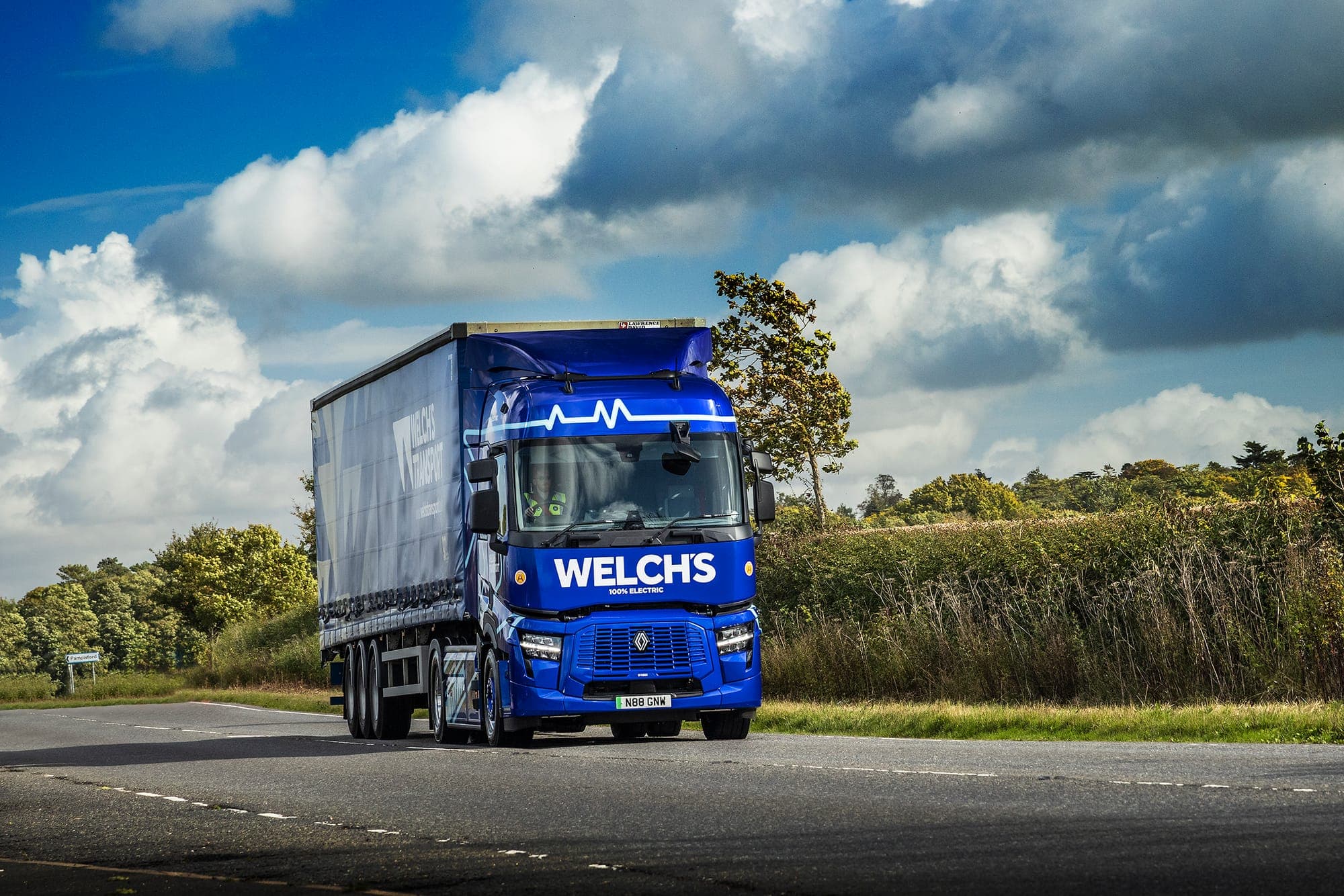
Quick answers
- Is it viable?It depends on the run, not a blanket yes or no. For predictable back-to-base duty cycles the maths often works today. For long, unplanned, payload-critical work it is harder. More →
- What it costsA higher purchase price than diesel, offset by the Zero Emission Truck Grant and lower running costs. Total cost of ownership is where the case is won or lost. More →
- ChargingMost of the energy comes from the depot, not the motorway. Depot charging is the real planning job; en-route fills the gap for the runs a single charge cannot cover. More →
- What you can buyVolvo, Renault Trucks E-Tech, DAF, Scania, MAN and the Mercedes-Benz eActros are all on sale in the UK now, across rigid and artic weights. More →
- Who's already doing itOperators are running electric HGVs on real contracts today, including Welch Group with a 42-tonne Renault E-Tech through the eFreight2030 consortium. More →
Is an electric HGV viable for your duty cycle?
The honest answer is that it depends on the run. An electric HGV lives or dies on three numbers: range, payload, and weight. Get those to line up with your duty cycle and the case is strong. Push against all three at once and it gets hard.
Range is the one operators worry about first, and usually the one that matters least once you map real routes. Most UK HGV work is back-to-base, predictable, and well inside the daily range of a current electric truck. The runs that strain an electric lorry are the long, unplanned, multi-drop days with no depot return and no time to charge.
Payload and weight are the real trade. A battery is heavy. UK rules allow an extra tonne of gross weight for zero-emission HGVs, which offsets a lot of it, but not always all of it. If you run out at maximum weight on every load, model the payload hit before you commit. If you cube out before you weigh out, which a lot of operators do, it rarely bites.
Where it works well today
- Back-to-base duty cycles with a depot return each day
- Predictable, plannable daily mileage
- Urban and regional distribution
- Operations that cube out before they weigh out
- Fixed routes you can charge against overnight
Where it is harder today
- Long-haul trunking with no depot return
- Consistently running at maximum gross weight
- Unpredictable, ad-hoc routing
- Sites with no realistic route to a grid upgrade
- Very high daily mileage on a single shift
On the regulation, HGVs sit outside the ZEV mandate for now. The phase-out dates are policy, not yet binding regulation. Our ZEV mandate guide covers where those dates actually land and what is still being designed.
What an electric HGV actually costs
The sticker price on an electric HGV is higher than the diesel equivalent. That is the number everyone leads with, and it is the wrong one to stop at. The question that decides it is total cost of ownership across the life of the vehicle.
Three things move the maths in your favour. The Zero Emission Truck Grant takes a direct chunk off the purchase price, applied through the dealer. Running costs are lower: electricity against diesel, fewer moving parts, less maintenance. And the heaviest electric trucks attract the largest grant, which is where the price gap is widest to begin with.
What works against you is the front-loading. Electric shifts cost from pence-per-mile fuel you pay as you go to a large up-front outlay on the vehicle and, if your depot needs it, the infrastructure to charge it. The total can land below diesel over a long enough hold, but only if you can finance the lump and keep the truck long enough to amortise it.
One open question to price in: residual values. The used market for electric HGVs is thin, so resale is hard to forecast and finance providers price that uncertainty into lease rates. Build a conservative residual into your own model rather than taking the headline TCO at face value.
To put real numbers against your own first truck, our first-truck calculator models the all-in cost, the grant, and the running-cost saving against the diesel you would otherwise buy.
Charging an electric HGV
For most UK fleets the energy does not come from the motorway. It comes from the depot. Around 85% of the kWh moving a battery-electric HGV is put in overnight at base, with en-route charging filling the rest for the duty cycles a single depot return cannot cover.
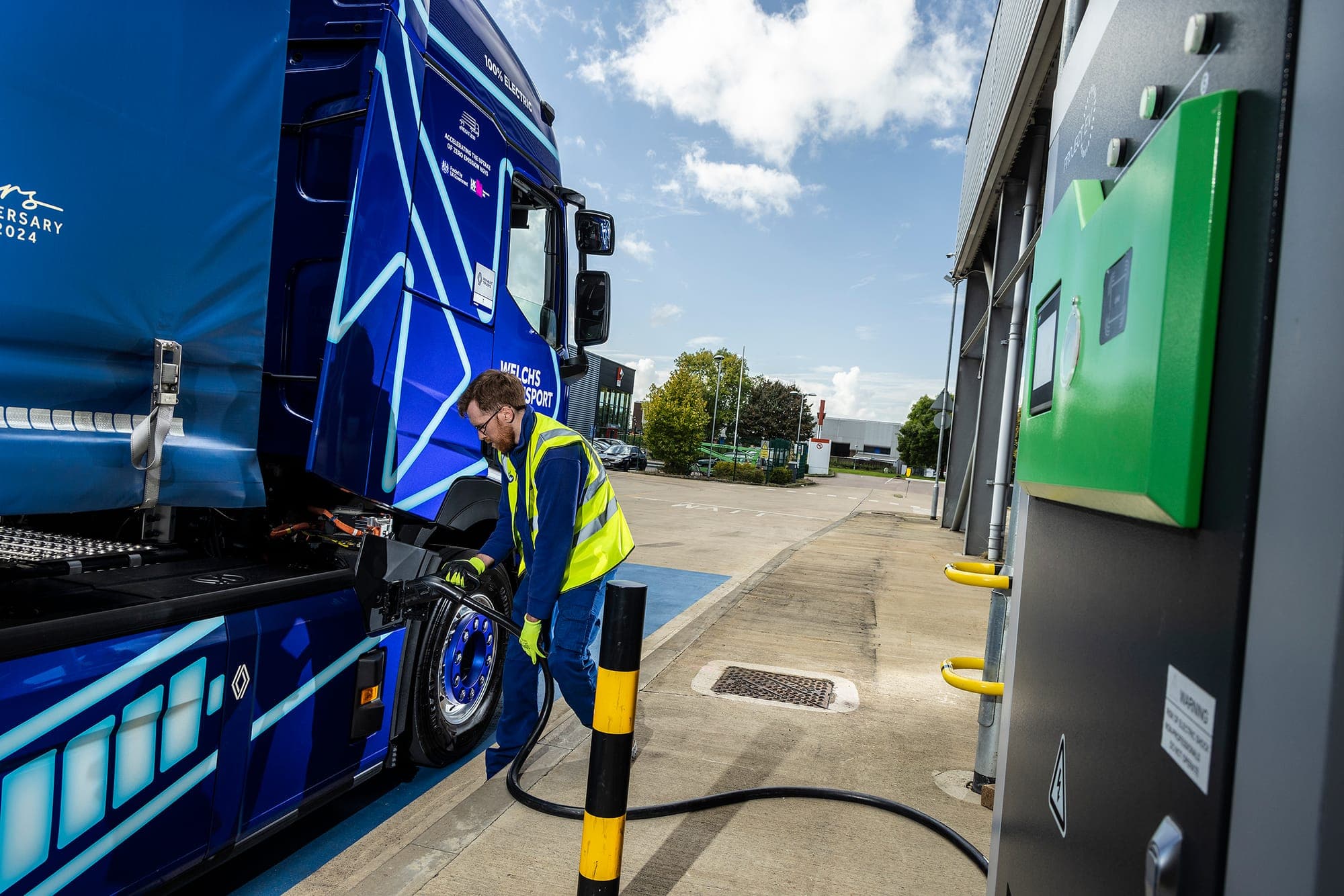
That changes where the hard work sits. Depot charging is slower, cheaper per kWh, and predictable, but it leans on one thing operators underestimate: the grid connection. A depot running a fleet of electric trucks overnight can need roughly ten times the connected load it has today, and a new connection in a constrained network area can take well over a year to land.
We have written the operator's guide to electric HGV charging in full: depot versus en-route, the Depot Charging Scheme, grid connection lead times, and the gap operators keep falling into. Start the connection conversation before you order the trucks, not after. To see where public en-route charging already exists, our charging map plots the HGV-suitable sites across the UK.
What you can buy in the UK right now
This is no longer a one-model market. Every major manufacturer selling diesel HGVs in the UK now has a battery-electric range on the books, from car-derived weights up to 44-tonne artics, and several of them now offer a genuine long-haul option rather than just urban and regional. The shortlist below is the current OEM picture as of mid-2026. Exact ranges, payloads and prices move with spec and battery choice, so confirm the numbers that matter against a live quote rather than a brochure.
Volvo Trucks
Up to 700 kmThe broadest electric range on the UK market, spanning rigid and articulated weights up to 44 tonnes. The FH, FM and FMX Electric cover distribution, regional and construction work with up to around 470 km of range, and the new FH Aero Electric with extended range adds a long-haul model rated at up to 700 km with megawatt charging, rolling out through 2026.
Renault Trucks E-Tech
Up to 600 kmA full E-Tech range from 3.1-tonne vans, through the D and D Wide for urban distribution, up to the T and C at 44 tonnes, and the platform behind several live UK operator deployments. New for 2026, the long-distance E-Tech T 585 and T 780 push range to around 460 km and 600 km respectively.
DAF
Built in the UKA complete electric line-up built in the UK at Leyland: the XB at 12, 16 and 19 tonnes for urban distribution, the XD and XF Electric (International Truck of the Year 2026) for distribution and longer haul, and the new XG and XG+ Electric for the heaviest work, with gross combination weights up to 50 tonnes and over 500 km of range on the longest-legged variants. DAF led the UK electric truck market in the first quarter of 2026.
Scania
~470 km at 42tA battery-electric range that now runs from urban and regional work into long-haul, with 400 and 560 kWh battery options and a new under-cab battery module that lifts range towards 500 km and beyond depending on configuration and weight. Around 470 km at 42 tonnes is a realistic headline figure.
MAN
Up to 570 kmA full eTruck line-up available in the UK: the eTGL at 12 tonnes for urban distribution, the eTGS rigid for distribution and regional haulage, and the eTGX tractor for long haul, with battery capacity up to 480 kWh, typical ranges around 500 to 570 km, and megawatt charging up to 750 kW.
Mercedes-Benz
~500 km at 44tThe eActros 600 is the long-haul flagship: 621 kWh of battery, around 500 km on a single charge, up to 44 tonnes, megawatt charging, and already running real distribution circuits for UK operators. The second-generation eActros 400 covers national long-haul and depot-based distribution, with the eEconic for refuse work.
The practical takeaway: for most weight classes and duty cycles there is now a production electric HGV you can order from a mainstream manufacturer. The constraint has moved from whether the truck exists to whether your routes and your depot can support it.
How operators are actually transitioning
The fastest way to cut through the brochures is to talk to operators already running the trucks. This is what we do.
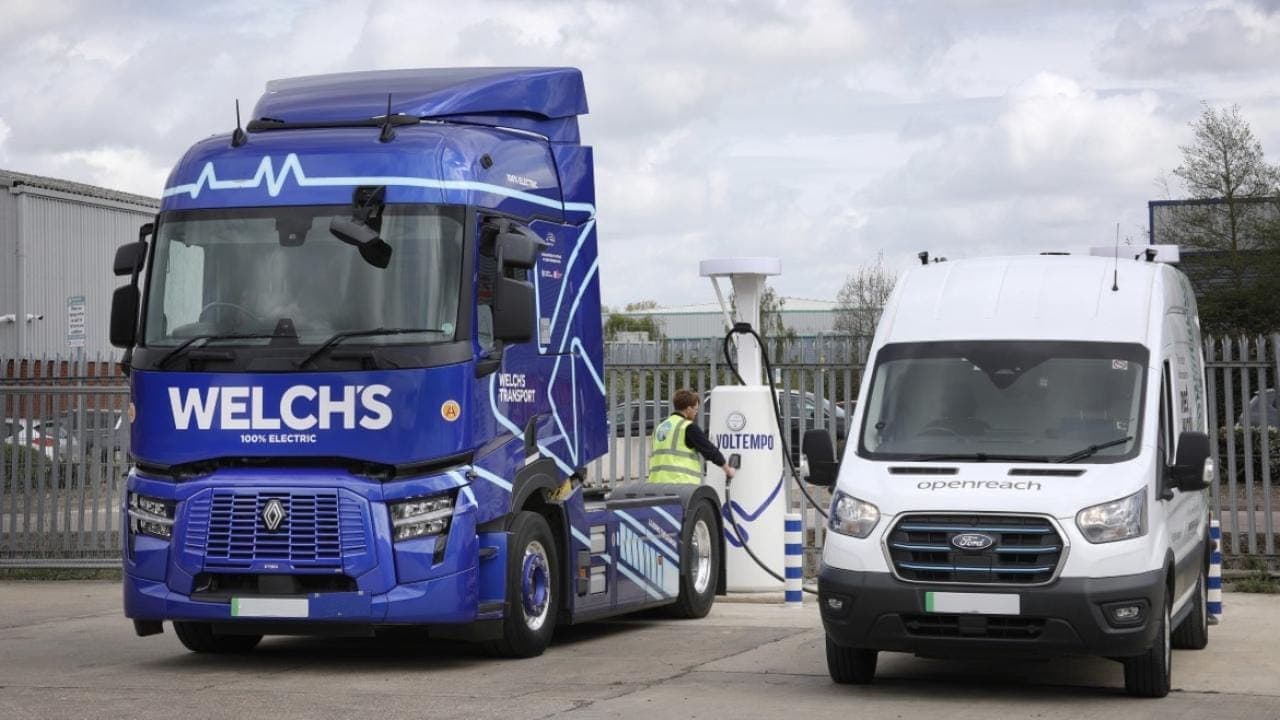
TwentyForty is built inside a working fleet. Welch Group is running a 42-tonne Renault E-Tech on real contracts, deployed through eFreight2030, a consortium within the government's Zero Emission HGV and Infrastructure Demonstrator (ZEHID). That is not a pilot in a press release. It is a truck doing a job, with all the depot, charging, and duty-cycle reality that comes with it.
What we have learned is that the vehicle is the easy part. The hard parts are the things around it: getting the grid connection in, sequencing the charging install against the vehicle delivery, and working out which routes the truck can actually hold without compromising the day's work. The operators who struggle are the ones who treat the truck order as step one. It is closer to step three.
We are not doing this alone. Through Project JOLT, operators are pooling real operational data from electric HGV deployments so the sector learns from live running rather than from spec sheets. Work with Connected Places Catapult feeds that operational evidence back into the wider transition. The point of all of it is the same: replace assumption with what actually happens when the truck is on the road.
If you are weighing up your first electric HGV, the most useful thing we can offer is an honest read from people who have already hit the snags. That is what the Transition Assessment is for.
Frequently asked questions
The questions UK fleet operators send us most often about electric HGVs.
How far can an electric HGV go on a charge?
Far enough for most UK duty cycles, which are back-to-base and well inside a current truck's daily range. Real-world range depends on weight, terrain, weather and how you drive, and it varies a lot by model and battery choice. The right question is not the headline range, it is whether the truck covers your specific daily route with margin to spare. Map your actual runs before you rule it in or out.
How long does it take to charge an electric HGV?
It depends on the charger and the battery. Overnight depot charging at lower power is the norm for most fleets: plug in at the end of a shift, full by the morning. Higher-power en-route charging adds a large chunk of range in well under an hour for the duty cycles that need a midday top-up. For planning, overnight depot charging is the default and the part worth designing around.
How much does an electric HGV cost?
More than a diesel to buy, less to run. The Zero Emission Truck Grant takes a direct amount off the purchase price, with the largest grants on the heaviest trucks. The figure that matters is total cost of ownership across the life of the vehicle, where lower running costs and the grant close the gap, provided you can finance the up-front outlay and hold the truck long enough.
Do electric HGVs cost you payload?
Sometimes, but less than people assume. The battery is heavy, so there is a weight penalty against an equivalent diesel. UK rules allow an extra tonne of gross weight for zero-emission HGVs, which offsets much of it. If you run at maximum weight on every load, model the payload hit carefully. If you cube out before you weigh out, which many operators do, it rarely affects the job.
Are electric HGVs viable yet, and are they worth it?
For the right duty cycle, yes. Predictable back-to-base operations with a depot return each day are where electric works well today. Long-haul trunking with no depot return and consistent maximum-weight running is harder. Viability is a question about your routes and your depot, not a blanket verdict on the technology.
Who makes electric HGVs for the UK market?
Every major manufacturer. Volvo, Renault Trucks E-Tech, DAF, Scania, MAN and Mercedes-Benz (eActros) all sell battery-electric HGVs in the UK, across rigid and articulated weights up to the heaviest classes. For most weight bands there is now a production model you can order from a mainstream manufacturer.
How do I electrify my fleet?
Start with the routes, not the trucks. Identify the duty cycles that suit electric first, then get the depot grid connection and charging plan moving early, since those have the longest lead times. Phase vehicle replacement against your renewal cycle, the grant windows, and the connection timeline together. The Transition Assessment is built to show you where your fleet is ready and where it is not.
Operator voices on electrification
Conversations, write-ups and explainers from fleets already running electric HGVs. From the fleet-electrification tag on The Loading Bay.
 Article
28 July 2026
An operator knows in a week. The money never asks.
A supplier we backed has gone into administration with the engineering working and real customers on the books. The gap isn't money. It's that the people who can tell whether the kit holds up are never in the room when the money decides.
 Article
16 June 2026
Battery swapping for trucks: stress-testing the sceptic's case
I've always been sceptical of battery swapping for trucks. Serious money is now behind it, so I stress-tested my position. The real case isn't speed, it's grid flexibility.
 Article
31 May 2026
The Hydrogen Debate in Transport: A Reality Check
Hydrogen has serious credentials in steelmaking and ammonia production. But for road transport, the efficiency losses, infrastructure gap, and economic reality all point the same way. Battery-electric is already delivering. Hydrogen might find a niche, but it's not the transition.
 Article
30 May 2026
HVO Is a Tool, Not a Transition
The carbon case for HVO is real, but only if the feedstock is genuine waste. With fraud arrests upstream and certificates from the same schemes that signed off fuel that didn't exist, operators need to treat HVO as a bridge they interrogate, not a box they tick.
 Article
16 May 2026
Are solid-state batteries coming to save your fleet?
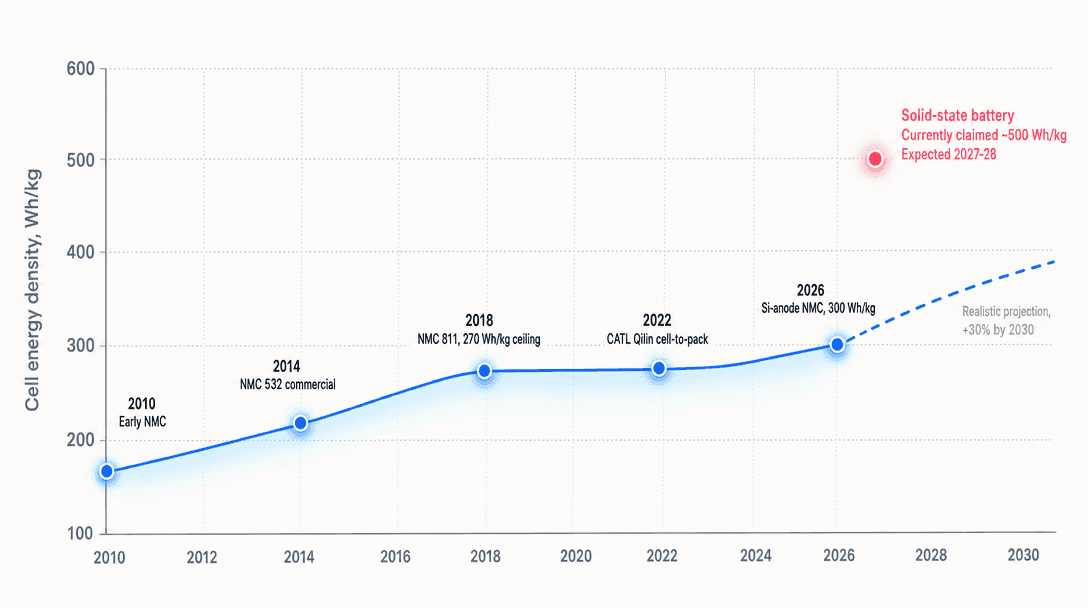
The engineering community has a pretty clear view on solid-state batteries. The marketing community has a different one. I went deep on the peer-reviewed literature to find out what the numbers actually say.
 Article
2 March 2026
Megawatt charging: enabling electric long-haul trucking?
The Megawatt Charging System (MCS) is being positioned as the critical infrastructure breakthrough that makes electric long-haul trucking operationally viable. But is it the answer operators have been waiting for, or just another layer of complexity in an already confusing transition?
Related guides
Each one digs into a specific decision in the freight transition.
Depot charging
Charging infrastructure that fits how depots run.
ExploreGrant funding
Match your fleet to the right grant.
ExploreThe ZEV mandate
The policy framework facing HGV operators.
ExploreFunded fleet analysis in Scotland
Transport Scotland funds up to £15,000 for SME operators. We deliver it.
ExploreLast reviewed and updated 18 July 2026. Sources: gov.uk, Department for Transport, Office for Zero Emission Vehicles, vehicle manufacturers.
Flag a correction →