Three manufacturers, three methods for the same asset. Each is what’s left of the diesel method once the realised sales are taken out. One declined to price its used stock three times. The only captive residual on the record started at zero and rose because the sale needed it.
Narrowed by its author afterwards: 2027 is when the data is expected, not when the problem ends. Car battery data exists, and BEV car residuals still fell about 60% from 2022 to 2024
Regulation forces the market
An industry commentator
An argument for intervention, not against it
Volume brings trucks to auction, around 2030
A fleet electrification provider
Strongest still standing. Needs trucks at auction that manufacturers say they won’t send
It resolves organically
An unattributed workshop takeaway
Untested. Nobody responded to it
The case for acting doesn’t rest on the market never forming. It rests on the next five years, and on who’s lost during them.
DfT’s HGV CO2 consultation, the RHA and TransiT all rest small operators’ route to zero emission on used trucks trickling down from bigger fleets.
8.4 to 10 years
from each Euro mandate to a used diesel majority, with every precondition in place. Lightest rigids took over eight years to a Euro VI majority. Artics, under three.
What made it work
Diesel
Electric
Open used market
Yes
Not on the evidence
Price discovery
Yes
Not on the evidence
Export route
Yes
None described
Charging zones repricing old stock
Yes, for Euro VI
Untested
Years from each Euro mandate to a majority of the fleet, first keepers against used stock
First-keeper stock reaches 50%Further wait for used stock to reach 50%
Doesn't show: fleet size or licence type, which no public data can resolve. Source: DfT VEH1108, GB, end 2000 to end 2025. The 2013 Euro V pre-buy compresses the Euro VI first-keeper crossing; the Euro VI gap is also shortened by LEZ and CAZ repricing.
operators hold Restricted licences and nothing else
47.5%
of GB’s 62,620 operators with a valid licence
2
vehicles, median authorisation. Median specified: one
21%
of GB’s authorised capacity
Source: GB O-licence register, valid licences, August 2026.
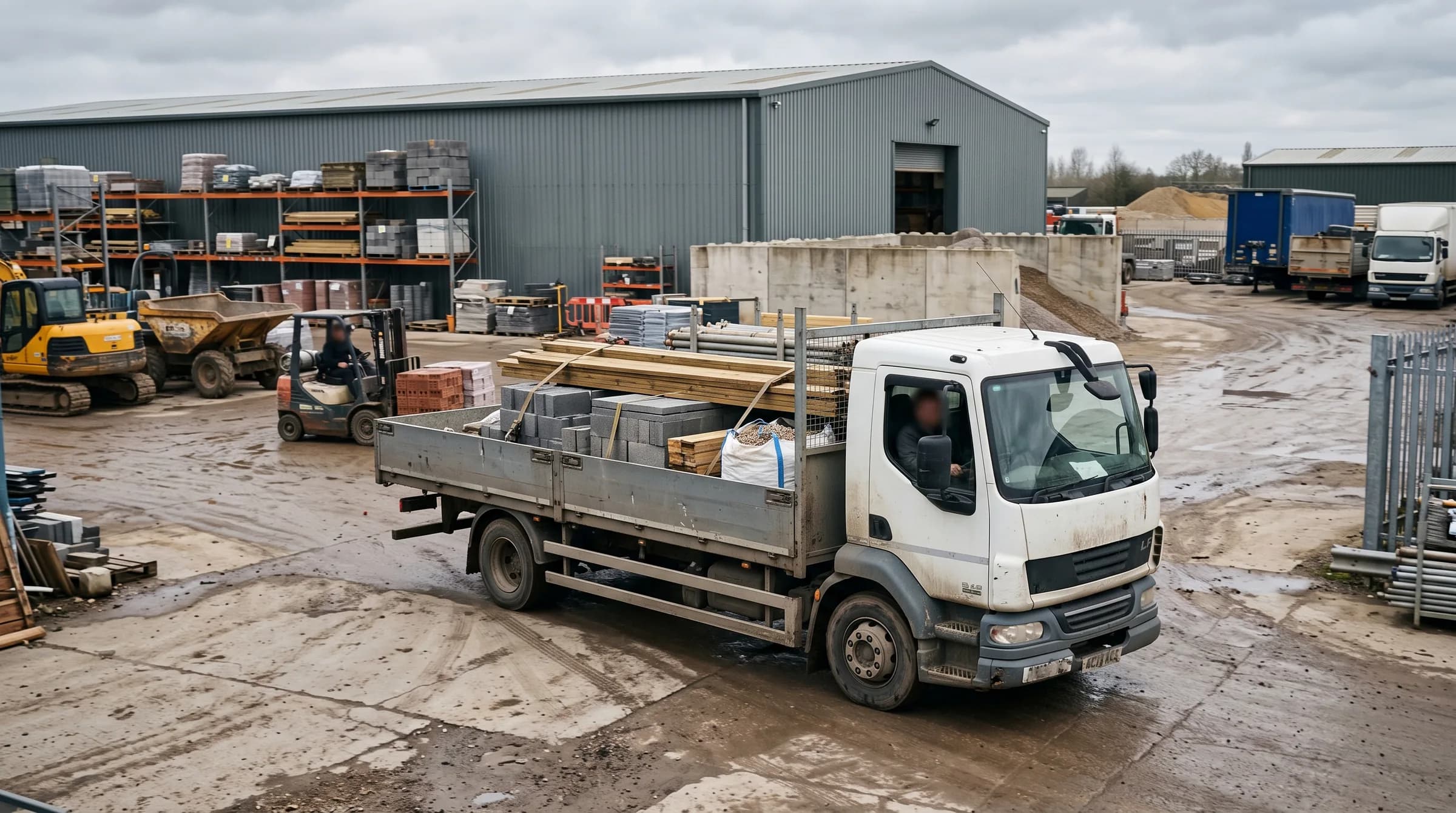
Builders, merchants, manufacturers, farmers, waste firms and plant hirers. Not hauliers. On the diesel clock they sit about a decade behind. Some will leave rather than wait. That’s a prediction, and it’s checkable every year from the same register.
Restricted-only operators by sector
Highlighted sectors, median authorised fleet marked
Fleet size on authorisation, all 29,744
1: 9,6312: 7,7993 to 5: 7,5796 to 9: 2,36310 to 19: 1,56120 to 49: 59050+: 221
Doesn't show: agriculture's full size, because agricultural exemptions keep much of farming off the register; or councils, which sit in the no-company-number row. The transport codes on Restricted licences are a data curiosity, not hauliers. Source: GB O-licence register, 3rd August 2026; Companies House, 1st July 2026.
Most Restricted-licence operators aren't hauliers. The truck is a tool of another trade.
Collected, and withheld from third parties. At one manufacturer, from its own paying customer. Motives on the record: comparison and liability.
Article 14
The EU Batteries Regulation gives whoever bought a battery read access to its state of health. Residual value is the first purpose named. Northern Ireland has it. Great Britain doesn’t.
GTR 25
The heavy truck battery standard was adopted in November 2025. The UK voted for it. Standards aren’t years away.
A figure read off the battery management system isn’t enough. Measure at rest and under load, by someone independent. Today the only valuer is the buyer.
The grant cuts the one price the used market needs
1.
The grant is paid on the new truck.
2.
The used truck is priced off the new one.
3.
OZEV’s own subsidy assessment: nearly new residuals may fall.
Our position
Tell government the vehicle grant is the wrong instrument, not that it needs no money. Spend it on infrastructure and on buying realised values.
Objections that stand
Instability, not existence, is the certainty problem: a fleet finance specialist, now joined by a manufacturer’s RV team. Grant and guarantee are a blend, never a replacement: the guarantee’s designer.
Residual value instruments, risk-bearing against information yield
Indicative placements, our judgement from the table below, not measurements
Source: interviews and written exchange, July and August 2026. What it doesn't show: cost, or whether any instrument has been tried in the UK truck market. The second table covers that.
Graded on who can hold the risk, the captives win and will keep winning while volumes are low. Graded on what reaches the record, the ranking turns over. Indicative placings, our judgement.
A structured long lease: ten to fifteen years to zero, handed on to a second operator around year five, across a book big enough to pool the risk. Three parties designed, write and buy versions of it. No mainstream lender has tested it.
Where it gets tested
Transport Scotland’s Zero Emission Truck Fund: up to £240 million over five years from 2027/28, paid only to consortia with a private financier and at least four operators.
Condition: consortia publish what they learn.
The guarantee
Only a discovery version: small, time-limited, exercised often, every value published. Ours, and not costed.
Public capital
The National Wealth Fund backs captive residuals only where the truck leaves at a disclosed value, battery data attached.
from Euro mandate to a used diesel majority, with every precondition
9%
of HGV operators confident in the zero emission business case
25%
of Chinese medium and heavy sales zero emission in 2025, about 457,000
2.7%
zero emission share of EU heavy truck sales, Q4 2025
0
of three manufacturers describe an export route for used electric
Source: TwentyForty analysis of the O-licence register and DfT tables; BVRLA HGV Outlook 2026; ICCT 2025 market reports; follow-up interviews, August 2026.
Publish the used-value monitoring committed to in the grant's subsidy assessment, and the evidence behind the finding of no market failure in finance availability. Transport Scotland found the opposite for the same market in September 2026
Publish VEH1108 split by fuel for HGVs: zero emission trucks on a second keeper or later, by cohort, every year. The numbers will be small for years. The point is starting the series
Align GB with Article 14 of the Batteries Regulation in the autumn consultation, covering the purchaser's access right, not only the passport. With DfT, set a timetable for transposing GTR 25, which the UK voted for
Require Zero Emission Truck Fund consortia to publish what they learn, realised values at exit and battery condition, so the data the fund pays for reaches lenders outside the consortium
Write battery data access, and its transfer to the next owner, into every purchase and lease contract for an electric truck. GB has no Article 14, and a contract can do now what regulation hasn't
State the volume at which retention stops being affordable, and publish realised values on the electric trucks they do place. Expect both as a condition of any National Wealth Fund capital
Take the government lines to their owners, chase every open question in Appendix D, take the lease to Scottish consortia, and run the used-channel census and the annual count