Guides / Depot charging
Where UK HGV charging actually exists, and where it doesn't.
A live, operator-curated map of HGV-capable charging across the UK, alongside an honest read on what depot installation involves: grid connections, the £170 million Depot Charging Scheme, and the gap operators keep falling into.
Get help planning your depotQuick answers
- Where the energy comes fromAround 85% of the kWh moving a battery-electric HGV goes in overnight at the depot. En-route charging fills the rest. More →
- What the DCS funds70% of chargepoint hardware and civil works, up to £1 million per organisation, from a £170 million programme running to 2030. More →
- The catchThe scheme does not fund grid connection upgrades, which is where most operators actually get stuck. More →
- Grid lead timesA new megawatt-scale connection in a constrained network area routinely takes 18 to 36 months. Start the DNO conversation before you order trucks. More →
- Sharing infrastructureShared hubs make strong economic sense for pallet networks and hub-and-spoke models. The missing piece is contractual, not technical. More →
The UK HGV charging map
Loading map…
Why depot charging is the real question
En-route charging gets the headlines because it looks like the motorway service stations we already use for diesel. For HGVs at UK duty cycles, that's not where the energy comes from.
Around 85% of the kWh moving a battery-electric HGV will come from the depot. Returning to base each night, slow charging at lower power levels, predictable departure windows. En-route fills the remaining 15% for the duty cycles that can't be served by a single depot return.
The strategic question for operators is not "where can I rapid charge mid-route?". It's "can my depot supply the energy and the connected load I need, on the timeline I can plan against?". That's the question the Depot Charging Scheme exists to support, and the question grid connections too often answer last.
Where the kWh actually go
For typical HGV duty cycles based on Centre for Sustainable Road Freight modelling and operator observation.
- kWh at home depot
- 80–90%
- Connected load for a 50-truck depot
- ~1 MW
- Typical existing supply at mid-size depot
- ~100 kW
The Depot Charging Scheme, in plain English
The Depot Charging Scheme (DCS) is the UK government's £170 million multi-year programme funding chargepoint hardware and the civil works to install it at fleet depots. It runs to 2030, administered by the Office for Zero Emission Vehicles and delivered through funding windows.
The scheme covers 70% of eligible costs up to £1 million per organisation across the programme's lifetime. Window 1 is open until 30 June 2026. Window 2 opens 28 October 2026 with £38 million available. The scheme covers N1, N2 and N3 commercial vehicles, weighted toward heavy.
The application process is straightforward by government standards: a written application, a project plan, and an installer quote. Most operators we've worked with secured a decision within eight to twelve weeks of submission. The hard part isn't the grant.
- Status
- Open · Window 1 until 30 Jun 2026
- Funding cap
- £1 million per organisation
- Coverage
- 70% of eligible costs
- Eligible categories
- N1 / N2 / N3, weighted to heavy
What catches operators out on depot charging
01. Grid connection lead times
The most underestimated number in the whole transition. A new 1 MW connection in a constrained DNO region routinely takes 18 to 36 months from the day you submit the application. In the worst regions, on the worst weeks, it's been quoted at five years. This is not a finance problem, it's a programming problem. Get the application in before your fleet renewal cycle forces the conversation.
02. Power demand vs the supply you already have
A 50-truck electric depot wants somewhere in the region of 1 MW of connected load if you're charging overnight, more if you're load-balancing across shifts. Most mid-sized commercial depots have an existing supply closer to 100 kW. The gap is an order of magnitude. No smart-charging strategy closes that on its own.
03. Phasing across three clocks
Your vehicle replacement cycle, your DNO's upgrade timeline, and the grant window cadence don't align by default. Plan against all three from the start. Operators who treat the chargepoint install as the first step are usually solving the wrong problem first.
04. The cost shape vs diesel
Electric trucks shift the cost from pence-per-litre OPEX to a front-loaded CAPEX in vehicles plus infrastructure. The total-cost-of-ownership maths can work, but only if you can finance the lump and amortise it across a long enough window. Residual values for electric HGVs remain an open question, which the Green Finance Institute's proposed Residual Value Guarantee would help close.
Pallet networks, hub-and-spoke, and the case for sharing
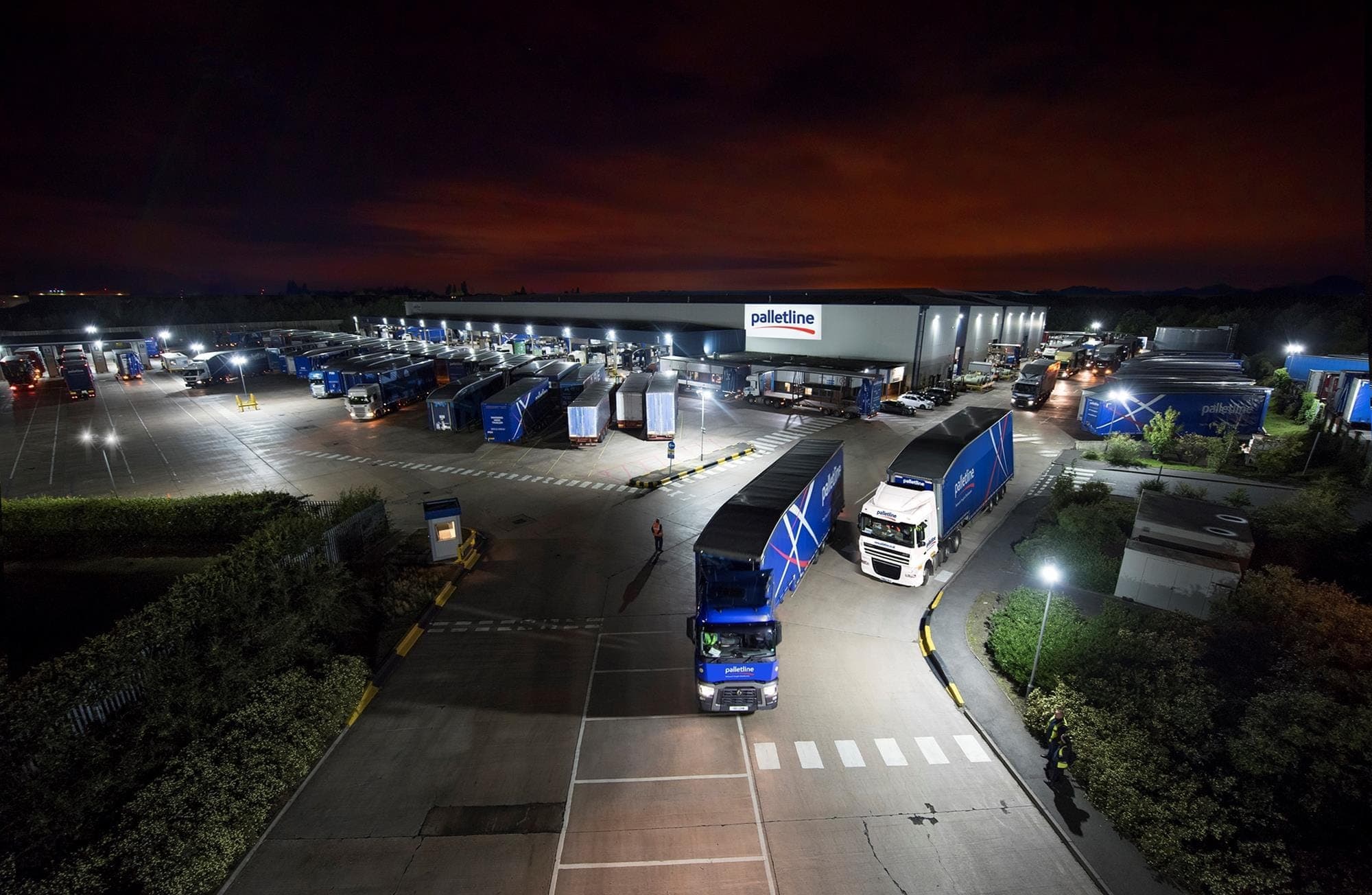
Most depots aren't operating in isolation. Pallet networks, third-party logistics consortia, and hub-and-spoke distribution models already share warehousing, drivers, and trunk routes. The same logic applies to charging.
A shared 12-bay 350 kW hub serving four operator networks runs at higher utilisation than the same four operators building separate four-bay setups behind their own meters. It also spreads the grid connection cost across the lot, halves the planning timeline per operator, and lets smaller fleets piggyback on the connection capacity a larger anchor tenant can justify.
Inter-operator agreements are the missing piece. Most operators we talk to are open to shared infrastructure; very few have the contractual framework to run it. Roaming standards, billing rails between operators, and a clear access hierarchy when bays are scarce all need to exist before steel goes in the ground. The technology side is easy. The commercial side is where this falls over today.
Grants and support for depot charging
Four programmes operators should know about. None of them on their own makes depot electrification straightforward; together they close most of the funding gap on vehicles and chargepoints, with grid connection still sitting outside any current scheme.
Depot Charging Scheme
OpenZero Emission Truck Grant
OpenZero Emission HGV & Infrastructure Demonstrator (ZEHID)
Demonstration runningProject JOLT
Open to operatorsOperators on charging and grid
Conversations, write-ups and explainers from fleets already living with these decisions. From the charging-infrastructure and energy-grid tags on The Loading Bay.
 Article
16 June 2026
Battery swapping for trucks: stress-testing the sceptic's case
I've always been sceptical of battery swapping for trucks. Serious money is now behind it, so I stress-tested my position. The real case isn't speed, it's grid flexibility.
 Article
22 March 2026
The Bottleneck Isn't the Truck
Subsidise what is shared, scarce, and slow to build. If that single principle shaped UK freight decarbonisation policy, we'd be in a very different place. Instead, the centre of gravity is still stuck on "help me buy a truck". The Plug in Truck Grant was topped up again on 6 January 2026, with discounts up to £120,000 for the heaviest vehicles and funding extended to March 2026. That helps early adopters. But it does not solve the bottleneck that actually determines pace of adoption: power availability, cost to serve, and reliability.
 Article
2 March 2026
Megawatt charging: enabling electric long-haul trucking?
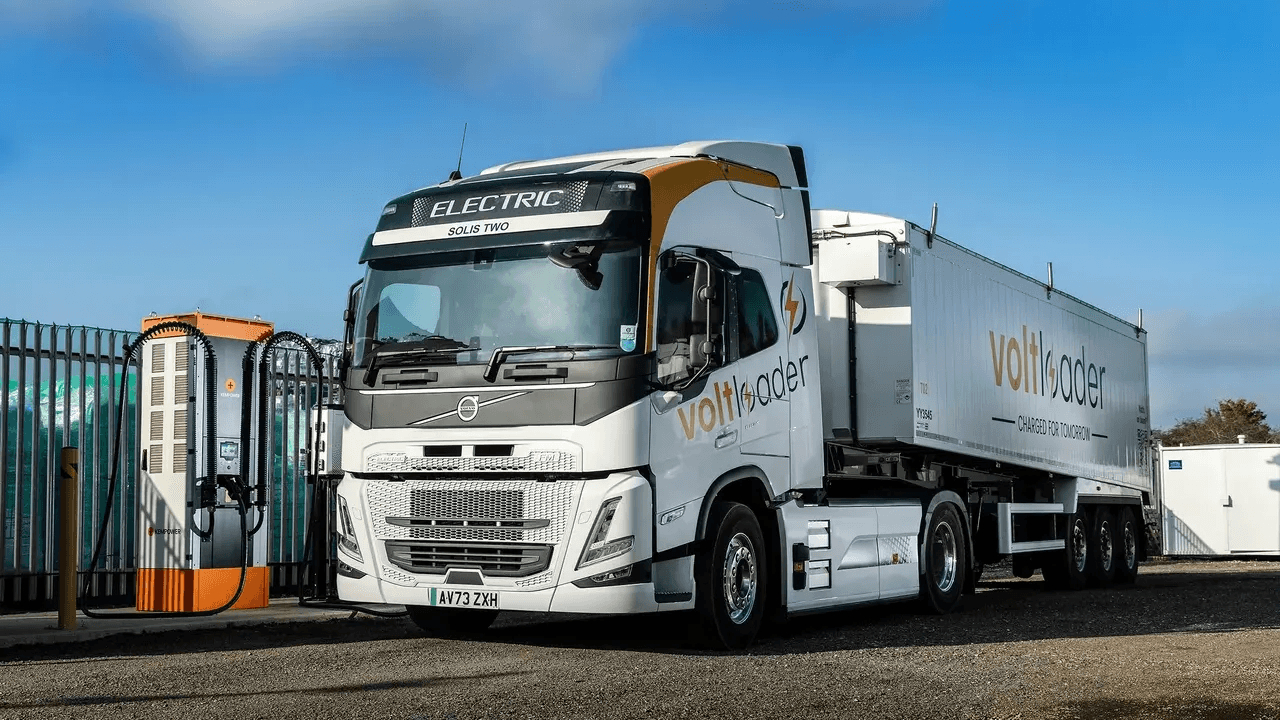
The Megawatt Charging System (MCS) is being positioned as the critical infrastructure breakthrough that makes electric long-haul trucking operationally viable. But is it the answer operators have been waiting for, or just another layer of complexity in an already confusing transition?
 Article
23 February 2026
An Operators Guide to Energy Markets for Electric HGV Fleets
This guide breaks down the basics for total beginners. It busts myths that might spook traditional operators, explains key terms, and shows how even a small electric fleet can tap into energy markets like flexibility trading and energy arbitrage in the UK. We will also explore what happens as you scale up.
 Article
2 February 2026
Grid Connections for Fleet Operators: Who Does What
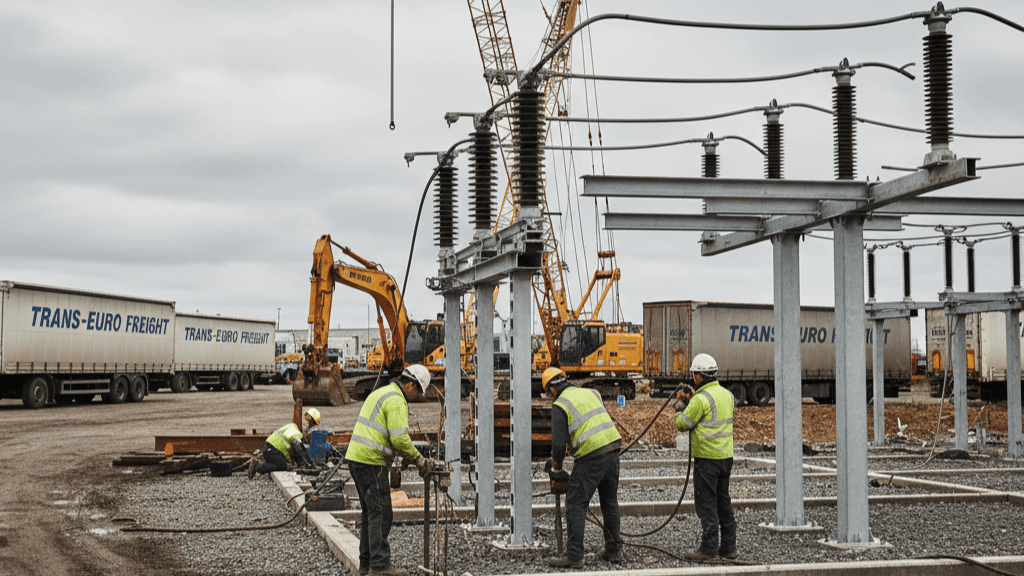
Electrifying HGVs means getting your depot enough electrical capacity to charge them. That brings you into contact with organisations you've probably never dealt with before: DNOs, iDNOs and ICPs. Here's what they do, how they interact, and what you need to know to get power without losing your mind.
 Podcast52 min
24 November 2025
Can data make fleet electrification easier?
Michael Ayres and Henry Clarke from Flexible Power Systems join Jamie for a deep dive into the real world mechanics of fleet electrification. Michael brings the system view shaped by years in grid-scale storage and transport refrigeration. Henry brings the platform logic, modelling, and the engineer
Frequently asked questions
The questions UK fleet operators send us most often about depot charging.
How much power does a depot of 50 trucks need overnight?
As a planning starting point, around 1 MW of connected load for a 50-truck electric HGV depot charging overnight, more if you're load-balancing across multiple shifts. The exact figure depends on battery sizes, dwell times, and how aggressively you smart-charge. The point is the order of magnitude. Most mid-size commercial depots run on closer to 100 kW today. That's the gap a grid connection upgrade has to close.
How long does a grid connection upgrade take?
Eighteen to thirty-six months is typical for a new megawatt-scale connection in a constrained DNO region. In the worst regions on the worst weeks it's been quoted at up to five years. There's no shortcut here; lead times have lengthened with the rise in connection requests. The only practical response is to start the conversation early, before you've committed to the vehicle and chargepoint plan that depends on it.
Can the Depot Charging Scheme cover grid connection costs?
No. This is the most important caveat on the scheme. DCS covers chargepoint hardware and the civil works on your side of the meter at 70% of eligible costs up to £1 million per organisation. A grid connection upgrade quoted by your DNO sits outside the scheme entirely. Several operator and trade-body submissions to the 2026 consultation argued for grid connection to be brought inside; no policy change has landed yet.
What's the difference between depot charging and en-route charging for HGVs?
Depot charging is overnight or between-shift charging at the vehicle's home base, lower power, longer dwell, predictable. En-route is mid-journey top-ups at public or semi-public sites, higher power, shorter dwell, less predictable. For most UK HGV duty cycles, depot charging accounts for around 85% of the energy and en-route fills the remaining 15%. The two are complementary, not interchangeable.
Can multiple operators share charging infrastructure at a depot?
Technically, yes. Commercially, rarely. The hardware supports shared use today. What's missing is the contractual layer: roaming agreements between operators, billing reconciliation, an agreed access hierarchy when bays are scarce. Shared hubs make particular sense for pallet networks and hub-and-spoke distribution where operators already share warehousing and trunk routes. Expect to see the first proper inter-operator agreements in the next 18 to 24 months.
Related guides
Going deeper on the surrounding decisions.
Need help planning your depot charging?
Last reviewed and updated 16 May 2026. Sources: gov.uk, Department for Transport, Office for Zero Emission Vehicles, Centre for Sustainable Road Freight.
Flag a correction →