Five policy asks
What government, regulators and network operators should change to make the depot story economically legible.
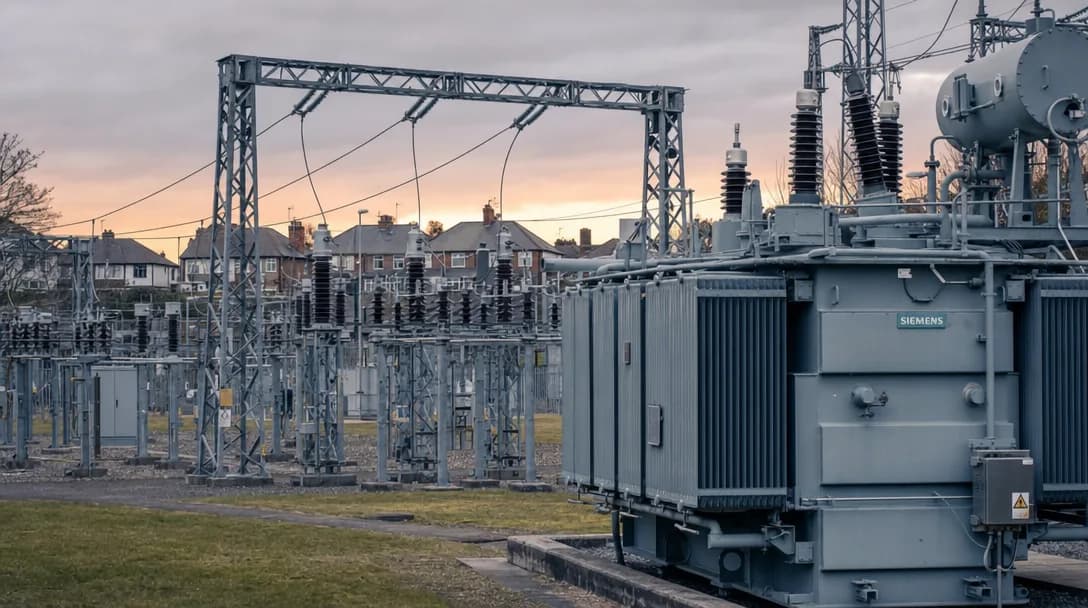
Five reforms would shift the depot energy infrastructure market in operators' favour. This page works through each: mechanism, precedent, institutional owner. The evidential basis is at /report/grid and /report/economics.
Mandatory disclosure of depot flex revenue from publicly funded electrification programmes.
Publish the realised depot energy economics from ZEHID and similar schemes on the same footing as TCO and vehicle performance.
Current barrier: commercial confidentiality clauses outweigh the public interest in disclosure.
Include distribution-connected EV charging hubs in Phase 1 of grid reform.
Or commit to a published timetable for Phase 2 within twelve months. Reform that reaches transmission alone does not reach depots.
Current barrier: Phase 1 is calibrated for the data-centre queue; Phase 2 has no published date.
Redesign Capacity Market eligibility for sub-1 MW depot assets combined with fleet charging.
Small operators are currently locked out of stacked revenue at exactly the moment the market most needs distributed flexibility.
Current barrier: prequalification rules and minimum capacity thresholds were written for utility-scale assets.
Reform DUoS red-band timing to recognise HGV depot return cycles.
The 4–7 pm peak window is anomalously placed for fleet operations. A reform that reflects the actual coincident demand profile changes the network cost calculation.
Current barrier: DUoS red-band timing is set per DNO and reviewed only at price control intervals.
Build a standardised stacked flex product across DNO and NESO services.
Operators currently need an in-house trading desk to take part. A standardised stacked product would let smaller fleets contribute without specialist capability.
Current barrier: DNO and NESO flex products are designed in parallel with little operator-side integration.
Why policy matters
The market is being shaped now, on terms that favour the financiers and aggregators. Three policy gaps are the reason.
Information: the evidence base on what depot energy infrastructure actually earns is closed inside financier portfolios. No public disclosure obligation exists even for publicly-funded demonstrator projects. Operators cannot price what they are giving up.
Grid connection: the reform programme designed to accelerate distribution-level connections was built for transmission-level data centre demand. Distribution-connected depot infrastructure waits in a queue with no priority mechanism.
Market design: the UK flexibility services architecture was designed for utility-scale assets at transmission. Sub-1MW behind-the-meter assets combined with fleet charging duty cycles don't fit. The eligibility rules, de-rating factors, and settlement requirements all disadvantage smaller distributed assets.
Ask 1: Mandatory disclosure from publicly-funded programmes
The cheapest reform and the most impactful.
Public money goes into UK fleet electrification through ZEHID, BEFH and equivalent programmes. Current reporting obligations cover truck performance, TCO, charging infrastructure delivery. They are near silent on depot energy economics — the question operators most need answered before signing any deal.
The mechanism is a contractual disclosure requirement attached to grant funding. Annual publication of: installed depot energy infrastructure; realised revenue from each flexibility service, distinguishing availability from utilisation, by NESO and DSO product; realised network cost avoidance; realised V2G revenue per vehicle. The data is already being collected internally by grant recipients. Publishing it costs them little. The benefit to the wider operator community is substantial.
Institutional owner: DfT, working with OZEV and DESNZ. If only one of the five asks lands, this is the one.
Ask 2: Distribution-connected charging hubs in Phase 1
The grid reform programme is delivering at transmission scale. Phase 1 doesn't reach distribution-connected projects. Phase 2 would, but has no published timetable.
Two routes exist. Direct inclusion: extend Phase 1 scope to EV charging hubs at distribution. Or a published Phase 2 timetable with delivery no later than April 2027, giving operators and financiers enough forward visibility to plan against.
The precedent is the government's own 11 March 2026 statement, in which EV charging hubs were named alongside data centres as strategically important. The naming hasn't been operationalised. The ask is that the stated priority becomes mechanism.
Institutional owners: DESNZ on Plan, Ofgem on Curate and Connect, NESO on operational delivery. The Demand Connections Stakeholder Group is the formal operator engagement route.
Ask 3: Capacity Market eligibility for sub-1MW BTM assets
The Capacity Market was designed for utility-scale assets. Sub-1MW behind-the-meter assets combined with fleet charging don't fit the eligibility rules, de-rating factors, or settlement requirements.
Three specific reforms: a simplified pre-qualification route replacing current case-by-case derogations; revised de-rating factors that recognise fleet-coupled duty cycles; simplified metering requirements that use the half-hourly settlement infrastructure already in place at depot-scale charging.
The T-1 collapse to £5/kW in March 2026 is partly a function of rules that make smaller distributed assets harder to participate. Fixing eligibility doesn't reverse the price collapse, but it removes a structural barrier that disadvantages exactly the assets the market needs more of.
Institutional owner: DESNZ on policy, Ofgem on regulatory design, NESO on delivery. The next Capacity Market consultation window is the engagement route.
Ask 4: DUoS red-band timing reform
The 4pm to 7pm DUoS red-band window is directly misaligned with HGV operations. Vehicles returning to base between 4pm and 6pm face the highest tariff rates of the day at the moment they are least able to defer charging.
Two specific mechanisms: a delayed red-band start (5pm) for sites without storage capable of covering the immediate post-return period; and a fleet-specific tariff option that allows HGV depots to commit to peak demand management in exchange for different banding — giving the DNO predictable load shifting, giving the operator tariff certainty.
Institutional owner: Ofgem on price control framework, the six DNOs on implementation. The RIIO-ED3 development process is the formal route. This sits furthest from current policy attention, but it is structurally one of the more tractable asks.
Ask 5: Standardised stacked flex product
Current UK flexibility market participation requires managing NESO products, DSO products, Balancing Mechanism arrangements, and Capacity Market obligations — each with its own pre-qualification, metering, and settlement requirements. Manageable for an aggregator with a dedicated trading desk. Not manageable for a logistics operator with an energy function on the side.
A standardised stacked flex product would aggregate available capacity across all eligible services through a single operational interface. The operator manages one relationship. The framework handles splitting, allocation, and settlement across the underlying markets.
The work exists. NESO and the DSOs have done the coordination groundwork under ENA Open Networks. The Energy Systems Catapult has mapped the Market Facilitator concept. The ask is operational delivery, with sub-1MW operator-facing assets specifically in scope.
Institutional owner: NESO via the Market Facilitator function, working with the DSOs and BM operator. The Clean Flexibility Roadmap consultation is the most direct engagement route.
If all five land
The cumulative effect is operator agency. The first ask closes the information asymmetry. The second addresses the connection bottleneck that drives operators into the deal structures. The third and fourth fix specific market design problems. The fifth makes operator-side participation tractable without a trading desk.
If only one lands, it should be Ask 1. The disclosure obligation alone would shift operator-financier negotiating positions more than any of the other four individually.
The work is collective and slow. It runs through the 12 Pillars programme, Workshop 2 and its sequels, the NESO stakeholder groups, and the Ofgem consultation cycles. The depot is the new substation. Whether that's true on operator terms or financier terms is a policy choice as much as a market one.