The Bottleneck Isn't the Truck
Subsidise what is shared, scarce, and slow to build. If that single principle shaped UK freight decarbonisation policy, we'd be in a very different place.
Instead, the centre of gravity is still stuck on "help me buy a truck". The Plug in Truck Grant was topped up again on 6 January 2026, with discounts up to £120,000 for the heaviest vehicles and funding extended to March 2026. That helps early adopters. But it does not solve the bottleneck that actually determines pace of adoption: power availability, cost to serve, and reliability.
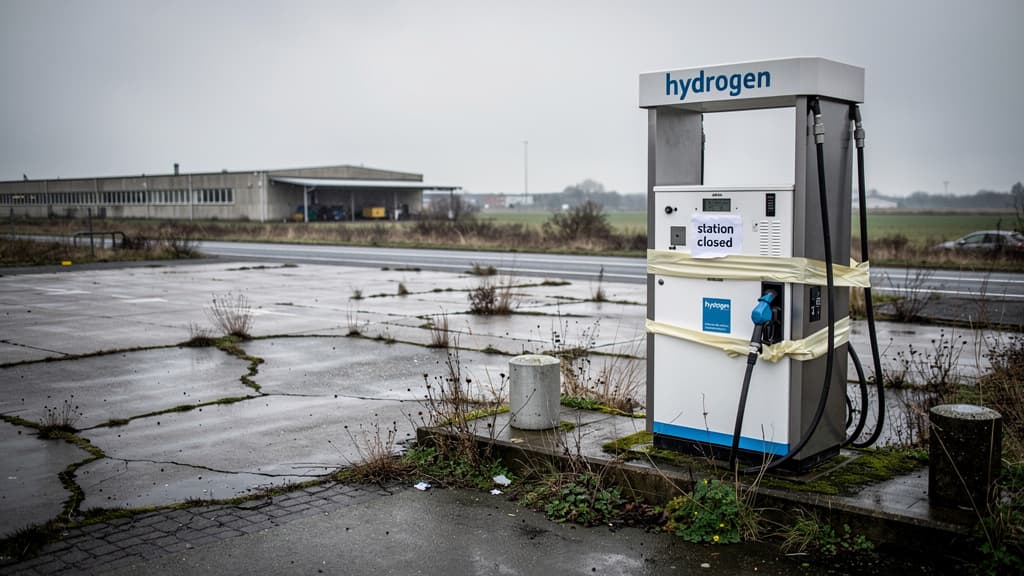
If government wants road freight to decarbonise at scale, the focus should move from "help me buy a truck" to "help me run an electric operation". That means infrastructure, energy, and site capability: chargers, grid connections, on site generation, storage, and control systems.
Why infrastructure first is the better public investment
1) Infrastructure is the constraint, vehicles are the symptom.
Operators can place an order for an electric truck in a day. Securing capacity, delivering a connection, planning civils, and commissioning high power charging can take years. Incentives that land on the slowest, riskiest step unlock everything else.
2) Infrastructure is shared, truck grants are one and done.
A depot microgrid, a battery, and a bank of chargers can support multiple vehicle cycles over 10 to 20 years, across different OEMs and battery chemistries. A vehicle grant subsidises a single asset that will be replaced. From a public value perspective, that is a poor trade unless you are explicitly buying learning, which should be time boxed.
When charging and energy systems are deployable at volume, you also create a market for installers, integrators, energy service providers, and software platforms. That drives down total system cost faster than subsidising end purchases, because you are building supply chain capability rather than drip feeding individual transactions.
3) Infrastructure reduces operating cost, not just capex pain.
The biggest adoption killer is not list price, it is energy economics and risk: demand charges, peak management, network capacity constraints, and volatile power pricing. Infrastructure incentives can be designed to force good behaviour: load management, smart charging, storage to clip peaks, and local generation to reduce exposure. Subsidising the truck without subsidising the ability to charge it cheaply is like giving someone a boat discount and then charging them rent for the ocean.
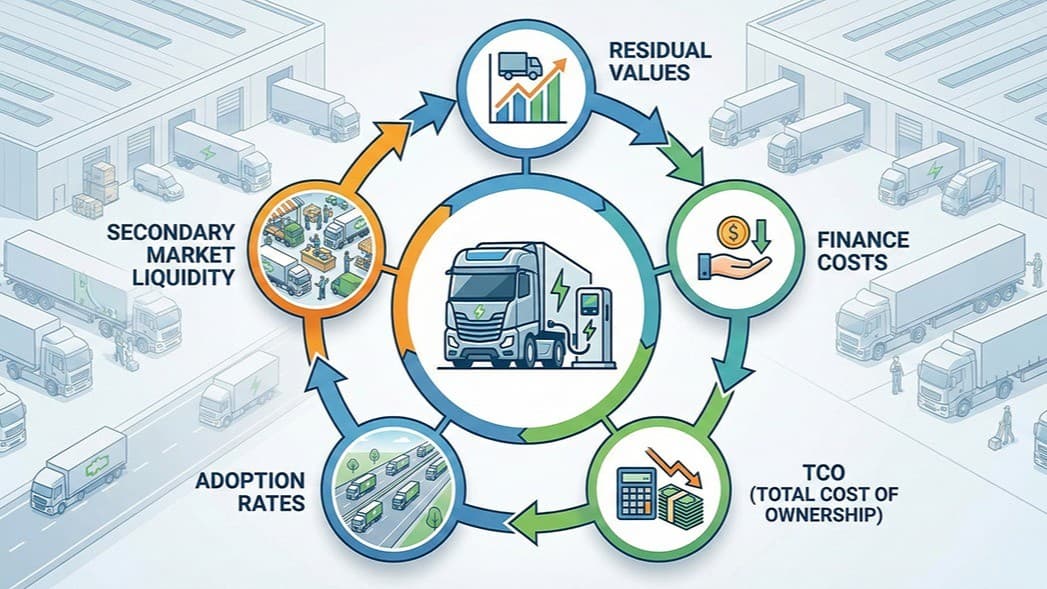
4) Infrastructure de risks residual values and financing.
Financiers get comfortable when an asset has dependable fuelling. A credible charging and energy plan reduces uncertainty around uptime, route planning, and second life value. That lowers cost of capital, which often matters more than a grant headline.
5) Infrastructure avoids technology lock in.
Truck grants can accidentally pick winners: a specific drivetrain, a specific OEM route to market, or a specific duty cycle. Incentivising site and corridor infrastructure is more technology neutral. It supports battery electric now, and it does not prevent other options later if they become genuinely economic.
What "infrastructure incentives" should actually cover
If government is serious about infrastructure first, it cannot mean "a bit off the charger hardware" while ignoring the real costs. A workable package targets five layers:
- Connection and capacity enablement: grid connection works, enabling works, substations, and the costly civils that sit between "paper capacity" and usable kW. Many schemes historically exclude connection upgrades, which is exactly where the pain lives. Some current grant guidance focuses on chargepoint installation in general terms, but freight needs an explicit heavy duty design rather than repurposed car logic.
- Depot energy systems: batteries (BESS), switchgear, load management, and energy management systems. These are what make the difference between "technically possible" and "commercially sane".
- On site generation: solar and, where appropriate, wind, with incentives shaped around dispatchability and self consumption rather than vanity kWp. Generation without control just gives you sunny curtailment.
- Resilience and uptime: redundancy, maintenance support, and monitoring. Freight is allergic to downtime for good reasons.
- Data and interoperability: metering, telemetry, and open APIs. Public money should buy future optionality, not proprietary dead ends.
A pragmatic position, not an ideological one
This is not an argument to abolish vehicle incentives tomorrow. Early markets often need purchase support, and the UK has chosen that route for now. The argument is about prioritisation and sequencing:
- Short term (now to 2028): keep limited vehicle support, but make infrastructure the primary lever and link any vehicle support to a credible charging plan.
- Medium term (2028 to 2032): taper vehicle grants and redirect the majority of public funding to depot and corridor infrastructure, especially where grid delivery is the gating factor.
- Long term (2032 onward): shift to outcomes based mechanisms: carbon intensity per tonne km, verified charging uptime, and demonstrable peak management rather than capital grants.
The policy "shape" that would actually work
If you want a single organising principle: subsidise what is shared, scarce, and slow to build. That is infrastructure. Trucks are important, but they are not the bottleneck.
And if anyone insists the incentives must stay vehicle led, ask them one question: "Where does the energy come from, at what price, and who guarantees it at 2am in February?" If the answer is vague, the policy is wishful thinking with a purchase order attached.