Grid Connections for Fleet Operators: Who Does What
Electrifying HGVs means getting your depot enough electrical capacity to charge them. That brings you into contact with organisations you've probably never dealt with before: DNOs, iDNOs and ICPs. Here's what they do, how they interact, and what you need to know to get power without losing your mind.
The Players
DNOs: Your Regional Grid Company
Distribution Network Operators own and run the local electricity network in your area. UK Power Networks in London and the South East, SP Energy Networks in parts of Scotland and England, and so on. There are 14 DNO regions across the UK. You don't choose your DNO, whoever covers your postcode is who you've got.
DNOs own the substations, cables and transformers that deliver power from the national grid to your depot. They don't sell electricity (that's your supplier), but they control access to it. When you need more capacity, the DNO assesses whether the local network can handle it, determines what upgrades might be needed, provides quotes and either carries out the work or oversees it.
DSOs: DNOs Doing Smart Network Management
DSO stands for Distribution System Operator. It's not a different organisation, it's the same DNO taking on a more active management role. Think of it as traffic control for electrons.
The old approach was simple: if the network was full, you waited for new cables. The DSO approach looks for ways to connect you sooner using flexibility. That might mean time-profiled connections where you agree to limits during peak hours, encouraging smart charging that staggers your load, or suggesting on-site storage to shave peaks. The aim is getting you connected faster by making better use of existing capacity.
When your DNO talks about flexible connections or smart solutions, that's their DSO function in action.
iDNOs: Alternative Network Operators
Independent DNOs are licensed operators that can own and run local electricity networks anywhere in the UK. Unlike DNOs tied to specific regions, iDNOs operate nationwide and focus on new developments and major connection projects.
When new electrical infrastructure is built, a substation for your depot for example, you can choose whether the regional DNO or an iDNO adopts and operates it. The iDNO takes ownership of the new kit, maintains it to the same standards, and provides the same 24/7 fault response.
The key advantage: iDNOs can offer Asset Value Payments. If you're building a substation and laying cables, an iDNO might reimburse a portion of that cost in return for owning the assets. DNOs aren't allowed to do this. For a large depot electrification, this could mean tens of thousands of pounds back, which changes project economics considerably.
You're not obliged to use an iDNO, but for substantial new infrastructure it's worth getting quotes alongside the DNO's offer. From an operational perspective, once everything's connected you won't notice any difference.
ICPs: Specialist Connection Builders
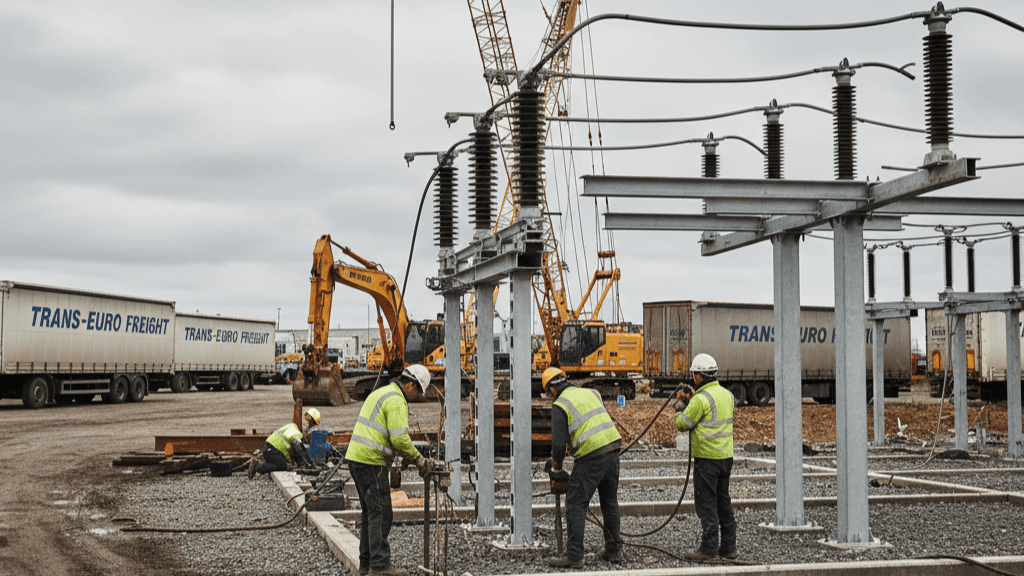
Independent Connection Providers are accredited companies that design and build grid connections. They're qualified contractors who can handle much of the work needed to connect your depot, surveys, design, civil works, cable laying, substation construction, testing.
All DNOs must allow competition in connections. You can hire an ICP to handle the 'contestable' work rather than having the DNO do everything. The DNO still handles 'non-contestable' bits (connecting to their live network and any upstream reinforcement) and must approve the ICP's design.
The upside: shopping around can save time and money. A capable ICP might complete work faster than the DNO's in-house team, especially if the DNO's swamped with projects. Many ICPs work hand-in-hand with iDNOs, or you can use an ICP whilst still having the DNO adopt the final connection.
How They Work Together
A typical depot electrification goes like this:
You contact your DNO with your requirements. They assess capacity and provide a quote. You can either accept their offer or seek competitive quotes from ICPs and iDNOs. If you use an ICP, they handle construction whilst the DNO oversees and approves. If an iDNO's involved, they adopt the new infrastructure upon completion. The DNO always ensures the final connection to their network is done safely.
It's not three organisations you're juggling simultaneously. It's choosing between service providers, similar to deciding whether to use your truck manufacturer's workshop or an independent specialist.
What You Actually Need to Do
Translate Operations Into Power
Before talking to anyone, work out your electrical requirements. An HGV might need 500 kWh to fully charge, but if you're charging over eight hours, that's 62.5 kW of continuous power. Ten trucks charging together means 625 kW. Add existing depot load and headroom, and you might need a megawatt or more.
This matters because DNOs think in kilowatts, that's what stresses their network at any instant. Get an electrical consultant to help translate 'we need to charge 20 trucks before the morning shift' into 'we require 1.5 MVA of supply capacity'.
Check Your Starting Point
Most depots were built for lights, offices and loading equipment. Your existing connection probably can't handle dozens of rapid chargers. If you've got 100 kVA now and need 1,500 kVA, you're looking at a significant upgrade.
Also consider physical requirements: space for a transformer, routes for cable trenches, whether you'll need planning permission for a substation. These aren't electrical questions, but they affect timelines and costs.
Contact Your DNO Early
As soon as you've got rough requirements, talk to your DNO. Tell them your location and desired load. They'll do a preliminary assessment.
Many DNOs offer free budget estimates for large connections, giving you ballpark costs and timelines before you commit. You might discover the nearest substation is at capacity, or that there's a high-voltage line nearby that could easily feed your site.
Start this conversation 18-24 months before you need power. The timescales will surprise you.
Understand Timelines
This is where transport and energy worlds collide painfully. You're used to procuring vehicles in months. Grid connections work differently.
Getting a formal quote from the DNO can take up to 65 working days for complex projects, three months just for the quote. Once you accept, construction timelines vary: simple upgrades might take one to two months, but a new high-voltage connection with substation could easily be 12-24 months or longer.
Why? Equipment lead times, design approvals, road closure permits, potential reinforcement of upstream networks. If someone's telling you they need electric trucks operational next year and you haven't contacted the DNO yet, have a frank conversation about what's realistic.
Budget Appropriately
Connection costs vary wildly. A few fast chargers might cost a few thousand pounds. A depot requiring multi-megawatt supply could run to hundreds of thousands or even millions.
The good news: since April 2023, DNOs can't charge you for upstream reinforcement. If your project triggers the need to upgrade transformers or cables serving the wider area, those costs are socialised across all network users. You only pay for dedicated infrastructure serving your site, cables, transformers, switchgear.
This regulatory change (the Access and Forward-Looking Charges reform) significantly reduces costs for large connections, though you still need to budget for direct connection infrastructure.
Explore Your Options
For small upgrades, the DNO route is often simplest. For major projects (especially above 1 MVA), get competitive quotes. Ask other fleet operators who've already electrified which providers were responsive and delivered on time. The DNO's website will list accredited ICPs.
An ICP might propose different engineering solutions that meet the DNO's standards but use more cost-effective methods or faster procurement. An iDNO might provide financial offset through asset adoption payments and focus hard on quick delivery since that's their business model.
Get Creative If Capacity Is Tight
If the DNO says your location has limited capacity or the timeline's too long, you're not stuck. Options include:
Smart charging: Rather than all trucks charging at full power simultaneously, use management systems to stagger charging. This can dramatically reduce peak demand. Ten trucks needing 500 kW if charging together might only need 200 kW peak capacity with proper load management over eight hours.
Battery storage: Install a large battery that charges during off-peak hours and provides extra power during peak charging times, shaving your peak demand from the grid's perspective.
Flexible connections: Agree to limits during network peak hours in exchange for faster or cheaper connection.
Phased rollout: Start with a smaller fleet and modest connection, then expand as grid capacity becomes available.
Design for Tomorrow
If you expect your electric fleet to grow, over-provision infrastructure upfront if affordable. Install a larger-capacity transformer from the start, or lay conduits for extra cables whilst trenches are open. Many companies install capacity for 10 trucks now but ensure the design scales to 50 trucks with minimal rework. This saves money long-term and ensures your electrification roadmap isn't grid-limited.
Real-World Examples
When Smart Beats Big
UPS depots in London couldn't get enough grid capacity to charge whole fleets at once. Rather than spending fortunes on massive grid upgrades, they implemented smart charging systems that dynamically manage when each van charges, keeping total power draw under a set limit. Battery storage units on site charge during low periods and provide extra power during peak vehicle charging.
Result: dozens of electric vans operating from minimal new grid infrastructure. The DNO (UK Power Networks) collaborated on this as it provided a blueprint for using technology to defer reinforcement.
When the Grid Can't Deliver
Some companies in capacity-constrained areas have faced grid connection waits of 10-15 years. One West London operator installed biogas-fuelled fuel cells with battery storage to power 24 rapid chargers, essentially creating a private power station to bypass grid limitations until capacity becomes available.
It's not common and it's not ideal for carbon goals, but it shows what's possible when grid timelines clash with urgent electrification deadlines.
Phased and Future-Proofed
Several council fleets have electrified 20% of vehicles initially with modest grid upgrades, whilst installing infrastructure (cable ducts, switchgear) sized for the eventual full fleet. When grid capacity catches up in a few years, scaling to 100% electric is straightforward. The alternative, upgrading infrastructure twice, costs far more.
The Connection Process
Here's how a major connection typically unfolds:
Initial inquiry: Contact your DNO with your site location and required load. They'll give informal feedback and may suggest a budget estimate.
Deciding your route: Proceed with the DNO providing a formal offer, or also approach ICPs and iDNOs for competitive quotes. Many do both.
Formal application: Submit a connection application to the DNO (the ICP can handle this if you're using one). The DNO registers your capacity request and studies the impact.
DNO quote: The DNO's engineers determine how to provide the power, identify connection points, work out what equipment is needed. They issue a connection offer within 50-65 working days for large connections, detailing scope, cost and timeline. Under current rules, this won't include wider network reinforcement costs.
Comparing options: If you've got ICP or iDNO quotes, compare price, timeline and terms. An iDNO might pay you an adoption sum upon completion, reducing net cost.
Accepting and contracting: You typically have 90 days to accept the DNO's offer. If using an ICP or iDNO, the DNO issues a revised agreement reflecting the division of responsibilities.
Design and construction: Detailed engineering is finalised. If an ICP's involved, their engineers design the parts they cover, which the DNO must approve. The ICP coordinates with the DNO throughout.
Network tie-in: Once new infrastructure is built and tested, the DNO connects it to their live network. They schedule a planned outage if needed and perform the final energisation.
Commissioning: Testing confirms everything works safely. If an iDNO's involved, ownership of new assets formally transfers to them at energisation.
Throughout this, communication is crucial. Regular coordination meetings help avoid the miscommunications that cause redesigns and delays.
Bridging the Language Gap
Power vs Energy
You think in fuel, litres per day. Electrical engineers think in power (kW, what's happening right now) and energy (kWh, total over time). A truck using 500 kWh per day needs 250 kW charging rate if charged in two hours, or 62.5 kW if charged over eight hours. Peak power determines what the network must supply at any instant.
Timeline Expectations
Transport operates fast. Power infrastructure moves slowly. A major connection takes a year or more, sometimes far longer if wider grid upgrades are needed. Integrate grid lead times into fleet transition planning from the start. Share your multi-year fleet plan with the DNO, they might incorporate your needs into their network development plans.
Flexibility vs Reliability
Transport operations prize predictability. Energy networks increasingly want flexibility. These aren't incompatible. A flexible connection doesn't mean unreliable, it means agreeing to smart management of when vehicles charge, which often aligns perfectly with depot operations anyway. If not all trucks are needed simultaneously, perhaps a subset can delay charging until later at night to fit a flexible connection profile.
A Worked Example
You want 1.5 MVA for an HGV depot. The DNO says you'll need a new 11 kV feeder and transformer, quoted at 18 months. An ICP offers to deliver the contestable works in 12 months. An iDNO proposes to adopt the assets and pay an adoption sum of £80,000.
The DNO's DSO team offers a flexible connection at 1.2 MVA now with brief curtailments during early evening peaks, rising to full 1.5 MVA after a planned network upgrade in two years. Your operations team confirms most trucks can charge after 10pm, so the curtailment window doesn't affect readiness.
You accept the ICP build, the iDNO adoption and the flexible profile. The DNO approves the design and energises the connection. The iDNO takes ownership and pays the adoption sum. Your trucks charge on schedule, you're operational a year earlier than the standard route, and the net cost is £80,000 lower.
Bottom Line
DNOs run your local grid. As DSOs, they're learning to manage it more actively using flexibility. iDNOs offer alternative ownership models that can improve project economics. ICPs get connections built, often faster or cheaper than the DNO's in-house option.
Start conversations with your DNO at least 18-24 months before you need power. Get competitive quotes for large projects. Consider smart charging and storage to reduce peak demand. Design for future expansion if affordable.
The electric future of logistics is absolutely achievable. It just requires treating grid connections as critical infrastructure planning rather than an afterthought. Do that, and you'll have your trucks charging reliably whilst others are still waiting for capacity.